
Colosseum
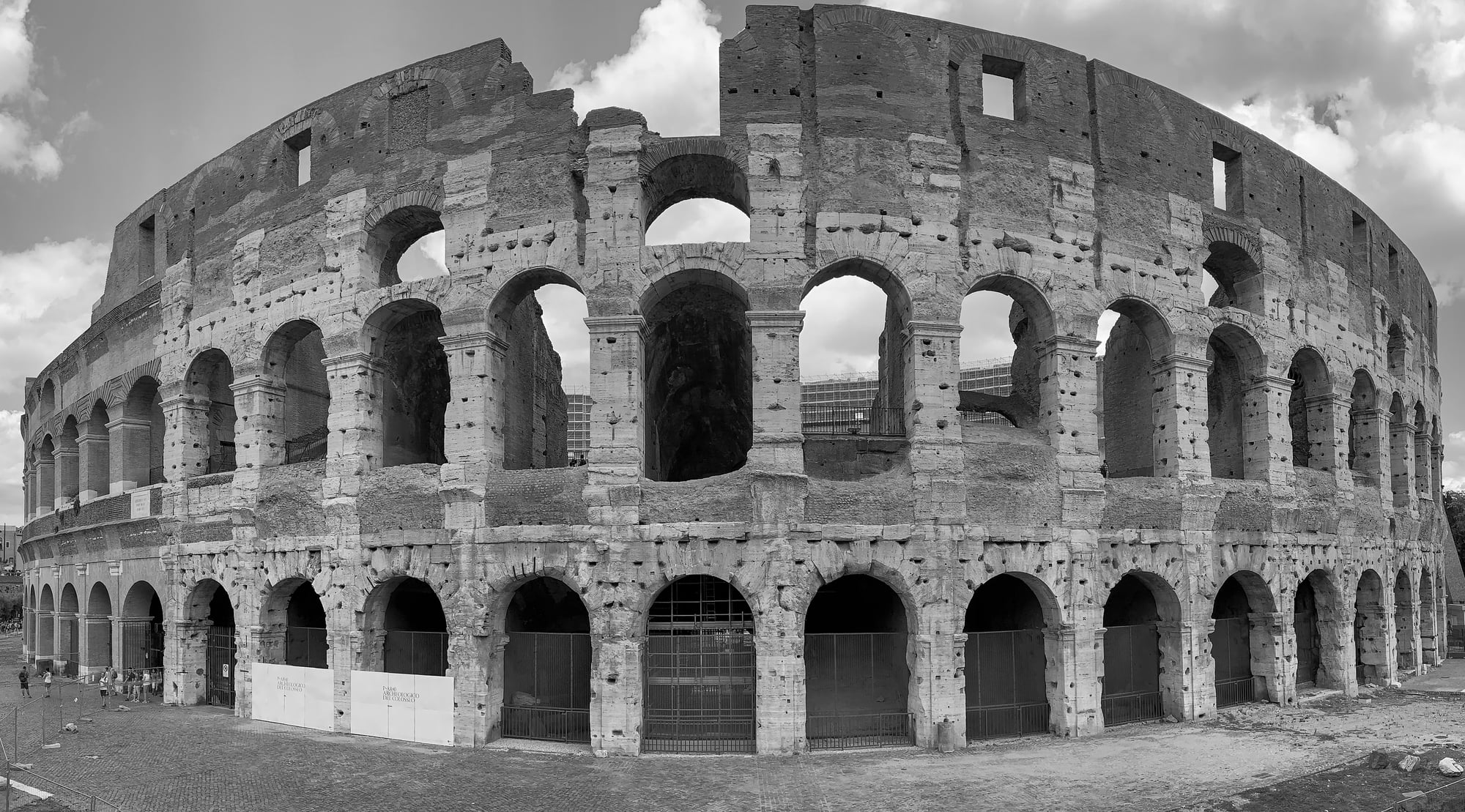
Credit: Nicholas Hartmann · CC BY-SA 4.0
The Colosseum is a giant stone amphitheater in the center of Rome, Italy. An amphitheater is a round, open-air arena with seats on all sides. The Romans built the Colosseum almost 2,000 years ago. Work started under Emperor Vespasian around 72 CE. His son, Emperor Titus, opened it in 80 CE. It is one of the most famous buildings from the ancient world.
The Colosseum was huge. It stood about 160 feet tall, as tall as a 15-story building. It could hold around 50,000 people, about the same as a big modern football stadium. The outside was covered in white stone called travertine. Inside, rows of seats curved around a sandy floor called the arena. The word arena comes from the Latin word for sand, which soaked up the blood spilled there.
The Romans came to the Colosseum to watch shows. The most famous were gladiator fights. Gladiators were trained fighters, often enslaved people or prisoners of war. They fought each other with swords, nets, and spears. The crowd also watched wild animal hunts. Romans brought lions, tigers, bears, and elephants from across their empire to fight in the arena. Sometimes the floor was even flooded with water so ships could battle in pretend sea fights. Historians still debate how the Romans managed this without ruining the building underneath.
Below the arena floor, workers built a maze of tunnels and rooms called the hypogeum. Cages held the animals. Wooden elevators, pulled by ropes, lifted gladiators and beasts up through trapdoors. They appeared in the arena as if by magic. The crowd loved the surprise.
Going to the Colosseum was free. Roman emperors paid for the games to keep the people happy. A poet named Juvenal complained that Romans only cared about "bread and circuses," meaning free food and free shows. The shows were also a way for emperors to show off their power and wealth.
The Colosseum was used for about 400 years. After the Roman Empire fell, the building was damaged by earthquakes. People also took its stones to build churches and palaces in Rome. Even so, much of it still stands. Today, more than seven million people visit the Colosseum each year. They walk through the same arches the Romans used and look down into the tunnels where gladiators once waited in the dark.
Related
Last updated 2026-04-26