
COVID-19 Pandemic
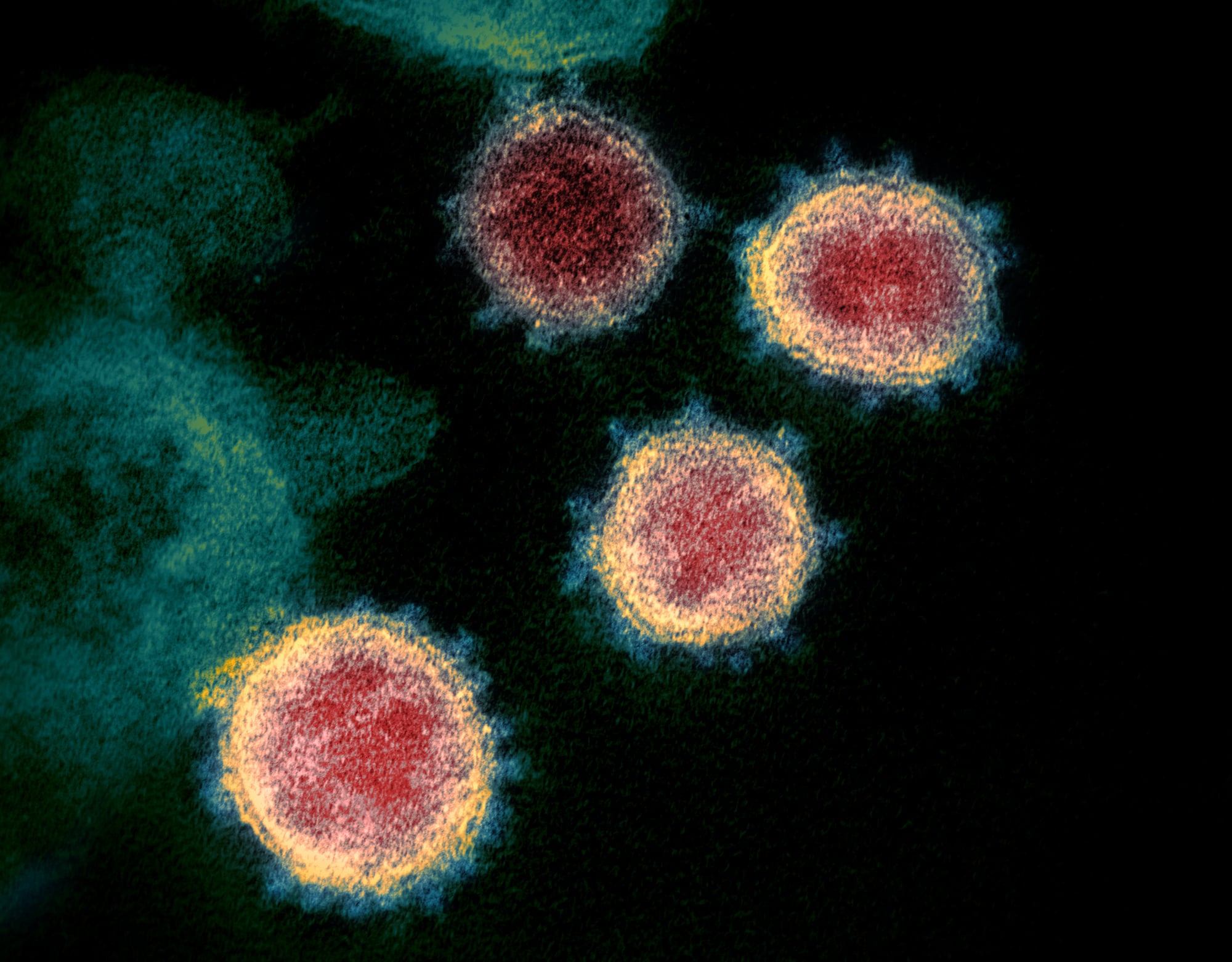
Credit: NIAID-RML (https://www.niaid.nih.gov/ & https://www.niaid.nih.gov/about/rocky-mountain-laboratories) · CC BY 2.0
The COVID-19 pandemic was a worldwide outbreak of a new disease that began in late 2019 and spread to nearly every country on Earth. The disease was caused by a virus called SARS-CoV-2. "COVID-19" is short for "coronavirus disease 2019." It was the worst pandemic in about a hundred years, since the flu pandemic of 1918.
The first cases were reported in the city of Wuhan, China, in December 2019. Within a few months, the virus had spread to every continent except Antarctica. In March 2020, the World Health Organization officially called it a pandemic. A pandemic is a disease outbreak that crosses many countries at once.
The virus spread through tiny droplets in the air. When a sick person coughed, talked, or even breathed, they could pass the virus to people nearby. Most people who caught COVID-19 had mild symptoms, like a cough, fever, or loss of taste and smell. But the disease was very dangerous for older people and those with other illnesses. By early 2024, more than 7 million confirmed deaths had been reported around the world. The true number is believed to be much higher.
Daily life changed almost overnight. Schools closed and students learned from home through video calls. Restaurants, movie theaters, and sports stadiums shut down. Many adults began working from their kitchens. People wore masks in public and stayed six feet apart, a practice called social distancing. Hospitals filled up so quickly that doctors and nurses sometimes had to treat patients in hallways and tents.
Scientists worked at a speed never seen before. Vaccines for new diseases usually take 10 to 15 years to develop. The first COVID-19 vaccines were ready in less than a year. By the end of 2021, billions of doses had been given around the world. The vaccines used a new technology called mRNA, which teaches your immune system to recognize the virus without using the live virus itself.
The pandemic also caused huge problems beyond the disease. Millions of people lost jobs. Supply chains broke down, so stores ran out of toilet paper, computer chips, and other goods. Many kids fell behind in school. Mental health problems rose sharply, especially among young people who spent long months away from friends.
By 2023, the World Health Organization said COVID-19 was no longer a global emergency, though the virus did not disappear. Scientists still study why some people got very sick while others barely noticed they were infected. Many also worry about the next pandemic, and how the world can be better prepared.
Related
Last updated 2026-04-26