
Jim Crow Laws
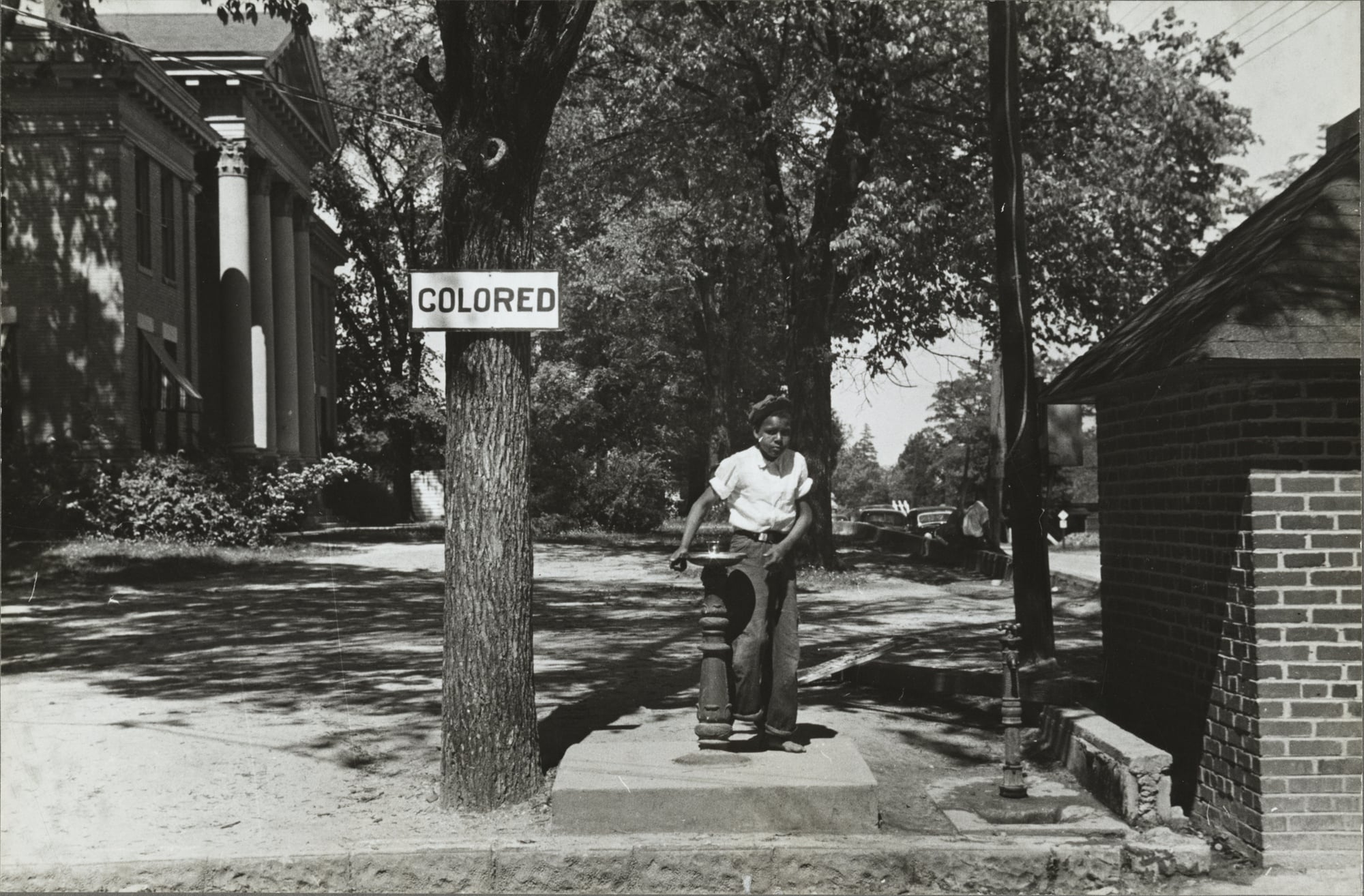
Credit: John Vachon · Public domain
Jim Crow laws were state and local laws in the United States that forced Black and white Americans to live separately. They were used mostly in the South from the late 1870s until 1965. Under these laws, Black Americans had to use different schools, hospitals, restrooms, train cars, water fountains, and even cemeteries. The name "Jim Crow" came from a cruel stage character that white actors used in the 1830s to make fun of Black people.
Jim Crow laws came after slavery ended. The Civil War ended in 1865, and slavery was banned that same year. For about ten years after the war, a period called Reconstruction, Black men in the South gained the right to vote, run for office, and go to school. But white leaders in Southern states pushed back. By the late 1870s, they began passing laws to take those rights away.
In 1896, the Supreme Court made these laws much stronger. In a case called Plessy v. Ferguson, the Court ruled that "separate but equal" facilities were allowed under the Constitution. In real life, the facilities were never equal. White schools got new books and warm buildings. Black schools often had no heat, torn books, and far less money per student.
Jim Crow was not just about separate spaces. The laws also made it nearly impossible for many Black Americans to vote. Some states charged a fee called a poll tax. Others gave reading tests that were unfair on purpose. White voters were often allowed to skip these tests through a "grandfather clause" if their grandfathers had voted. Black voters almost never qualified.
Jim Crow was also enforced through fear. Groups like the Ku Klux Klan used violence to threaten Black families, especially those who tried to vote, own land, or speak out. Thousands of Black Americans were lynched, meaning they were killed by mobs without a trial. Between the 1870s and 1950s, more than six million Black Americans moved north and west to escape these conditions. This huge movement is called the Great Migration.
The fight against Jim Crow grew into the Civil Rights Movement. Leaders like Martin Luther King Jr., Rosa Parks, and John Lewis led marches, boycotts, and sit-ins. In 1954, the Supreme Court ruled in Brown v. Board of Education that segregated schools were unconstitutional. The Civil Rights Act of 1964 and the Voting Rights Act of 1965 finally ended Jim Crow as law. Ending its effects on American life has taken much longer, and historians say that work is not finished.
Related
Last updated 2026-04-26