
Martin Luther King Jr.
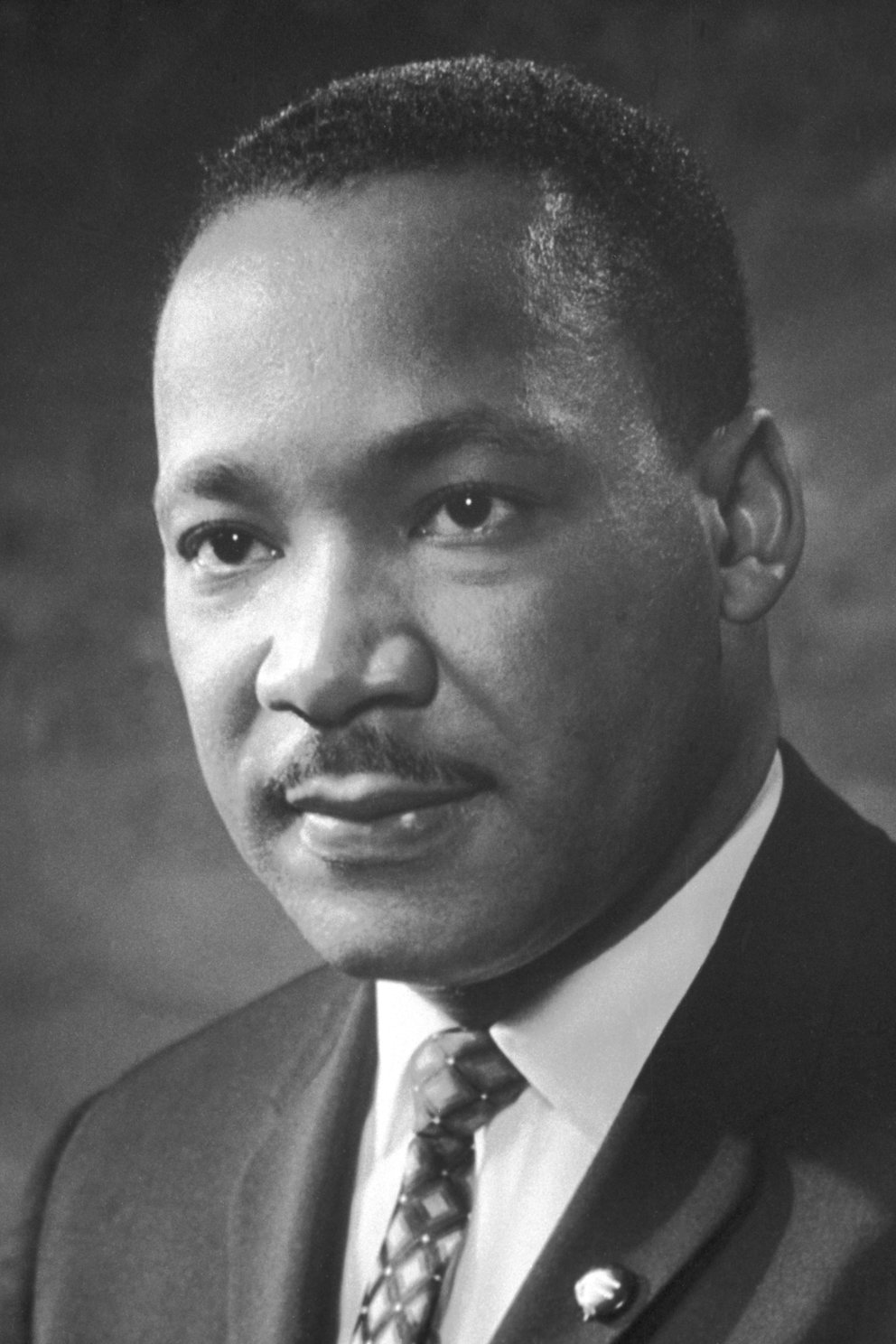
Credit: Nobel Foundation · Public domain
Martin Luther King Jr. was an American minister and civil rights leader who fought to end racial segregation and unfair treatment of Black Americans. He lived from 1929 to 1968. He led peaceful protests, gave some of the most famous speeches in American history, and helped change the laws of the United States. He is honored every year on the third Monday of January, a national holiday called Martin Luther King Jr. Day.
Growing up under Jim Crow
King was born in Atlanta, Georgia, on January 15, 1929. His father was a Baptist minister, and his mother was a teacher. Young Martin was a smart student who skipped two grades and started college at age 15.
He grew up under a system called Jim Crow. These were laws across the southern United States that kept Black people separate from white people. Black children went to different schools. Black families had to use different drinking fountains, different waiting rooms, and different sections of buses. The schools and services for Black people were almost always worse. King saw this unfairness every day, and it shaped the rest of his life.
Becoming a leader
After college, King became a minister like his father. He also studied the ideas of Mahatma Gandhi, who had used peaceful protest to help free India from British rule. King believed the same approach could work in America. He called it nonviolent resistance. The idea was to break unfair laws on purpose, accept the punishment without fighting back, and let the whole country see how unjust the laws were.
In 1955, a Black woman named Rosa Parks was arrested in Montgomery, Alabama, for refusing to give up her bus seat to a white passenger. King, then only 26, was chosen to lead a protest. Black residents of Montgomery refused to ride the city buses for 381 days. They walked, carpooled, and shared rides instead. The bus company nearly went broke. In the end, the Supreme Court ruled that bus segregation was against the Constitution. King had won his first big victory.
The March on Washington
King kept leading protests across the South. He led marches, sit-ins at lunch counters, and voting drives. He was arrested almost 30 times. While locked up in Birmingham, Alabama, in 1963, he wrote a famous letter explaining why people sometimes have to break unjust laws to change them.
That same year, King helped organize the March on Washington. On August 28, 1963, about 250,000 people gathered at the Lincoln Memorial. That was more people than lived in most American cities at the time. Standing in front of the giant statue of Abraham Lincoln, King gave the speech he is most famous for. "I have a dream," he said, "that my four little children will one day live in a nation where they will not be judged by the color of their skin but by the content of their character."
Changing the laws
The protests worked. In 1964, Congress passed the Civil Rights Act, which made segregation in public places illegal. In 1965, after King led a march from Selma to Montgomery that was attacked by police on live television, Congress passed the Voting Rights Act. This law protected the right of Black Americans to vote. Together, these two laws ended legal segregation in the United States.
In 1964, King won the Nobel Peace Prize. He gave away the prize money to civil rights groups.
Death and legacy
King knew his life was in danger. He had been threatened many times. His house had been bombed. On April 4, 1968, he traveled to Memphis, Tennessee, to support garbage workers who were on strike for better pay. While standing on the balcony of his motel, he was shot and killed by a man named James Earl Ray. King was 39 years old.
The country was shaken. Riots broke out in more than 100 cities. But King's work did not stop. The Fair Housing Act, which made it illegal to refuse to rent or sell a home to someone because of their race, was passed just one week after his death.
Today, King's words and actions are taught in nearly every American school. There are streets named after him in almost every city in the United States. A huge stone statue of him stands on the National Mall in Washington, D.C., not far from where he gave his "I Have a Dream" speech. Some historians point out that King was actually unpopular with most white Americans during his lifetime, and that his message about poverty and war is sometimes left out of the celebrations. King wanted more than just nice memories. He wanted the country to keep changing.
Related
Last updated 2026-04-26