
Virtual Reality
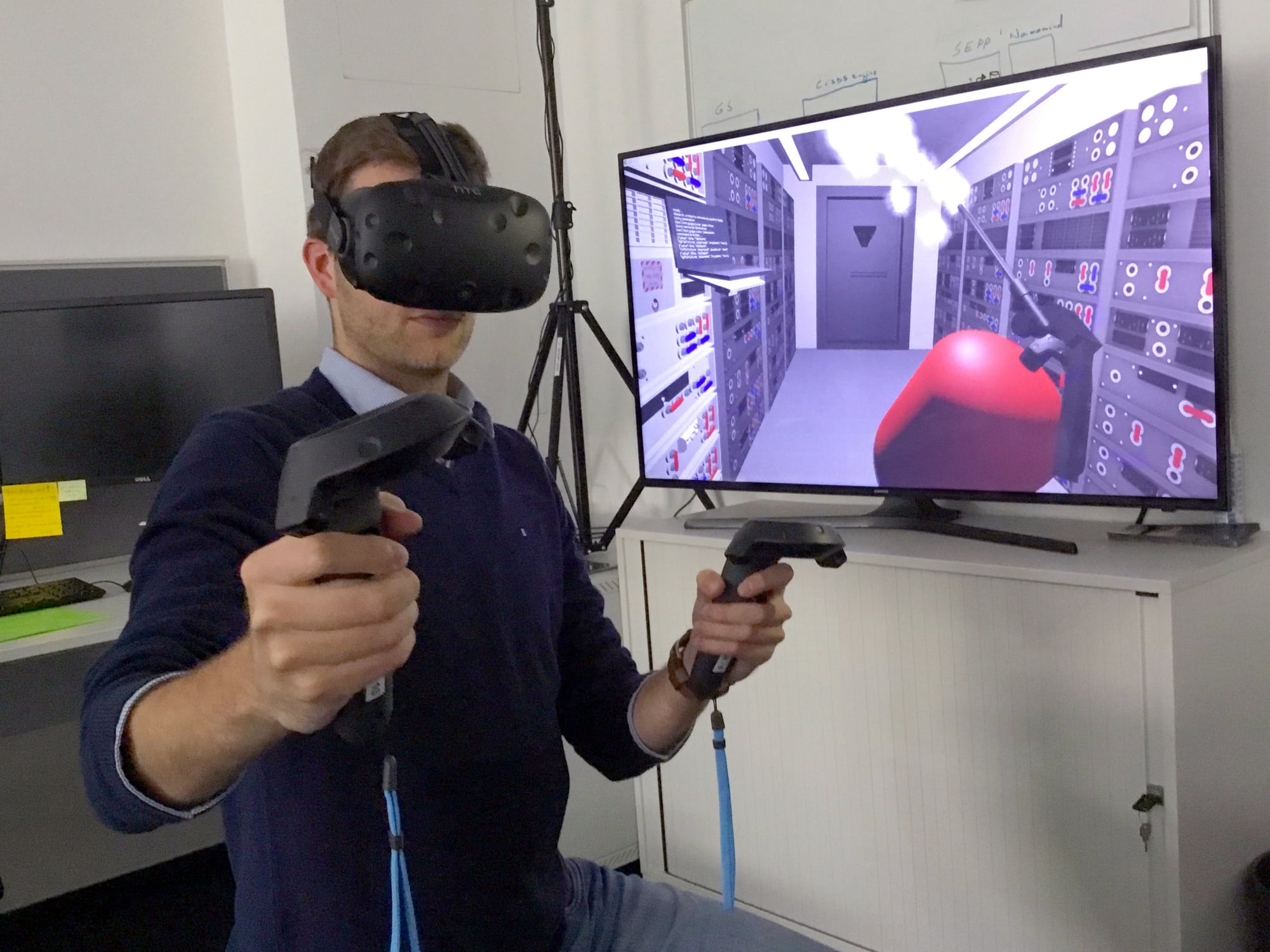
Credit: European Space Agency · CC BY-SA 3.0 igo
Virtual reality, often called VR, is a kind of technology that uses a computer to create a fake world you can look around and move through. People usually experience VR by wearing a headset that covers their eyes. Inside the headset are two small screens, one for each eye. The screens show pictures that change as you turn your head, so it feels like you are inside the picture instead of looking at it.
VR works by tricking your senses. Your eyes send signals to your brain about what you see. Your ears tell your brain what you hear. Special sensors in the headset track how your head moves. The computer then changes what you see and hear to match. If you turn left, the world turns with you. This happens fast enough that your brain accepts the fake world as real, at least for a little while.
Most VR systems also use hand controllers. The controllers track where your hands are, so you can pick up virtual objects, push virtual buttons, or throw a virtual ball. Some newer headsets watch your hands directly with cameras. You do not need to hold anything at all.
People use VR for many things. Video games are the most common. A player can stand inside a game world instead of watching it on a flat screen. Doctors use VR to practice surgeries before doing them on real patients. Pilots and astronauts train in VR because crashing a virtual plane is much safer than crashing a real one. Some schools use VR to take students on field trips to places like the bottom of the ocean or the surface of Mars.
The idea of VR is older than you might think. In 1968, a computer scientist named Ivan Sutherland built the first headset. It was so heavy that it had to hang from the ceiling. People nicknamed it "the Sword of Damocles" because it looked like it might fall on you. Modern headsets weigh about a pound and run on batteries.
VR has limits. Wearing a headset for a long time can cause headaches or a feeling like seasickness. Scientists call this "cyber sickness." It happens because your eyes tell your brain you are moving, but your inner ear knows you are standing still. Researchers are still trying to figure out the best ways to fix it. They are also asking bigger questions, like how much time in a fake world is healthy for a growing brain.
Related
Last updated 2026-04-25