
Smartphone
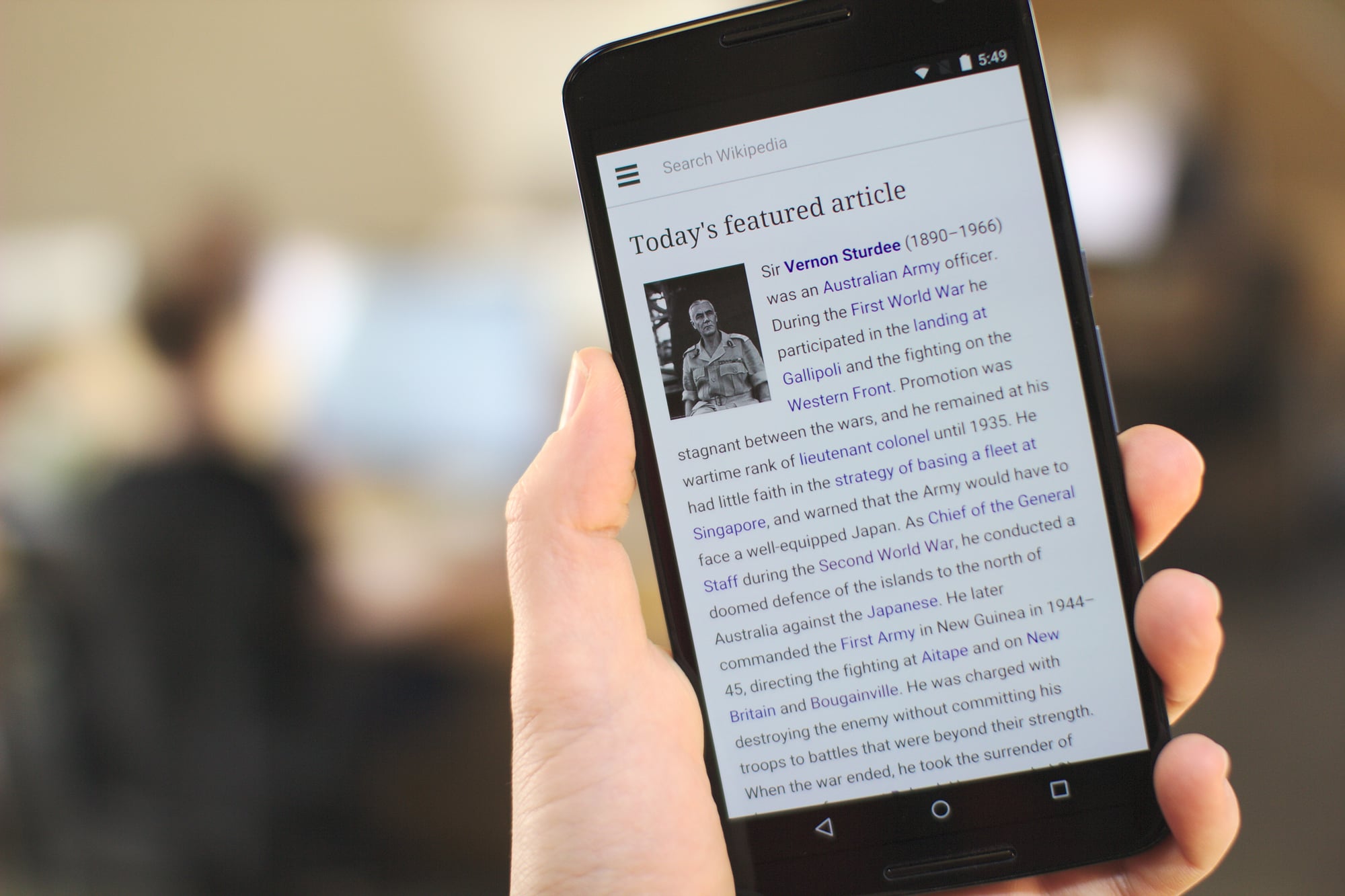
Credit: Sage Ross · CC BY-SA 4.0
A smartphone is a small handheld computer that can also make phone calls. It connects to the internet, runs programs called apps, and uses a touchscreen instead of buttons. Most smartphones today are about the size of an adult's hand. They fit easily into a pocket or backpack.
The first true smartphone was the IBM Simon, sold in 1994. It could send emails and faxes, but it cost almost $900 and the battery lasted only an hour. Smartphones did not become common until 2007, when Apple released the first iPhone. The iPhone showed people that a phone could be a music player, a camera, a web browser, and a game console all at once. Within ten years, more than half the people on Earth owned a smartphone.
Inside a smartphone are many of the same parts found in a desktop computer. There is a processor, which is the "brain." There is memory, which holds apps and photos. There is a battery, a camera, and tiny sensors that can tell which way the phone is pointing. A modern smartphone can do billions of calculations every second. That is more computing power than NASA had when it sent astronauts to the Moon.
Smartphones connect to the world in several ways. They use cell towers to make calls and send texts. They use Wi-Fi to reach the internet at home or school. They use GPS satellites to figure out where they are on Earth, often within a few feet. Many phones can also pay for things by tapping against a small reader at a store.
Smartphones have changed daily life faster than almost any invention in history. People use them to take pictures, watch videos, find directions, talk with friends, and look up almost any fact. But scientists, parents, and doctors are still debating what all this screen time does to kids. Some research suggests that too many hours on a phone can hurt sleep and attention. Other studies find smaller effects. Many countries are now passing rules about phones in schools, and the answers are not fully settled.
The story of the smartphone is also still being written. Phones now use artificial intelligence to answer questions, translate languages, and even describe what their cameras see. Some companies are working on phones that fold in half or wrap around your wrist. Whatever comes next, the basic idea will probably stay the same: a tiny computer, always nearby, connected to almost everything.
Related
Last updated 2026-04-25