
Paper
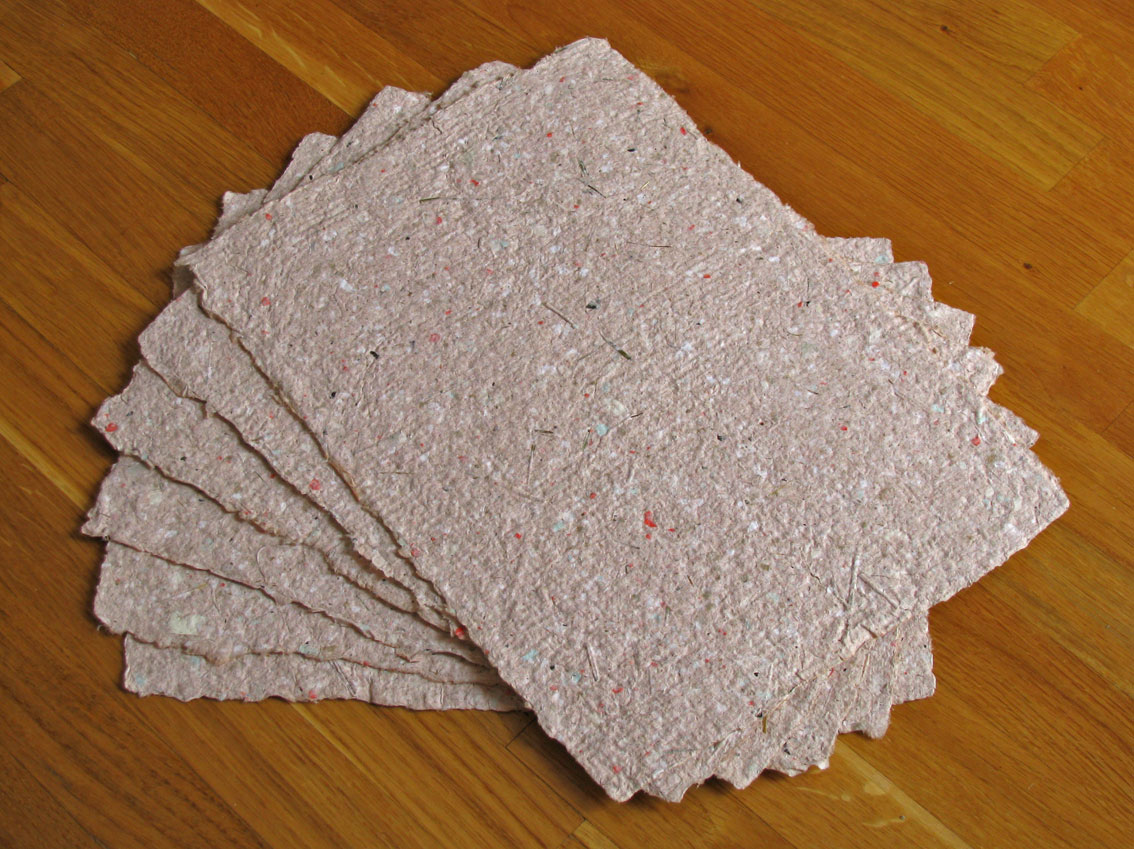
Credit: Goran Anđelić · CC BY-SA 4.0
Paper is a thin, flat material made from plant fibers pressed together. People use it for writing, printing, drawing, wrapping, and hundreds of other jobs. Most paper today is made from wood, but it can also be made from cotton, bamboo, rice straw, or old paper that has been recycled.
Paper was invented in China around the year 105 CE. A government official named Cai Lun is usually given credit for the invention. He soaked plant fibers in water, mashed them into a wet pulp, spread the pulp on a flat screen, and let it dry into a sheet. That basic recipe has not changed much in almost 2,000 years.
Before paper, people wrote on whatever they could find. The ancient Egyptians used papyrus, a kind of mat made from a tall reed. The word "paper" comes from "papyrus," but the two are not really the same thing. Other cultures wrote on dried animal skins called parchment, on clay tablets, on silk, on wax, and even on thin strips of bamboo tied together with string.
Paper slowly spread out from China. It reached the Islamic world by the 700s, where Baghdad became famous for its paper mills. From there it traveled along trade routes into Europe. Europeans did not start making their own paper until around the 1100s, more than a thousand years after Cai Lun.
Paper became truly important after the printing press was invented in the 1400s. Before then, books were copied by hand and cost a fortune. With paper and movable type together, books could be made by the thousands. Ideas, news, and stories spread faster than ever. Many historians believe paper helped power the Renaissance, the Scientific Revolution, and the spread of public schools.
Today the world makes more than 400 million tons of paper every year. That is a huge amount of trees. Most modern paper mills now use trees grown on farms just for paper, and they recycle old paper back into new paper. Recycling one ton of paper saves about 17 trees and a lot of water.
Paper is so common that it is easy to forget how strange it is. A thin sheet of mashed-up plant can hold a poem, a math test, a treasure map, or a hundred-dollar bill. For almost two thousand years, it has been one of the simplest and most powerful tools humans ever made.
Related
Last updated 2026-04-25