
Exoplanet
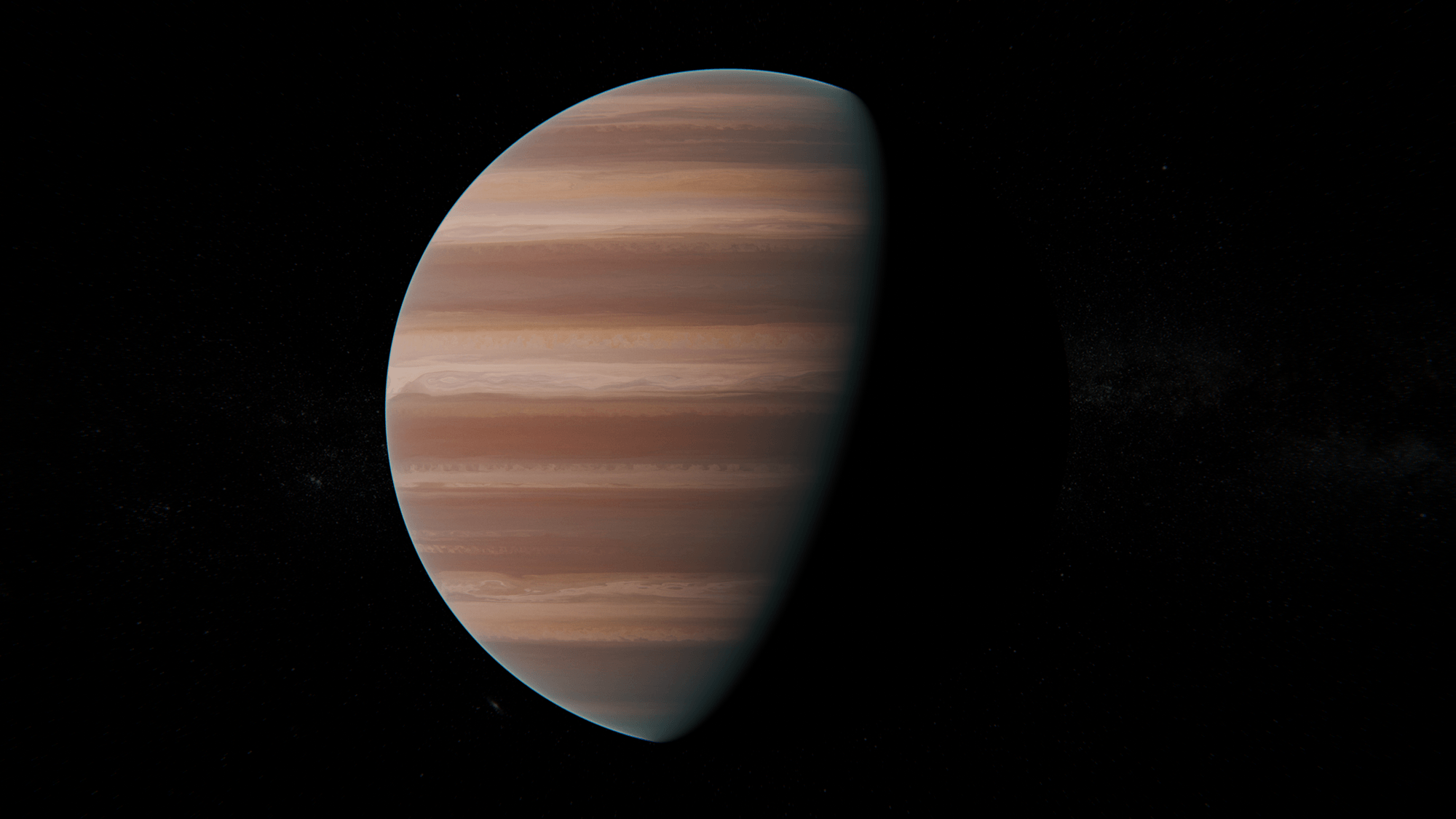
Credit: CaptSalamanca · CC BY 4.0
An exoplanet is a planet that orbits a star other than our Sun. The word is short for "extrasolar planet," which means a planet outside our solar system. Astronomers have confirmed more than 5,500 exoplanets so far. They believe there are billions more waiting to be found in our galaxy alone.
For a long time, nobody knew if other stars had planets at all. People guessed they did, but no one could prove it. The first exoplanet around a normal star was confirmed in 1995. It is called 51 Pegasi b, and it orbits a star about 50 light-years from Earth. The scientists who found it later won the Nobel Prize.
Exoplanets are hard to see directly. Stars are huge and bright. Planets are small and dark. Looking for a planet next to a star is like trying to spot a firefly next to a searchlight from miles away. So astronomers usually find exoplanets in two clever ways.
The first way is called the transit method. When a planet passes in front of its star, the star's light dims by a tiny amount. Special space telescopes, like NASA's Kepler and TESS, watch thousands of stars at once and look for those tiny dips. The second way is called the wobble method. A planet's gravity tugs on its star as it orbits. The star moves back and forth just a little, and astronomers can measure that wobble in the starlight.
The exoplanets found so far are strangely varied. Some are huge gas giants that orbit closer to their stars than Mercury orbits the Sun. Astronomers call these "hot Jupiters." Some are rocky worlds bigger than Earth but smaller than Neptune, a type we do not have in our own solar system. A few orbit two stars at once, like Tatooine in Star Wars.
The most exciting exoplanets sit in what scientists call the "habitable zone." This is the distance from a star where water could stay liquid on a planet's surface. Liquid water is important because every life form we know of needs it. Telescopes like the James Webb Space Telescope can now study the air around some of these planets. They look for gases like oxygen and methane that might hint at life. No one has found proof of life on another world yet. But for the first time in human history, we have the tools to look.
Related
Last updated 2026-04-22