
Observation
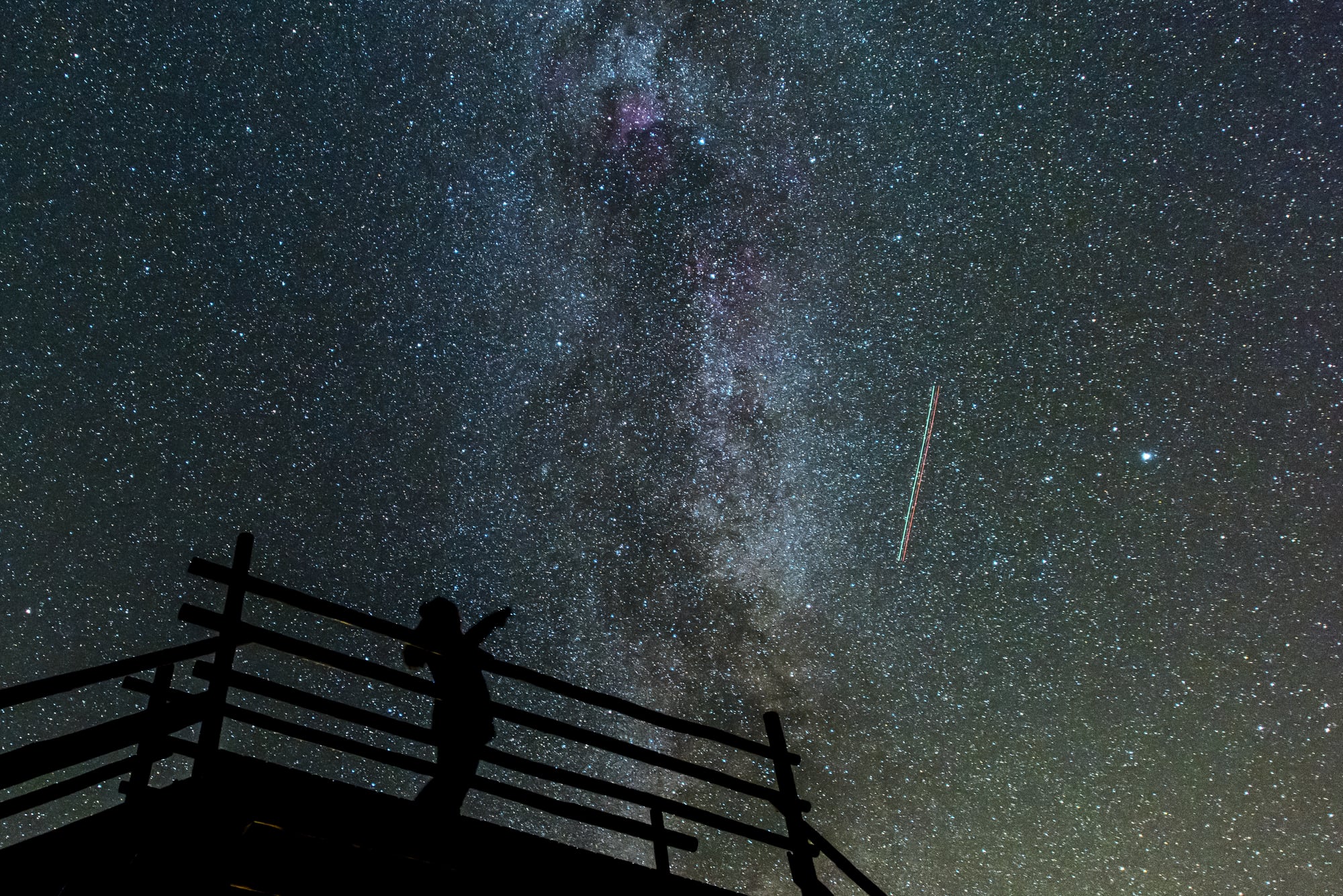
Credit: Martin Mark · CC BY-SA 4.0
Observation is the act of paying careful attention to something and noting what you see, hear, smell, taste, or feel. In science, observation is how learning begins. Before a scientist can ask a good question, run an experiment, or explain how something works, that scientist has to notice what is actually happening in the world.
Observations can come from the five senses. A scientist might watch ants carry food back to their nest. Another might listen to the songs of humpback whales. But observations can also come from tools that stretch the senses. A microscope lets you see cells too small for your eyes. A telescope lets you see stars that are trillions of miles away. A thermometer measures heat more exactly than your skin can.
There are two main kinds of observations. Quantitative observations use numbers. "The plant grew 4 inches in two weeks." Qualitative observations use words to describe qualities. "The plant's leaves turned yellow and curled at the edges." Good scientists usually collect both kinds, because numbers and descriptions tell different parts of the story.
Careful observation has led to some of the biggest discoveries in science. In the 1600s, Galileo pointed a new invention called the telescope at Jupiter and noticed four tiny points of light moving around it. Those points were moons. His observation helped prove that not everything in space orbits Earth. In the 1800s, Charles Darwin spent five years sailing around the world, carefully writing down every finch beak, tortoise shell, and fossil he found. His notes became the foundation for the theory of evolution.
Observation is harder than it sounds. People often see what they expect to see and miss what they do not. Scientists try to fight this by writing things down right away, taking photos or measurements, and having other people check their work. Even then, two scientists watching the same thing can disagree about what it means. That is part of why science keeps asking questions.
You can practice observation without any special tools. Sit outside for ten minutes and write down every bird, bug, and sound you notice. Look at a leaf through a magnifying glass. Watch how shadows move across a wall during the afternoon. The more closely you look at the world, the more interesting it gets.
Related
Last updated 2026-04-23