
Seaweed
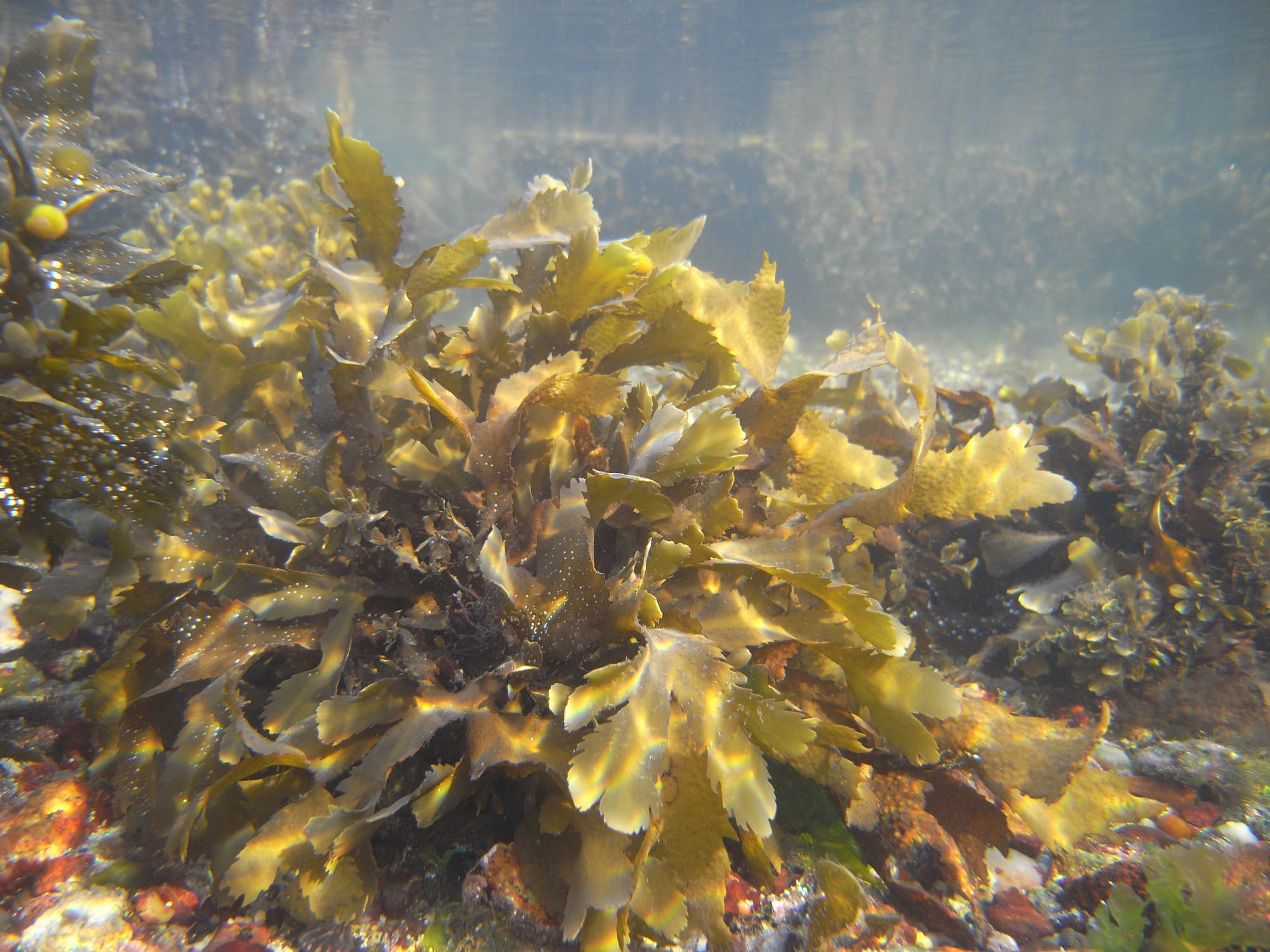
Credit: Grubio--1 · CC BY-SA 4.0
Seaweed is a kind of algae that grows in the ocean. Even though it looks like a plant, it is not a true plant. Seaweed does not have roots, stems, leaves, or flowers the way land plants do. Instead, it soaks up water and food directly through its whole body. Seaweed comes in three main color groups: green, brown, and red. There are about 10,000 different kinds living in oceans all over the world.
Seaweed needs sunlight to make its food. Like plants, it uses photosynthesis, the process of turning sunlight, water, and carbon dioxide into sugar. That is why seaweed grows in shallow water, where light can still reach it. In very clear water, some kinds can grow as deep as 800 feet down. Below that, the water is too dark for seaweed to survive.
The biggest seaweed is giant kelp. It grows along cool coasts like California and South Africa. A single kelp can stretch more than 150 feet from the seafloor to the surface, taller than a 15-story building. Kelp grabs onto rocks with a part called a holdfast. Small gas-filled bubbles called floats lift its blades up toward the sun. Together, many kelps form underwater forests where sea otters, fish, and seals live and hide.
Seaweed is a huge part of life in the ocean. It feeds animals like sea urchins, snails, and turtles. It gives baby fish a safe place to grow up. Coral reefs depend on certain red seaweeds that help build their hard frames. Seaweed also helps the whole planet. Ocean algae, including seaweed, make about half of the oxygen in Earth's air. Every other breath you take comes from the sea.
People have eaten seaweed for thousands of years. In Japan, Korea, and China, it is a normal part of meals. The dark wrap around a sushi roll is a red seaweed called nori. Irish and Welsh families have long made a dish called laver bread from boiled seaweed. Seaweed shows up in surprising places too. A thickener called carrageenan, made from red seaweed, is used in ice cream, toothpaste, and chocolate milk to keep them smooth.
Scientists are now studying seaweed as a tool against climate change. Seaweed farms pull carbon dioxide out of the water as they grow. Some farms also raise food and feed for cattle at the same time. The ocean's strangest "plant" may turn out to be one of its most useful gifts.
Related
Last updated 2026-04-25