
Red Blood Cell
Credit: denn / Denise Chan from Hong Kong, China · CC BY-SA 2.0
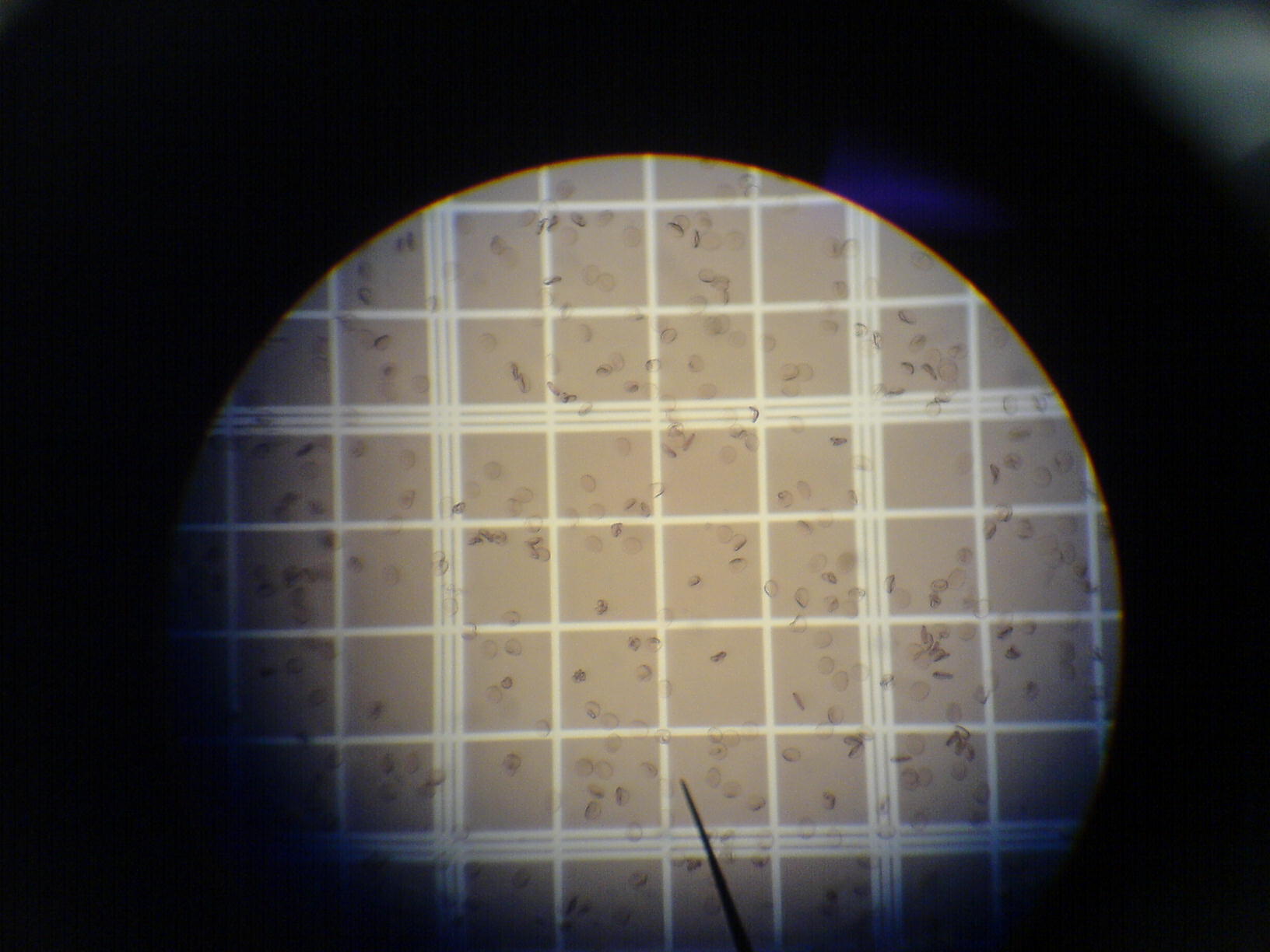
A red blood cell is a tiny cell in your blood that carries oxygen around your body. Red blood cells are the most common cells in human blood. A single drop of blood holds about 5 million of them. They are made inside your bones, in a soft tissue called bone marrow.
Red blood cells have an unusual shape. Each one looks like a tiny disk that is pinched in the middle on both sides, sort of like a doughnut without a hole. This shape gives the cell more surface to grab oxygen with. It also lets the cell bend and squeeze through blood vessels narrower than the cell itself.
Red blood cells are also strange because they have no nucleus. A nucleus is the part of a cell that holds its DNA and acts like its control center. Almost every other cell in your body has one. Red blood cells push their nucleus out as they grow up. That leaves more room inside for a special protein called hemoglobin.
Hemoglobin is what does the real work. Each red blood cell holds about 270 million hemoglobin molecules. Hemoglobin grabs oxygen in your lungs and lets go of it when the cell reaches a part of the body that needs it. Hemoglobin is also why blood is red. It contains iron, and iron turns reddish when it joins with oxygen. Blood without much oxygen looks darker, almost purple.
A red blood cell takes a long trip. After being made in the bone marrow, it enters the bloodstream and travels in a loop driven by the heart. It picks up oxygen in the lungs, carries it to muscles, organs, and skin, and then heads back for more. One cell makes this loop about once every minute. In its lifetime, a single red blood cell travels hundreds of miles inside you.
Red blood cells live about 120 days. Old or damaged cells are broken apart in the spleen, and the iron inside them is recycled to make new cells. This is one reason your body needs iron from food. Without enough iron, you cannot make enough healthy red blood cells, and you may feel tired and weak. Doctors call this condition anemia.
Different people have different blood types, like A, B, AB, and O. The type comes from tiny markers on the outside of your red blood cells. Knowing a person's blood type matters for blood transfusions, when blood from one person is given to another.
Related
Last updated 2026-04-25