
Fever
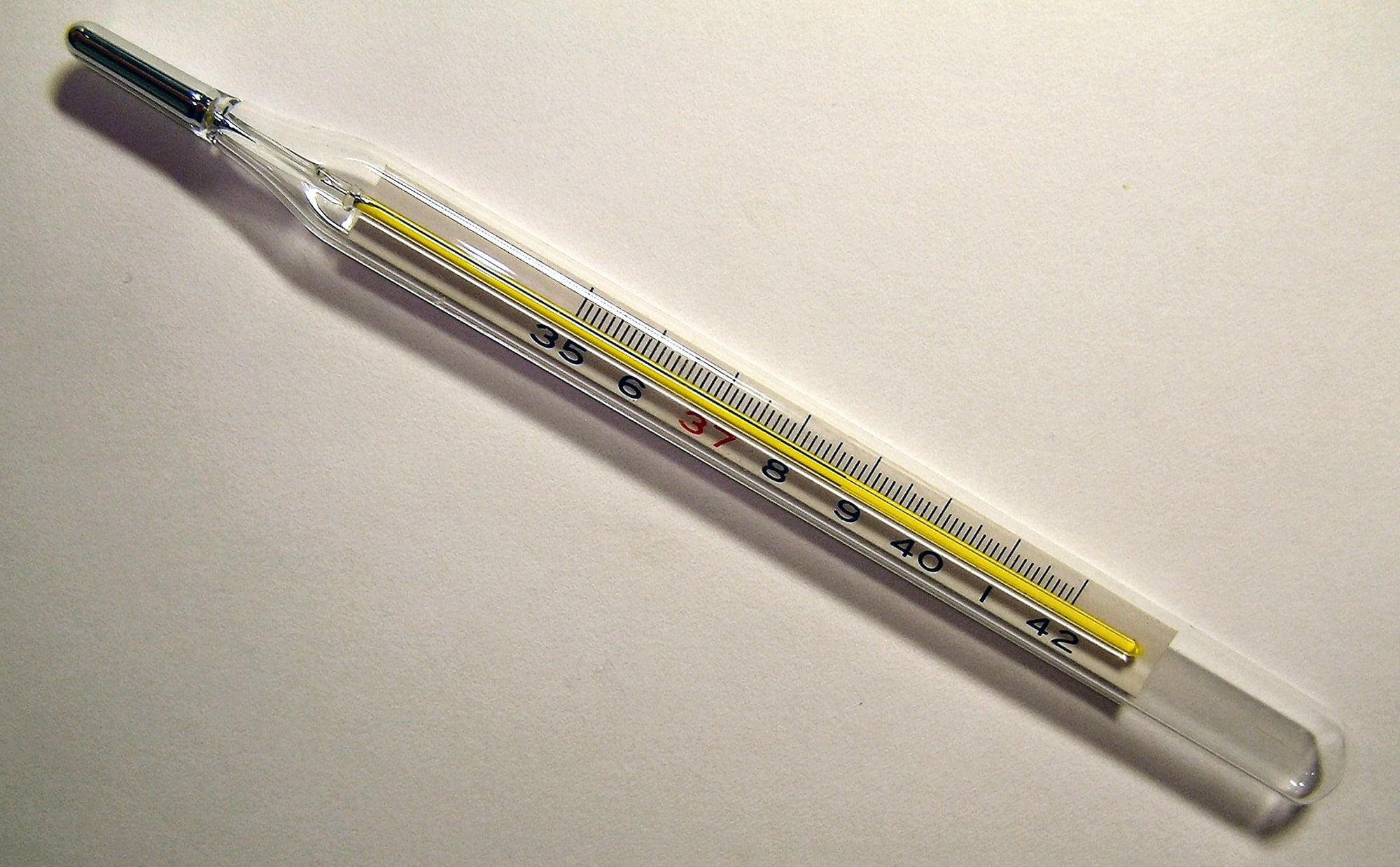
Credit: Menchi · CC BY-SA 3.0
A fever is when your body's temperature rises higher than normal. A normal human body temperature is around 98.6 degrees Fahrenheit (37 degrees Celsius). Doctors usually call it a fever when the temperature reaches 100.4 degrees Fahrenheit (38 degrees Celsius) or higher. Almost everyone gets a fever sometimes, especially when they are sick.
A fever is not really an illness by itself. It is a sign that your body is fighting something. Most fevers are caused by germs, like viruses or bacteria, that have gotten inside you. The flu, a cold, an ear infection, and a sore throat can all cause fevers. So can some shots, like the ones you get to protect against measles or COVID-19.
Here is the surprising part. Your body raises its own temperature on purpose. When white blood cells spot germs, they send out chemical signals. The signals travel to a part of your brain called the hypothalamus, which works like a thermostat. The hypothalamus turns the body's setting up. A higher temperature helps your white blood cells work faster, and it makes life harder for many germs. So a fever is actually your immune system going to war.
That is why a fever can feel so strange. While your body is heating up, you may feel cold and start to shiver. Shivering makes muscles work, and working muscles produce heat. Once your body reaches its new, higher setting, you feel hot and sweaty instead. Your skin may turn red. You might feel tired, achy, and not hungry. Your heart usually beats a little faster too.
Most fevers are safe and go away on their own in a day or two. To feel better, doctors say to drink lots of water, rest, and wear light clothes. Medicines like acetaminophen or ibuprofen can lower a fever, but they do not cure what is causing it. Kids should never take aspirin for a fever, because it can cause a rare but serious illness called Reye's syndrome.
Some fevers do need a doctor. A baby under three months old with any fever should be seen right away. Older kids should see a doctor if a fever goes above 104 degrees Fahrenheit, lasts more than three days, or comes with a stiff neck, trouble breathing, or a strange rash. The fever itself is rarely the real danger. The reason behind the fever is what matters.
Related
Last updated 2026-04-25