
Rio de Janeiro
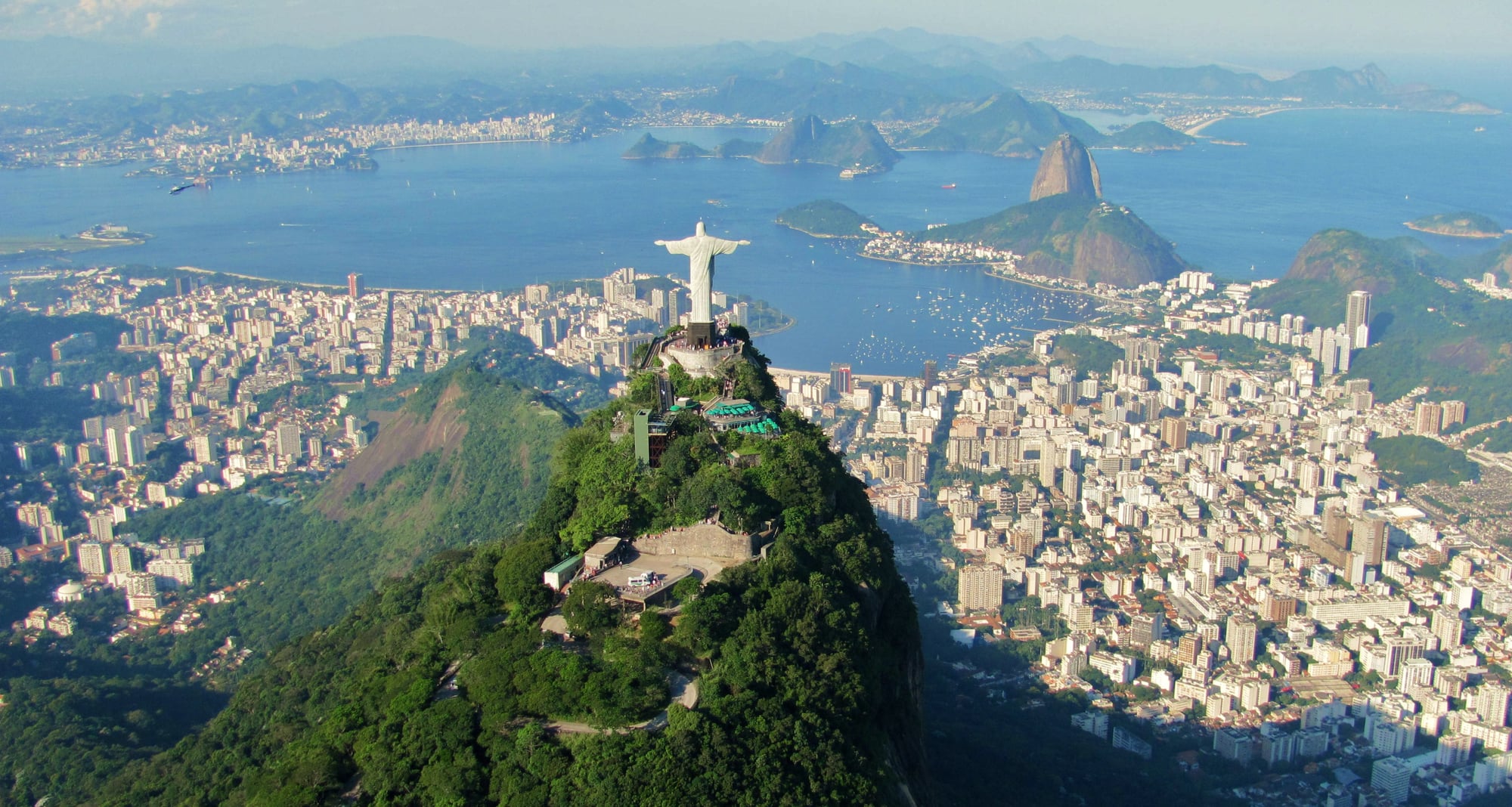
Credit: Rafael Rabello de Barros · CC BY-SA 3.0
Rio de Janeiro is a large city on the southeastern coast of Brazil. It sits on a huge bay called Guanabara Bay, where the land meets the Atlantic Ocean. About 6.8 million people live in Rio itself, and more than 13 million live in the wider area around it. That makes Rio the second-biggest city in Brazil, after São Paulo.
Rio is famous for its setting. Steep green mountains rise right out of the sea, and beaches curve between them. Two of those mountains have become symbols of the city. Sugarloaf Mountain is a rocky peak that looks like a giant loaf of old-fashioned sugar. Corcovado Mountain is topped by a 98-foot statue called Christ the Redeemer. The statue was finished in 1931 and has arms stretched out wide, as if hugging the whole city. It stands taller than a nine-story building.
Portuguese explorers sailed into Guanabara Bay on January 1, 1502. They thought the bay was the mouth of a river, so they named it Rio de Janeiro, which means "River of January." The name stuck, even after people realized there was no river there. Portugal ruled Brazil for more than 300 years, and Rio was the capital of Brazil from 1763 until 1960. Today the capital is a city called Brasília, built inland.
Rio is known around the world for Carnival. Carnival is a giant festival held every year in the days before the Christian season of Lent. The streets fill with music, dancing, costumes, and parades. The biggest parades feature samba schools, which are neighborhood groups that spend all year preparing. Each school brings thousands of dancers and drummers and a line of giant floats. More than two million people crowd the streets each day of Carnival.
The city also hosted the 2016 Summer Olympics. It was the first South American city ever to host the Games.
Life in Rio is not the same for everyone. Wealthy neighborhoods sit near beaches like Copacabana and Ipanema. But hundreds of steep hillsides are covered in favelas. Favelas are crowded neighborhoods built by people who could not afford regular housing. Rocinha, the biggest favela, holds around 100,000 people in a space smaller than New York's Central Park. The government has spent decades trying to bring better schools, water, and safety to the favelas, with mixed results.
People who live in Rio call themselves Cariocas. They are known for loving music, soccer, and the sea.
Related
Last updated 2026-04-23