
Gobi Desert
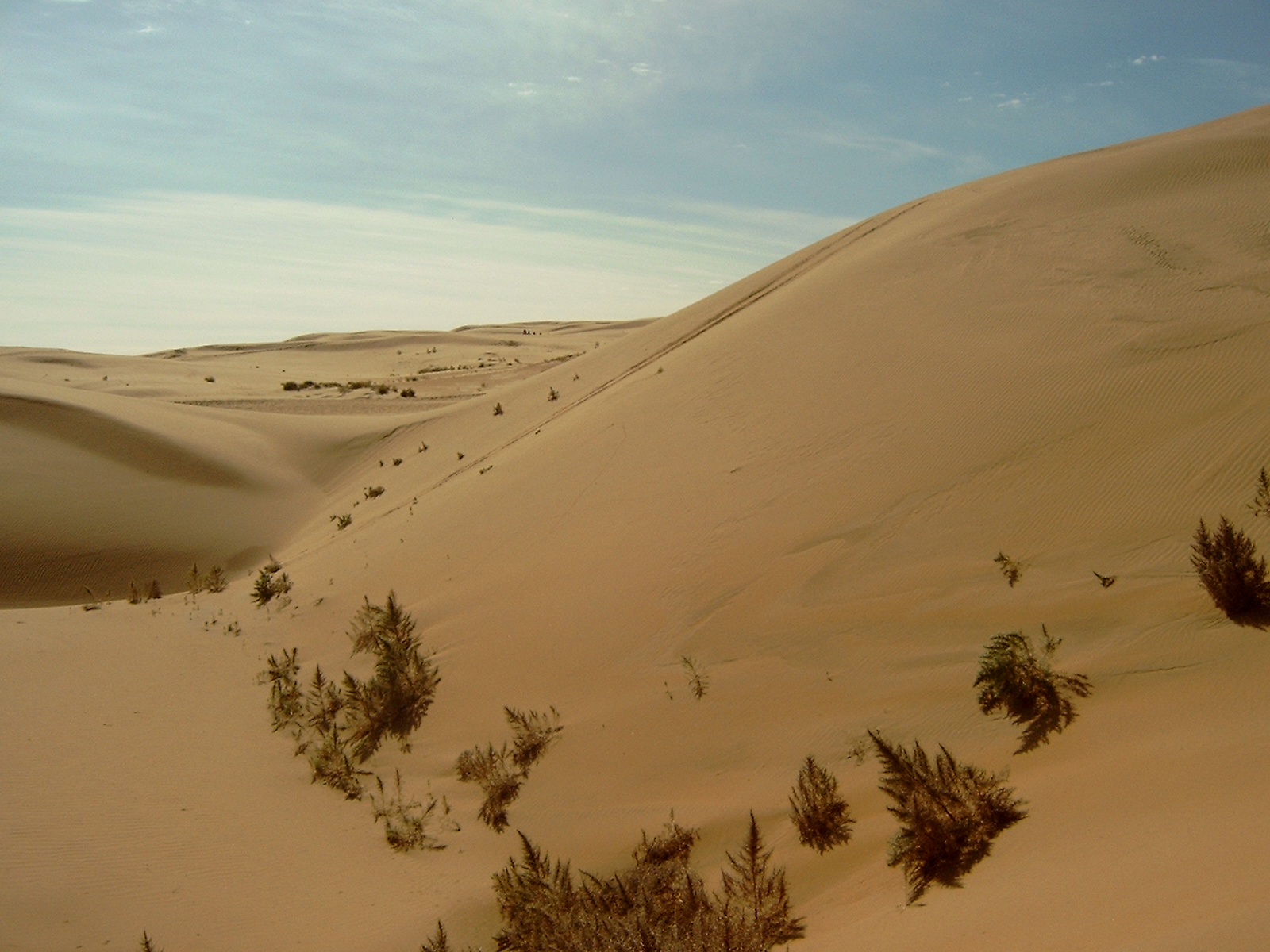
Credit: Wikimedia Commons · CC BY-SA 3.0
The Gobi Desert is a large, dry region in central Asia. It stretches across parts of northern China and southern Mongolia. The Gobi covers about 500,000 square miles, which makes it bigger than the state of Alaska. It is the fifth-largest desert in the world and the biggest in Asia.
The word "gobi" comes from a Mongolian word meaning a dry, stony place where little grows. That is a good description. Most of the Gobi is not sandy like the Sahara. It is covered in gravel, small stones, and bare rock. Only a small part of the desert has the rolling sand dunes that many people picture.
The Gobi is a cold desert, not a hot one. Summers can reach over 100 degrees Fahrenheit, but winters drop far below zero. Temperatures can swing 60 degrees in a single day. Snow sometimes falls on the dunes in winter. The desert sits on a high plateau, more than 3,000 feet above sea level, which is part of why it gets so cold.
The Gobi exists because of a wall of mountains to the south. The Himalayas block wet air from the Indian Ocean before it can reach central Asia. When clouds are stopped by tall mountains like these, the land behind the mountains stays dry. Scientists call this a rain shadow.
Few people and few plants live in the Gobi, but it is not empty. Nomadic herders called Mongols have raised sheep, goats, camels, and horses in the Gobi for thousands of years. They live in round tents called gers. Wild animals include the Bactrian camel, which has two humps, the snow leopard, the Gobi bear, and the wild ass. The Gobi bear is one of the rarest bears on Earth. Scientists think fewer than 40 are left in the wild.
The Gobi is famous for fossils. Its dry, wind-scrubbed rocks preserve dinosaur bones beautifully. Paleontologists have dug up hundreds of species here, including Velociraptor and Protoceratops. One famous fossil shows the two dinosaurs locked together in a fight that ended 75 million years ago, before the sandstorm that buried them both.
For centuries, the Silk Road passed along the edges of the Gobi. Traders on camels carried silk, spices, and ideas between China and the Mediterranean. The desert was dangerous to cross, but it connected two halves of the world. Today the Gobi is still growing. Each year, it spreads farther south into China, swallowing farmland as the climate shifts.
Related
Last updated 2026-04-23