
Waterfall
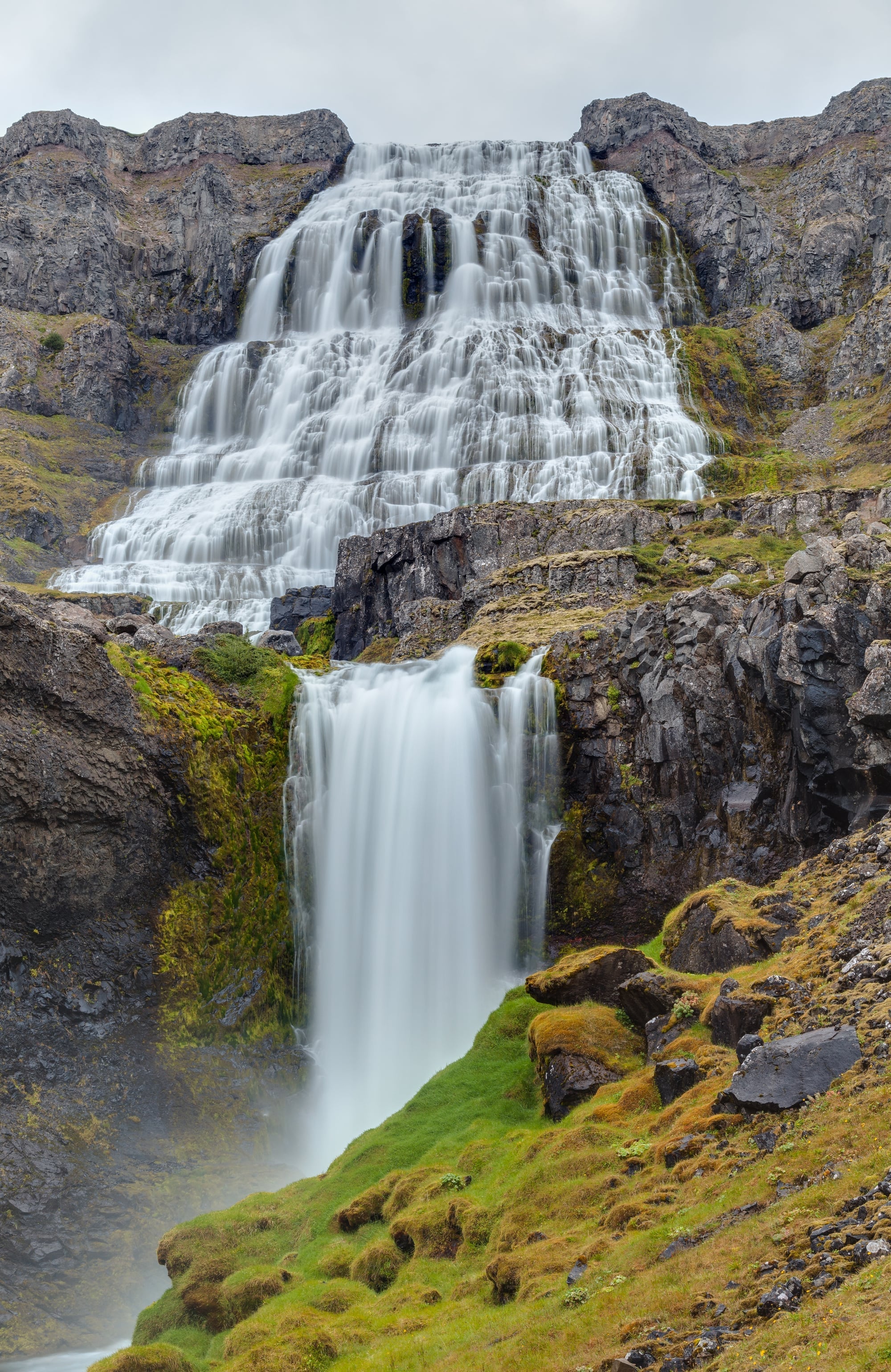
Credit: Diego Delso · CC BY-SA 4.0
A waterfall is a place where a river or stream drops suddenly from a higher level to a lower one. Waterfalls are found on every continent, including Antarctica. Some are only a few feet tall. Others plunge thousands of feet down sheer cliffs. They form wherever flowing water meets a sudden change in the height of the land.
Most waterfalls form because of erosion. Erosion is the slow wearing away of rock by water, wind, or ice. A river often flows over different kinds of rock. Some rock is hard, and some is soft. The water wears away the softer rock faster than the harder rock. Over time, a step forms in the riverbed. The water tumbles over that step, and a waterfall is born.
Once a waterfall exists, it keeps changing. The crashing water carves out a deep pool at the bottom called a plunge pool. The force of the water also chips away at the cliff behind the falls. Bit by bit, the cliff edge moves backward up the river. Niagara Falls, on the border between the United States and Canada, has moved about seven miles upstream since the last ice age ended. That works out to a few feet each year.
Waterfalls come in many shapes. A plunge waterfall drops straight down through the air. A cascade tumbles down a series of rocky steps. A horsetail stays in contact with the rock as it falls. A block waterfall is wide and flat, like a curtain of water. Niagara Falls is mostly a block. Yosemite Falls in California is a plunge.
The world's tallest waterfall is Angel Falls in Venezuela. Its water drops 3,212 feet, more than twice the height of the Empire State Building. The widest is Khone Falls in Laos, which spreads more than six miles across the Mekong River. By volume, Inga Falls on the Congo River carries more water than any other waterfall on Earth.
Waterfalls do more than look beautiful. The fast-falling water can spin huge machines called turbines, which make electricity. This is called hydroelectric power, and it provides energy to millions of homes around the world. Waterfalls also create misty habitats where rare plants and insects live, often found nowhere else on Earth.
Every waterfall is temporary. Given enough time, the water that makes it will also wear it away.
Related
Last updated 2026-04-25