
Thunderstorm
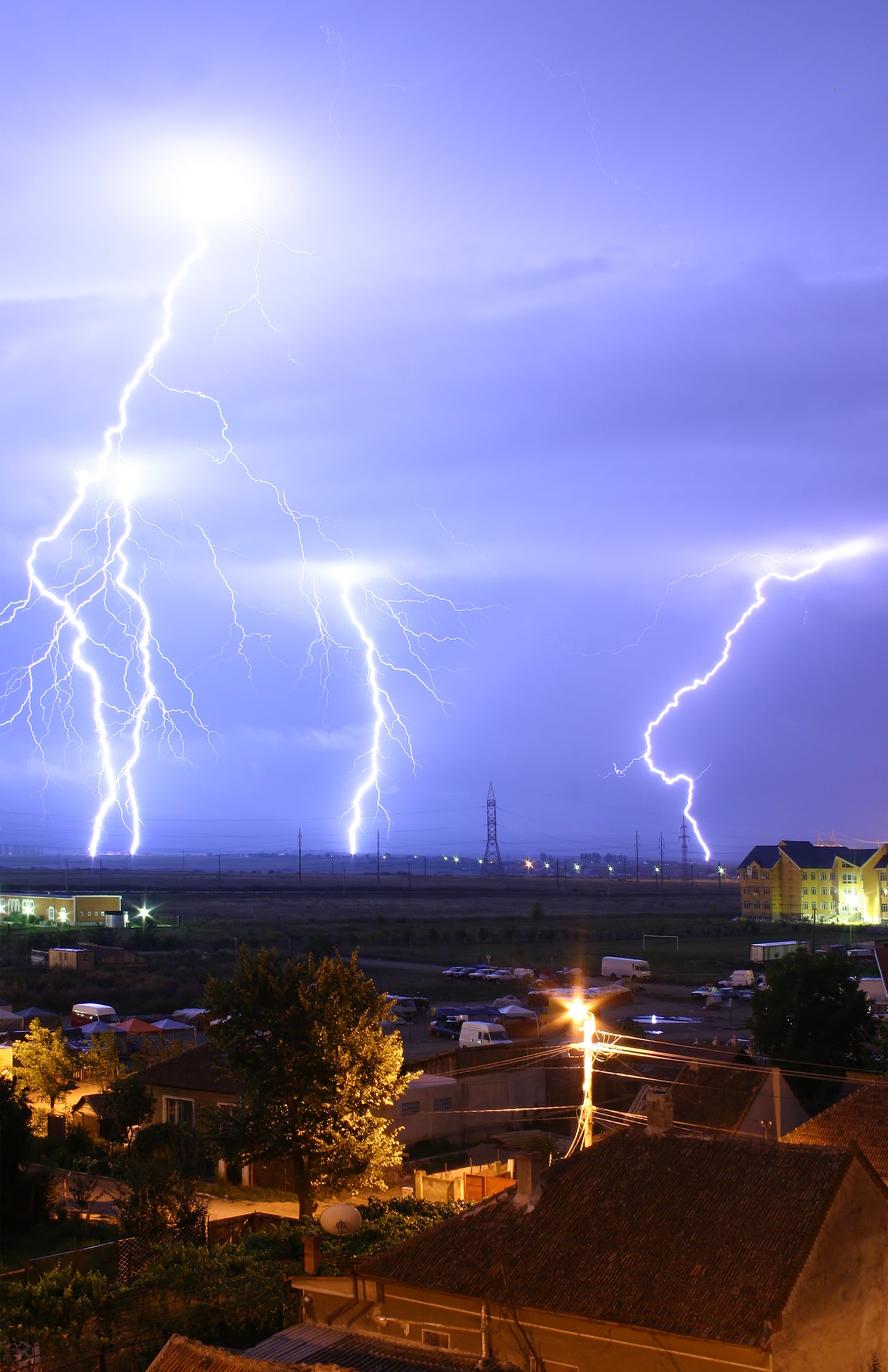
Credit: Mircea Madau · Public domain
A thunderstorm is a storm with lightning, thunder, heavy rain, and strong winds. Thunderstorms form inside tall clouds called cumulonimbus clouds. These clouds can grow more than 10 miles high, taller than Mount Everest. Thunderstorms happen all over the world, but they are most common in warm, wet places near the equator.
A thunderstorm needs three things to form. It needs warm air near the ground, cooler air higher up, and moisture in the air. When the warm, wet air rises fast into the cold air above, the water in it turns into tiny drops and ice. These drops bump and crash into each other inside the cloud. All that bumping builds up electric charges, the same kind that make a sock stick to a sweater fresh out of the dryer.
When the charge gets strong enough, it jumps. That jump is lightning. A bolt of lightning heats the air around it to about 50,000 degrees Fahrenheit, which is five times hotter than the surface of the Sun. The hot air explodes outward so fast that it makes a loud boom. That boom is thunder. Light travels much faster than sound, so you see the flash before you hear the rumble. You can guess how far away a storm is by counting the seconds between them. Every five seconds means about one mile.
Most thunderstorms last less than an hour. They form, drop their rain, and fade. But some grow into giant storms called supercells. Supercells can spin and produce hail the size of golf balls or even baseballs. The most dangerous tornadoes are born inside supercells.
Thunderstorms are dangerous, but they also help the Earth. The heavy rain waters forests and farms. Lightning pulls nitrogen out of the air and sends it into the soil, where plants need it to grow. Without thunderstorms, many places would be too dry to live in.
Scientists are still working out some details about lightning. They know how charges build up in clouds, but they are not sure exactly what triggers a single bolt to jump at one moment instead of another. Some researchers think tiny bursts of cosmic rays from space may help start the spark.
If a thunderstorm rolls in while you are outside, the safest thing is to get indoors. Stay away from tall trees, open fields, and water. The old rule still holds: when thunder roars, go indoors.
Related
Last updated 2026-04-25