
Weather
Credit: Mircea Madau · Public domain
Weather is what is happening in the air around you at any given moment. It includes things like temperature, wind, rain, snow, clouds, and sunshine. Weather can change from hour to hour, and it can be very different from one town to the next. Climate is different from weather. Climate is the pattern of weather a place gets over many years.
Almost all weather happens in the lowest layer of the atmosphere, called the troposphere. This layer reaches from the ground up to about 7 miles high, roughly the cruising height of a passenger jet. Above the troposphere, the air is too thin and too still for clouds to form.
The Sun is the engine that drives all weather. Sunlight heats the ground, and the ground heats the air above it. Warm air rises, and cool air sinks down to take its place. This movement of air is what we call wind. The Sun also lifts water from oceans, lakes, and puddles into the sky as a gas called water vapor. When water vapor rises and cools, it turns back into tiny droplets and forms clouds. When those droplets get heavy enough, they fall as rain or snow.
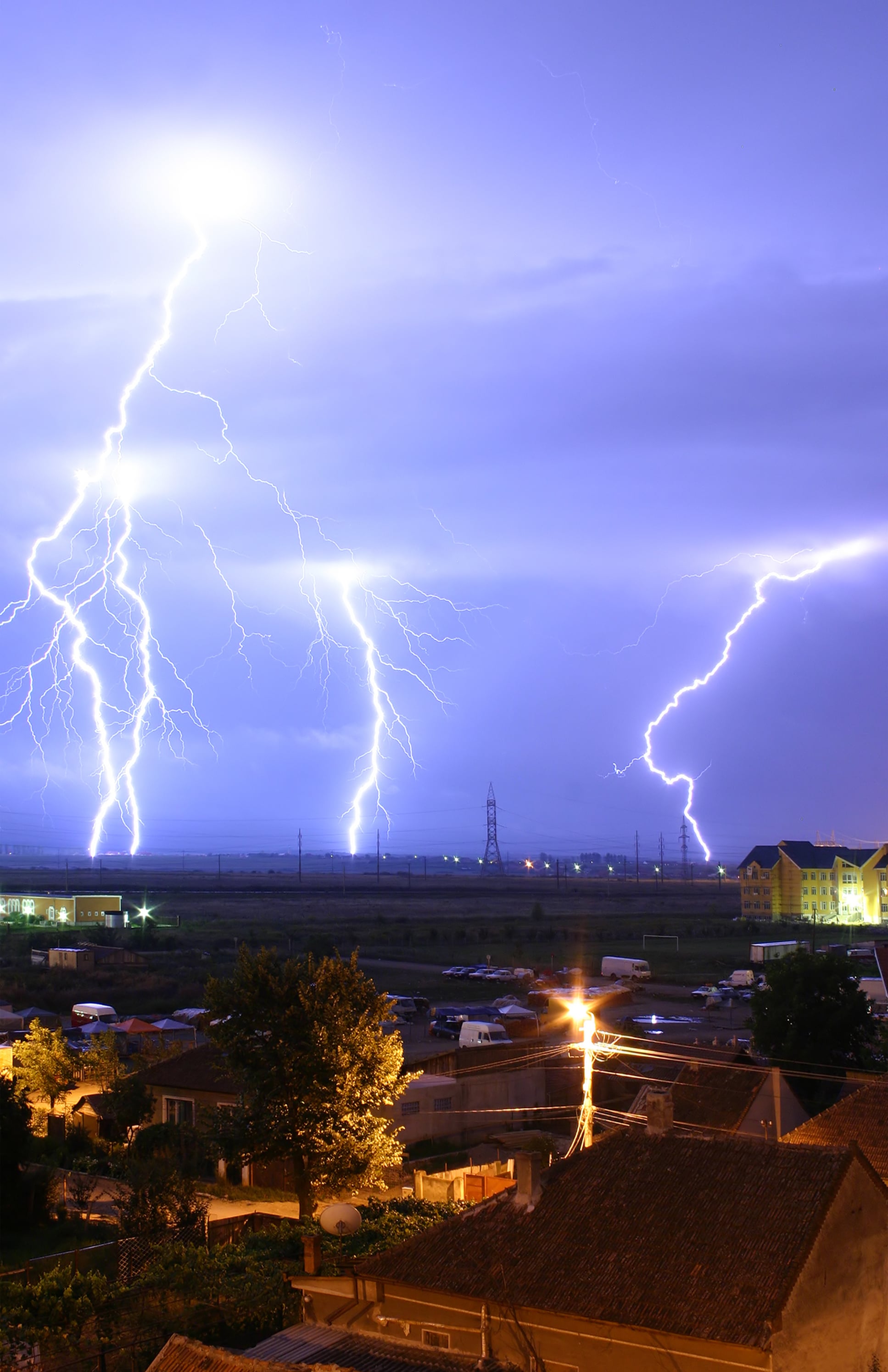
Weather can be calm or wild. A summer day might bring a light breeze and a few puffy clouds. A storm might bring lightning, hail, or winds strong enough to tear roofs off houses. Hurricanes form over warm ocean water and can stretch hundreds of miles wide. Tornadoes are smaller but spin much faster, with winds that can flip cars and snap trees in seconds.
People have always tried to predict weather. Farmers watched the sky to know when to plant. Sailors studied wind and waves to stay safe. Today, scientists called meteorologists use satellites, radar, and weather balloons to track storms and forecast what is coming. They feed all this information into computers that solve huge math problems about how the air moves.
Even with powerful computers, forecasts are not perfect. The atmosphere is what scientists call a chaotic system. A tiny change in one place can grow into a big change somewhere else a few days later. This idea is sometimes called the butterfly effect. It is why a five-day forecast is usually pretty good, but a two-week forecast often misses.
The next time rain surprises you on a sunny morning, remember that the air above your head is a giant, restless ocean. It is always moving, always mixing, and never quite the same twice.
Related
Last updated 2026-04-25