
Stream
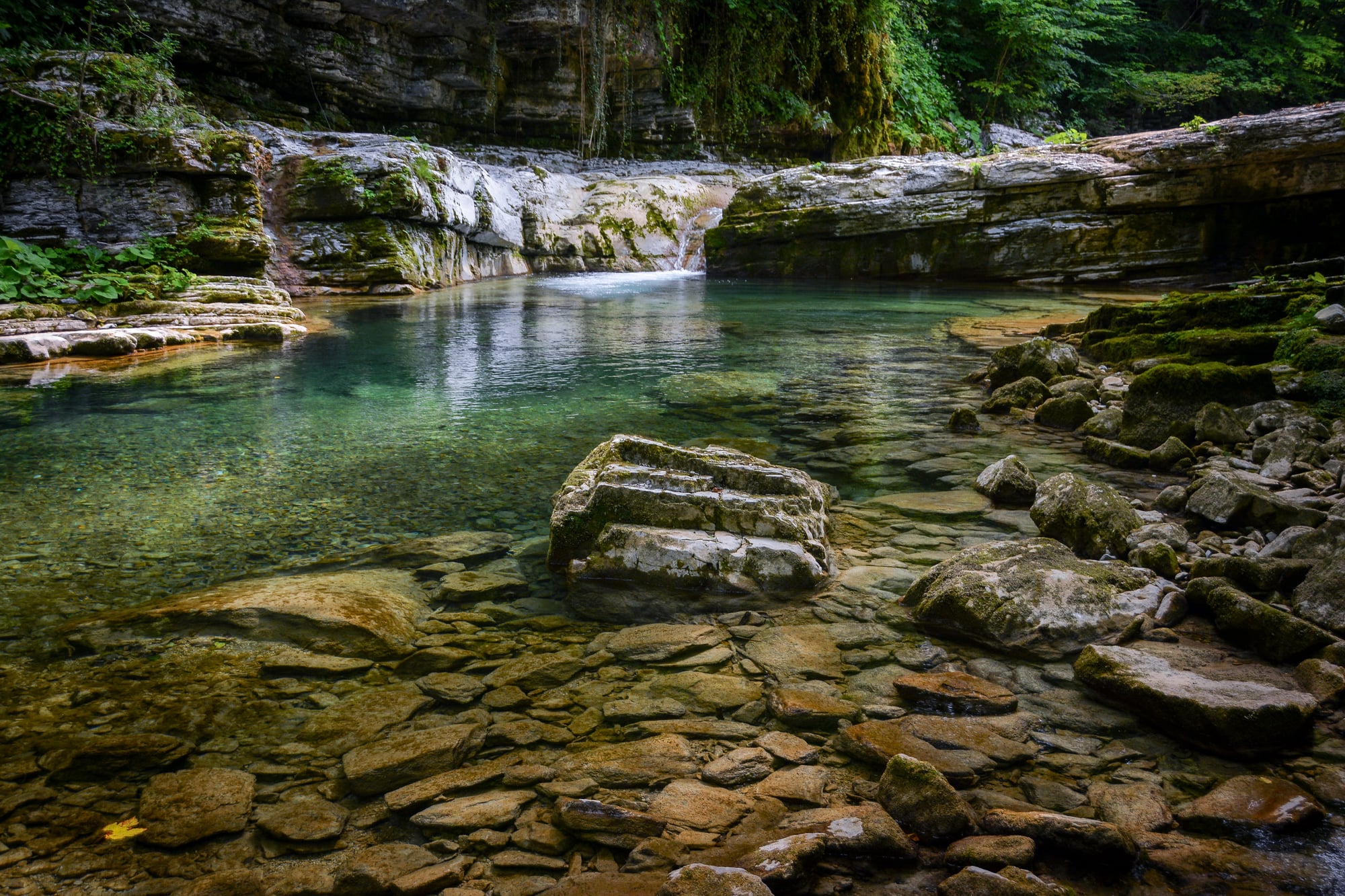
Credit: Svjetlopis, Vladimir Tadic · CC BY-SA 4.0
A stream is a small body of flowing water that moves across the land in a narrow channel. Streams are smaller than rivers but work the same way. They carry water downhill toward a larger body of water, like a river, lake, or ocean. Almost every river in the world began as a small stream high in the hills or mountains.
Streams form when water gathers on the land and starts to flow downhill. The water can come from rain, melting snow, a spring, or runoff from a lake. Gravity pulls the water toward the lowest path it can find. Over time, the moving water cuts a small channel into the soil and rock. The channel deepens and widens as more water passes through.
The place where a stream begins is called its source. The place where it joins a larger body of water is called its mouth. Many small streams often join together as they flow downhill. When two streams meet, the joining point is called a confluence. After enough streams combine, the flow becomes large enough to be called a river.
Streams shape the land as they move. The water carries tiny bits of sand, soil, and rock. These bits scrape against the streambed like sandpaper, slowly wearing it away. This process is called erosion. Over thousands of years, a small stream can carve a deep valley. The Grand Canyon began this way, with a single river working on the rock for at least 6 million years.
Streams are also full of life. Insects like mayflies and caddisflies hatch in the cold, moving water. Small fish such as minnows and trout feed on the insects. Frogs, salamanders, and crayfish hide under the rocks. Birds like herons hunt along the banks. Even the streambed itself is alive, with tiny plants and bacteria growing on every wet surface.
Scientists sort streams by size using a number called the stream order. The smallest streams, with no other streams flowing into them, are called first-order streams. When two first-order streams meet, they form a second-order stream. The Mississippi River, near its mouth, is a tenth-order stream. About 80 percent of the flowing water on Earth is in first- and second-order streams. They are tiny on a map, but together they make up most of the planet's running water.
A healthy stream tells you a lot about the land around it. Clear water, leafy banks, and lots of insects mean the soil and forests nearby are doing their job too.
Related
Last updated 2026-04-25