
Dead Sea
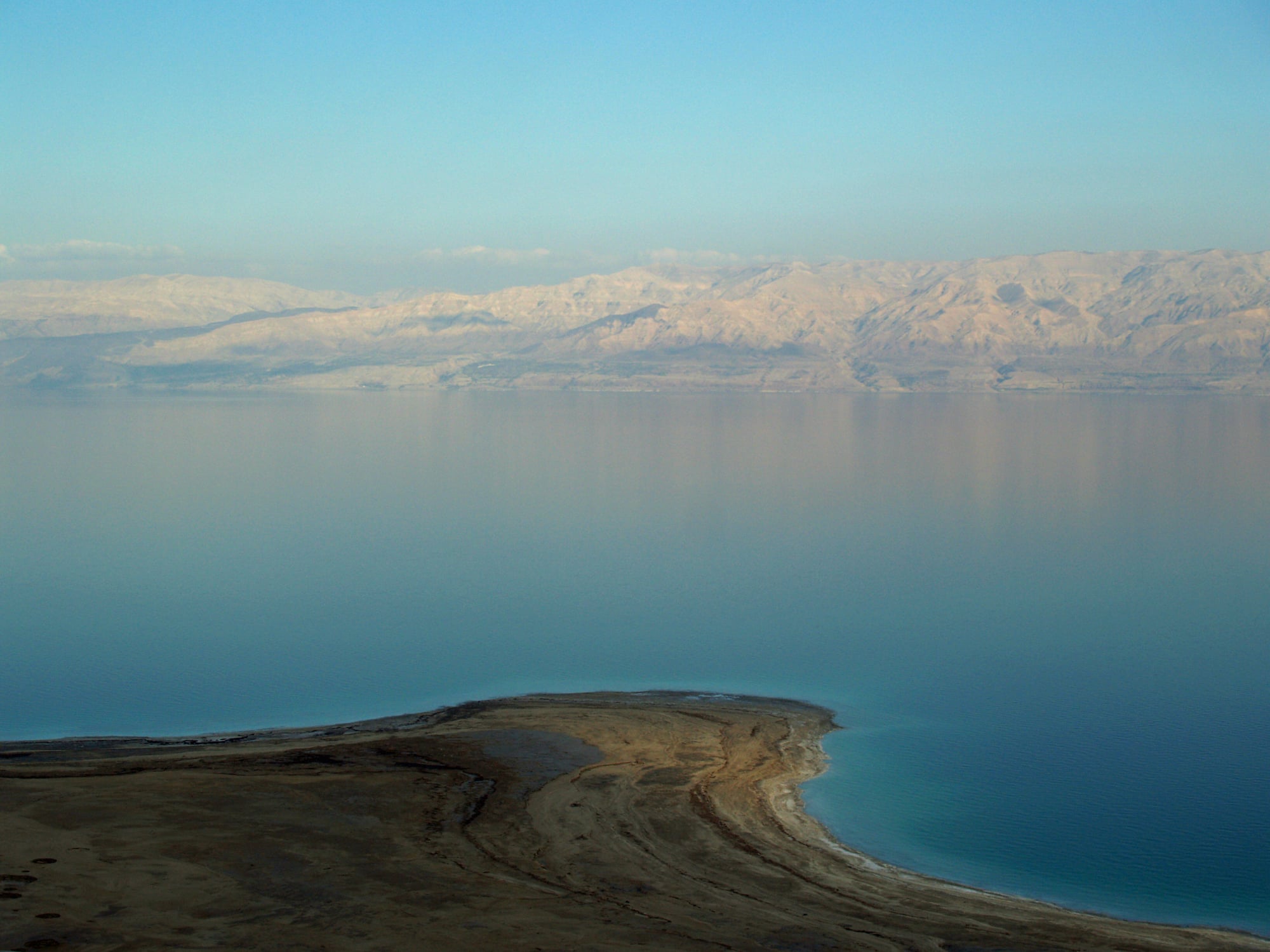
Credit: David Shankbone · CC BY-SA 3.0
The Dead Sea is a salty lake in the Middle East. It sits on the border between Israel and Jordan, with the West Bank along its northwest shore. Even though people call it a sea, it is really a lake, because no part of it connects to an ocean. The Dead Sea is one of the saltiest bodies of water on Earth and also the lowest spot on any continent.
The surface of the Dead Sea is about 1,410 feet below sea level. That is deeper below sea level than the Empire State Building is tall. Standing on its shore, you are lower than any other place you could walk to on dry land.
The water is almost ten times saltier than the ocean. Regular ocean water is about 3.5 percent salt. The Dead Sea is around 34 percent salt. That much salt makes the water very heavy and thick. It also makes the water so dense that almost anything floats in it. Swimmers do not really swim. They bob on the surface like a cork.
The lake gets its name because almost nothing lives in it. Fish carried in by the Jordan River die within minutes in the salty water. Only a few kinds of bacteria and tiny salt-loving microbes can survive. Along the shore, strange shapes of white and gray salt build up into pillars and crusts. In some places the salt looks like snow.
The Jordan River is the main source of fresh water flowing into the Dead Sea. Almost no water flows out. The hot desert sun slowly cooks the water away, leaving the salt behind. That is why the lake keeps getting saltier over time.
The Dead Sea has been famous for thousands of years. Ancient Egyptians used its black mud and asphalt to help preserve mummies. The Bible mentions it many times. In 1947, a young shepherd searching for a lost goat found clay jars hidden in a cliffside cave near the shore. Inside were the Dead Sea Scrolls, ancient writings more than 2,000 years old. They are some of the oldest copies of parts of the Hebrew Bible ever found.
Today the Dead Sea is shrinking fast. Its surface drops more than three feet every year. Countries have pulled so much water out of the Jordan River for farms and cities that very little now reaches the lake. Scientists and the nearby governments are working on plans to save it, but no one agrees yet on the best fix.
Last updated 2026-04-23