
Monsoon
Credit: w:user:PlaneMad · CC BY-SA 3.0
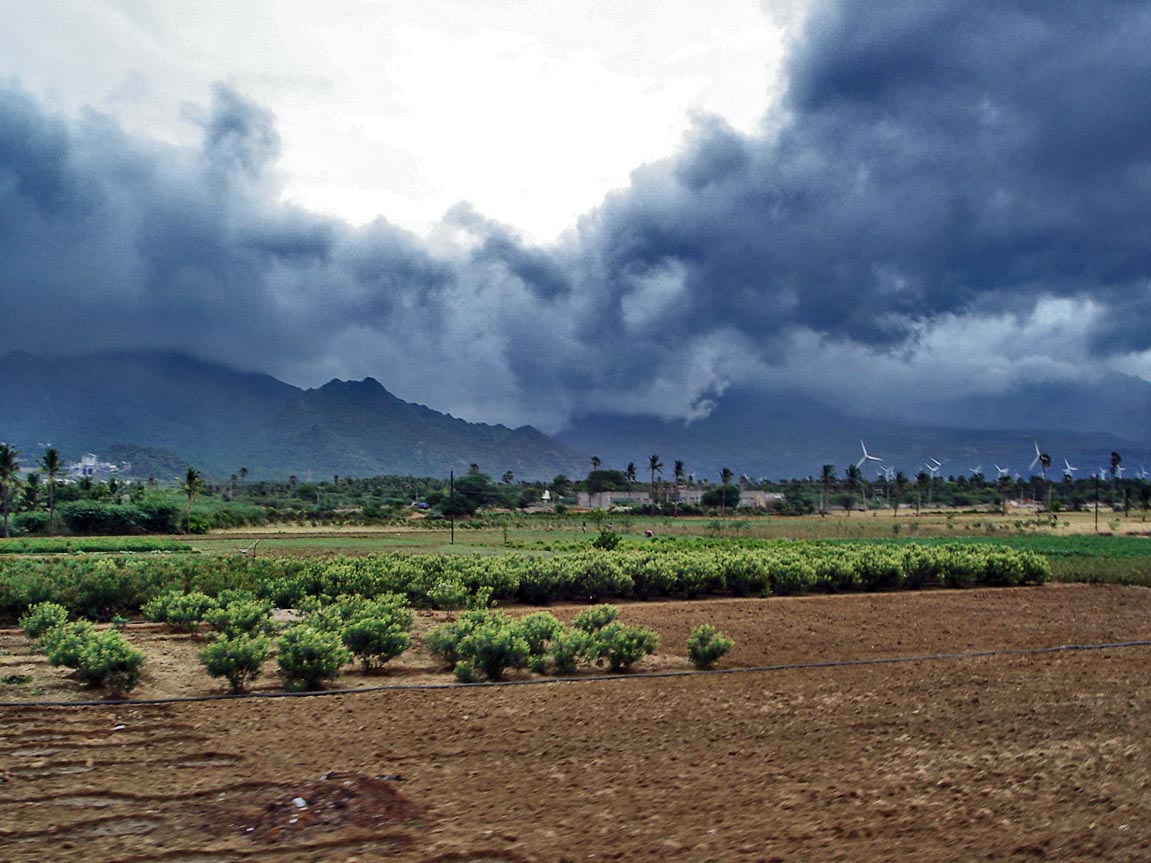
A monsoon is a wind pattern that changes direction with the seasons and brings big shifts in weather. The word is most often used for the wet and dry seasons in South Asia, Southeast Asia, and parts of Africa and Australia. During the wet monsoon, heavy rain falls almost every day for months. During the dry monsoon, the wind reverses and the rain mostly stops.
Monsoons happen because land and water heat up at different speeds. In summer, the land warms faster than the ocean. Hot air rises off the land, and cooler, wet air blows in from the sea to take its place. That sea air carries lots of moisture. When it hits the land and rises, the moisture turns into clouds and rain. In winter, the land cools faster than the ocean. The wind flips around and blows from the dry land out toward the sea, so the rain stops.
The most famous monsoon is in India. Each year, the wet season begins in early June and ends in September. In just four months, parts of India get most of their rain for the whole year. The town of Mawsynram, in northeast India, is one of the wettest places on Earth. It receives about 467 inches of rain a year, which is almost 39 feet. That is enough water to cover a four-story building.
For more than a billion people, the monsoon is life or death. Farmers depend on the rain to grow rice, wheat, tea, and cotton. If the monsoon arrives late or brings too little rain, crops fail and food gets scarce. If too much rain falls, rivers flood, and roads, homes, and farms wash away. Monsoon floods kill thousands of people in some years.
Monsoons happen on other continents too. West Africa has a monsoon that waters the farms south of the Sahara Desert. Northern Australia has a wet season from December to March. Even the southwestern United States has a smaller monsoon. Hot summer air over Arizona and New Mexico pulls in moist air from the Gulf of California, which causes booming afternoon thunderstorms.
Scientists are watching monsoons closely as the climate changes. Some studies suggest that warmer air will hold more moisture, making the wet season rainier. Other studies suggest the rains may become less reliable, with longer dry spells between heavy storms. How exactly monsoons will shift in the coming century is one of the big open questions in climate science today.
Related
Last updated 2026-04-25