
Flood
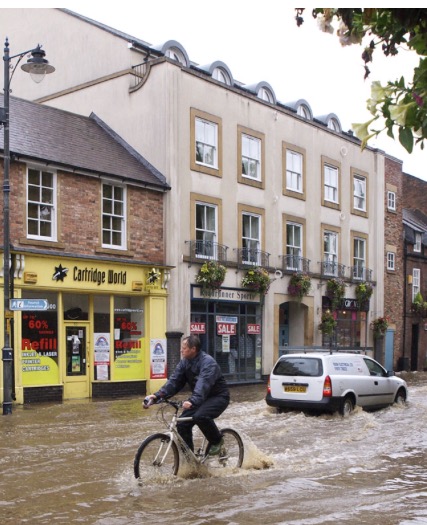
Credit: johndal · CC BY-SA 2.0
A flood is a large amount of water that covers land that is usually dry. Floods can happen almost anywhere in the world. They are one of the most common natural disasters, and they cause more damage in the United States than any other kind of weather event.
Most floods start with too much water in one place. Heavy rain is the biggest cause. When rain falls faster than the ground can soak it up, the extra water runs across fields, streets, and yards until it pools or rushes downhill. Melting snow can do the same thing in spring, especially when warm weather arrives quickly.
Rivers flood when they cannot hold all the water flowing into them. The water spills over the banks onto the flat land nearby, called the floodplain. People have farmed floodplains for thousands of years because the soil is rich. They have also lived on them, which is why river floods can be so destructive. The Yellow River in China has flooded so often, and killed so many people, that it has been nicknamed "China's Sorrow."
Floods near the ocean are different. A storm surge happens when a hurricane pushes seawater inland. The wind piles ocean water up against the coast until it floods streets and houses miles from the beach. In 2005, Hurricane Katrina's storm surge broke the walls protecting New Orleans and flooded most of the city.
The fastest and most dangerous kind of flood is a flash flood. Flash floods can rise in just a few minutes after a heavy storm. A dry desert canyon can fill with rushing water from a thunderstorm miles away, catching hikers by surprise. Just six inches of fast-moving water is enough to knock an adult off their feet. Two feet can carry away a car.
Floods are not always bad. The yearly flood of the Nile River in ancient Egypt left behind dark, rich soil that let farmers grow crops in the middle of the desert. Without those floods, ancient Egyptian civilization could not have existed. Many wetlands and forests also depend on regular flooding to stay healthy.
Scientists who study climate say floods are getting worse in many places. A warmer atmosphere holds more water, which means heavier rainstorms. Rising sea levels make storm surges reach farther inland. Cities are working on better drainage, stronger levees, and warning systems to give people more time to get to safety.
Related
Last updated 2026-04-25