
Metamorphic Rock
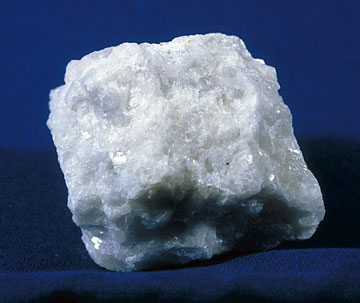
Credit: USGS · Public domain
A metamorphic rock is a rock that has been changed by heat, pressure, or both, deep inside the Earth. The word "metamorphic" comes from Greek words that mean "to change form." Every metamorphic rock began as another kind of rock first. It might have been an igneous rock, a sedimentary rock, or even an older metamorphic rock. Then heat and pressure squeezed and cooked it into something new.
This change happens far below the surface, where conditions are extreme. Temperatures can reach more than 1,500 degrees Fahrenheit. The pressure can be thousands of times greater than the air pressure you feel right now. But the rock does not melt. If it melted, it would become magma and then turn into igneous rock instead. In metamorphism, the rock stays solid. Its tiny mineral crystals slowly grow, shift, and rearrange while the rock stays in one piece.
Two famous metamorphic rocks show how this works. Limestone is a soft sedimentary rock made from old seashells and coral. When limestone is buried and heated, its crystals grow larger and lock together. It becomes marble, the smooth stone used for statues and floors. Shale, a sedimentary rock made of squashed mud, can change into slate. Slate splits into flat, thin sheets, which is why it is used for roof tiles and old chalkboards. With more heat and pressure, slate can keep changing into schist, and then into gneiss.
Many metamorphic rocks have stripes or bands. The bands form when pressure pushes from one direction and lines up the mineral crystals. Gneiss often shows beautiful light and dark stripes for this reason. Other metamorphic rocks, like marble and quartzite, do not have bands because their crystals are all the same kind.
Most metamorphic rock forms where tectonic plates crash into each other. The crashing builds mountains and pushes huge slabs of rock deep underground. Most of the rock under your feet, far below the soil, is metamorphic. Some of it is more than a billion years old.
Metamorphic rocks are part of a slow journey called the rock cycle. A grain of sand on a beach might become sandstone, then quartzite, then get pushed back to the surface and worn down into sand again. The trip can take hundreds of millions of years. The Earth is constantly recycling its own crust, and metamorphic rocks are one of the steps in between.
Related
Last updated 2026-04-25