
Mineral (Geology)
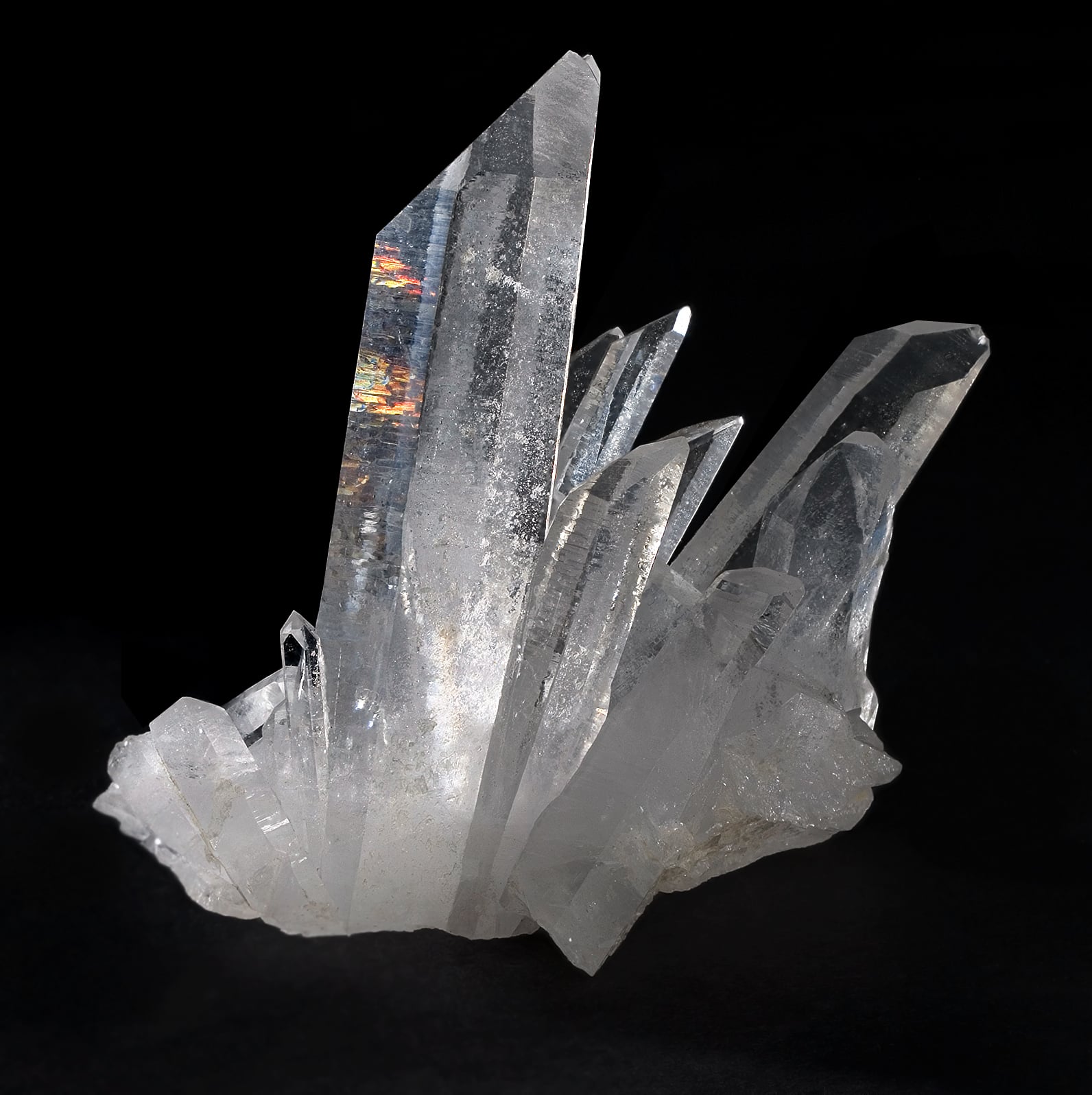
Credit: JJ Harrison (https://www.jjharrison.com.au/) · CC BY-SA 2.5
A mineral is a solid natural substance with a specific chemical recipe and a regular pattern of atoms inside it. Minerals form in the ground through natural processes, not by living things or by people. They are the basic building blocks of rocks. Most rocks you see are made of two or more minerals mixed together.
Scientists have identified more than 5,000 different minerals on Earth. Some are common, like quartz and feldspar. Others are so rare they have only been found in one or two places. Each mineral has its own fixed recipe of elements. Salt, for example, is always one part sodium and one part chlorine. Change the recipe, and you get a different mineral.
The atoms inside a mineral line up in neat, repeating patterns. This pattern is called a crystal structure. It is why many minerals grow into shapes with flat sides and sharp corners. A salt crystal forms tiny cubes. A quartz crystal forms six-sided columns ending in points. The shape comes from the way the atoms stack, all the way down at a size too small to see.
Geologists use a few simple tests to tell minerals apart. Hardness is one of the most useful. A scale called the Mohs scale ranks minerals from 1 to 10. Talc, the softest, is a 1. You can scratch it with your fingernail. Diamond, the hardest, is a 10. It can scratch almost anything else. Geologists also look at color, shine, and the color of the powder a mineral leaves when scraped on a tile. That powder color is called its streak.
Minerals matter far beyond science class. Iron from the mineral hematite becomes steel for buildings, cars, and bridges. Aluminum comes from a rock called bauxite. Copper, gold, and silver are pulled out of the ground as minerals too. Even the inside of your phone holds tiny amounts of rare minerals with names like coltan and lithium. Without mining, modern technology would not exist.
A few minerals are also famous for their beauty. Diamonds, rubies, emeralds, and sapphires are all minerals. When a mineral grows large, clear, and colorful enough, people call it a gemstone and cut it for jewelry. Most diamonds formed more than a billion years ago, deep underground, under heat and pressure greater than anything at the surface. The shiny stone in a ring traveled a long way to get there.
Related
Last updated 2026-04-25