
Wedding Traditions
Credit: Yogita · CC BY 3.0
A wedding is a ceremony where two people get married, and a wedding tradition is a custom that families and cultures repeat at these ceremonies. Almost every culture in the world has weddings. The clothes, foods, music, and rituals look very different from place to place, but the basic idea is the same. Two people, their families, and their community gather to mark the start of a new family.
In many Western countries, a bride often wears a long white dress. This tradition is newer than most people think. It became popular in 1840, when Queen Victoria of Britain wore a white gown at her wedding. Before that, brides usually wore their best dress in any color. The groom often wears a suit or tuxedo. The couple exchanges rings, says vows, and shares a first kiss in front of guests.
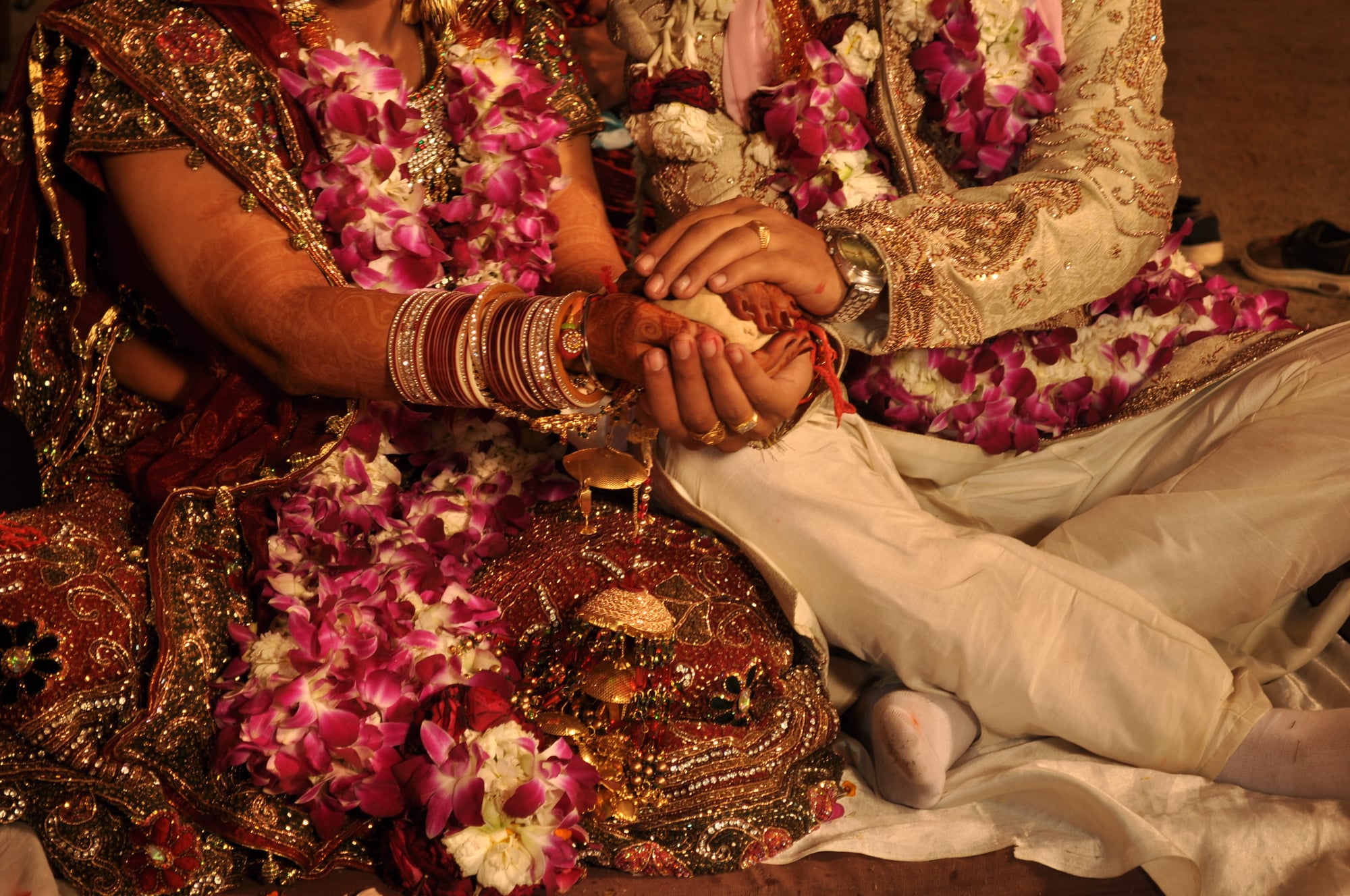
Other cultures use very different colors. In China and India, red is the traditional wedding color. Red stands for luck, joy, and good fortune. A Chinese bride may wear a red silk dress called a qipao. An Indian bride often wears a red sari covered in gold thread. Her hands and feet are painted with detailed patterns in a reddish-brown dye called henna. Indian weddings can last three days or more, with music, dancing, and dozens of dishes.
Many traditions involve food shared between the couple. At Jewish weddings, the couple stands under a cloth canopy called a chuppah. At the end of the ceremony, the groom stomps on a glass wrapped in cloth, and guests shout "Mazel tov!" which means "good luck." At Japanese Shinto weddings, the couple sips rice wine called sake from three small cups. At many African weddings, the families "jump the broom" together, a custom that traveled with enslaved Africans to the Americas and is still practiced today.
Some traditions are about luck. An old English rhyme says a bride should carry "something old, something new, something borrowed, something blue." In Greece, guests pin money to the couple's clothes during the dance. In Mexico, a long rope or rosary called a lazo is wrapped around both partners in a figure eight to symbolize their joined lives.
Weddings keep changing. People marry later in life now than they did 100 years ago. Same-sex weddings are legal in dozens of countries. Many couples mix traditions from different cultures, especially when the partners come from different backgrounds. The clothes and rituals shift with each generation, but the gathering itself, family and friends witnessing a promise, has stayed remarkably steady for thousands of years.
Related
Last updated 2026-04-26