
Family
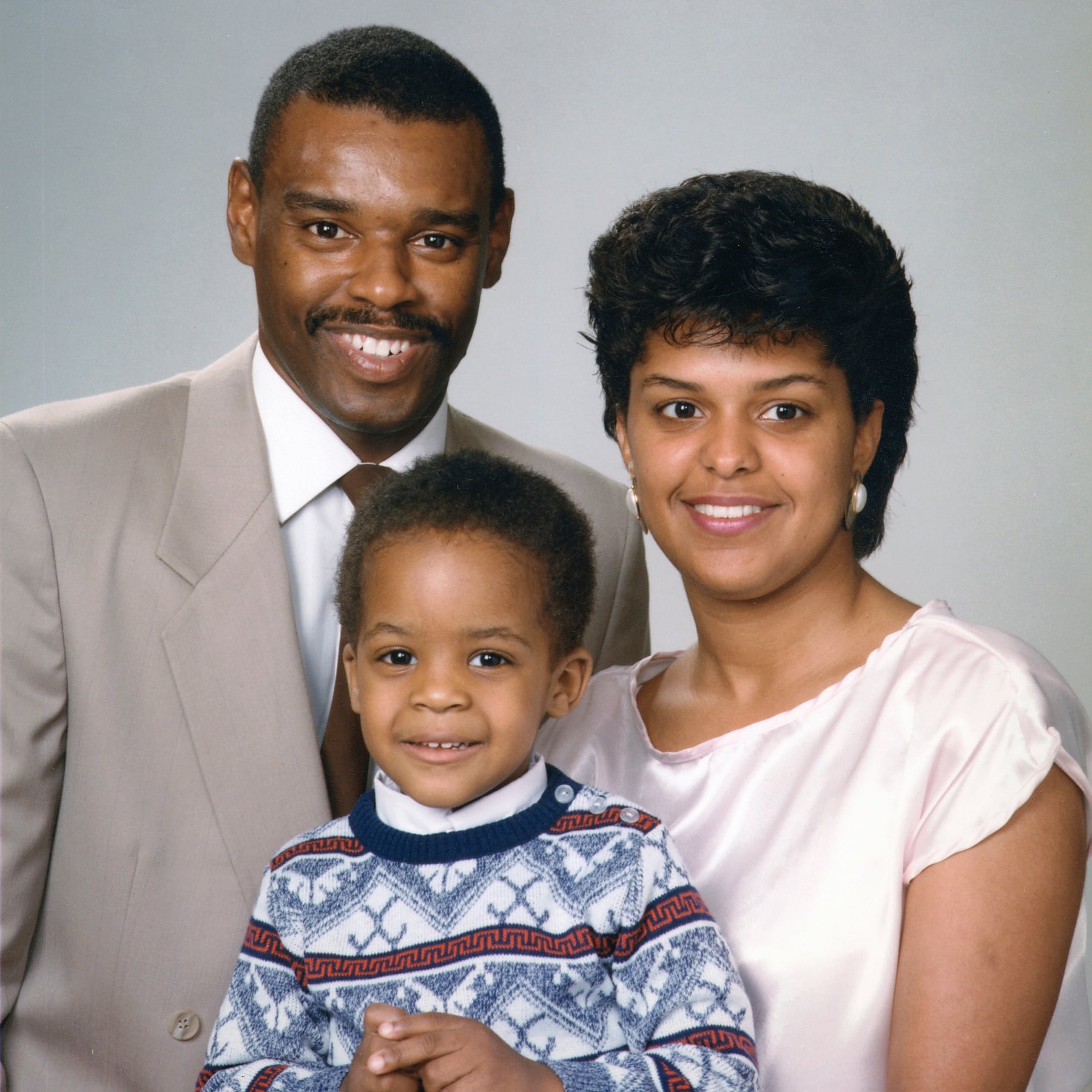
Credit: Bill Branson (Photographer) · Public domain
A family is a group of people connected by birth, marriage, adoption, or strong bonds of care. Families exist in every culture on Earth. They are one of the oldest ways humans have organized their lives. Most people are born into a family, and most people grow up to help build a family of their own.
Families come in many shapes. A nuclear family usually means two parents and their children living together. An extended family adds grandparents, aunts, uncles, and cousins. Some children live with one parent. Some live with two moms or two dads. Some live with grandparents, foster parents, or adoptive parents. All of these are real families. What ties a family together is not always blood. Care, time, and trust matter just as much.
In many parts of the world, several generations live in one home. This is common in much of Asia, Africa, and Latin America. In the United States and parts of Europe, smaller households are more common. Families have changed a lot over time. Two hundred years ago, an average American family had seven or eight children. Today, the average is about two. Families are also smaller in Japan, China, and most of Europe.
Family members usually share a last name, but not always. They may share a home, meals, holidays, and traditions. They may share a religion or a language. Many also share inherited traits like eye color, hair color, or height. These traits are passed down through tiny instructions called genes. About half of your genes come from each biological parent. That is why kids often look a little like their parents and a little like themselves.
Different cultures have different rules about family. In some places, the oldest male is the head of the household. In others, women lead. Some cultures expect kids to live near their parents their whole lives. Others expect kids to move out and start their own homes as adults. The Mosuo people of southern China have a tradition where children are raised mostly by their mothers and uncles, and fathers live in a different house. There is no single "right" way to be a family.
Scientists who study human history believe families have existed for at least 100,000 years, longer than any city, country, or written language. Tools change. Borders change. Languages disappear. But almost everywhere humans have ever lived, people have gathered into small groups to feed each other, protect each other, and raise the next generation.
Related
Last updated 2026-04-26