
Traditional Dance
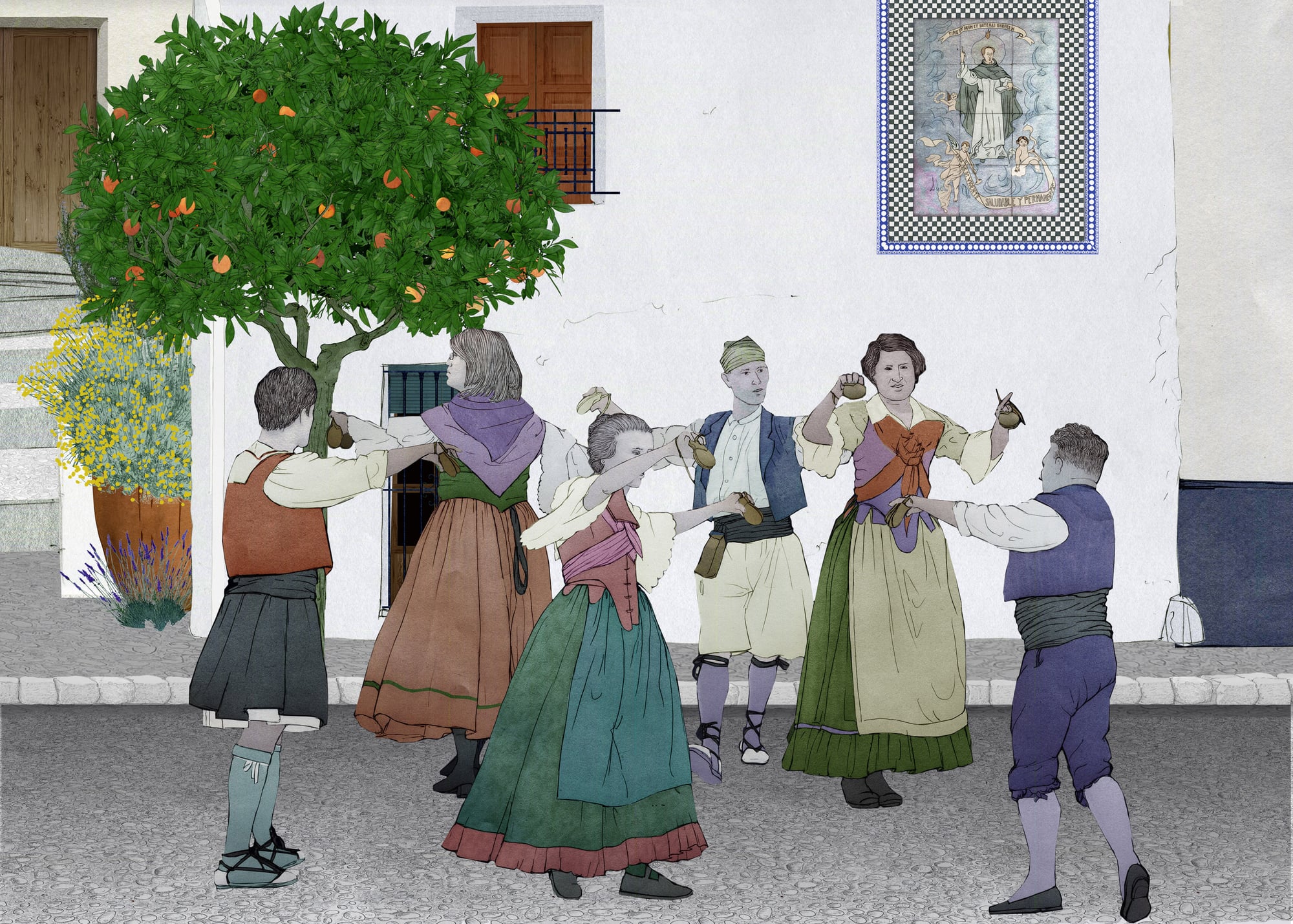
Credit: Andrés Marín Jarque · CC BY-SA 3.0
A traditional dance is a dance that has been passed down within a culture for many generations. Almost every group of people on Earth has its own traditional dances. Some are danced at weddings or holidays. Others are danced to tell stories, honor ancestors, or ask the gods for rain, good crops, or victory in battle. The steps, music, and costumes are usually taught from older dancers to younger ones.
Traditional dances are very old. People were dancing long before they were writing. Cave paintings in India and Africa show dancers from more than 9,000 years ago, before the first cities were built. Ancient Egyptians danced at funerals. Ancient Greeks danced in plays and at festivals for their gods. Almost every culture invented dance on its own.
The dances look different all over the world. In Ireland, step dancers keep their arms straight at their sides and tap out fast rhythms with their feet. In Spain, flamenco dancers stomp, clap, and snap to guitar music. In Japan, dancers in kimonos move slowly and carefully through bon odori, a summer dance for honoring family members who have died. In Hawaii, hula dancers use their hands to act out the words of a song. In Mexico, the jarabe tapatío, also called the Mexican hat dance, is danced by couples around a wide hat on the floor.
Some traditional dances tell long stories. Indian classical dances like Bharatanatyam use hundreds of hand shapes, called mudras, to act out tales from Hindu mythology. A skilled dancer can show a flower opening, a deer running, or a god shooting an arrow, all without saying a word.
Other traditional dances belong to whole communities, not just trained performers. The hora is danced in a big circle at Jewish weddings, with everyone holding hands. Many Native American powwows include round dances where anyone can join in. The Maasai people of Kenya and Tanzania have a famous jumping dance, called adumu, where young men leap straight up to show their strength.
Traditional dances are also alive. They keep changing. Hip-hop, which started in New York City in the 1970s, is now danced everywhere and is becoming a tradition of its own. When people move to new countries, they bring their dances with them, and new versions grow.
The next time you tap your foot to a song without thinking, you are doing something humans have done for thousands of years.
Last updated 2026-04-26