
Kwanzaa
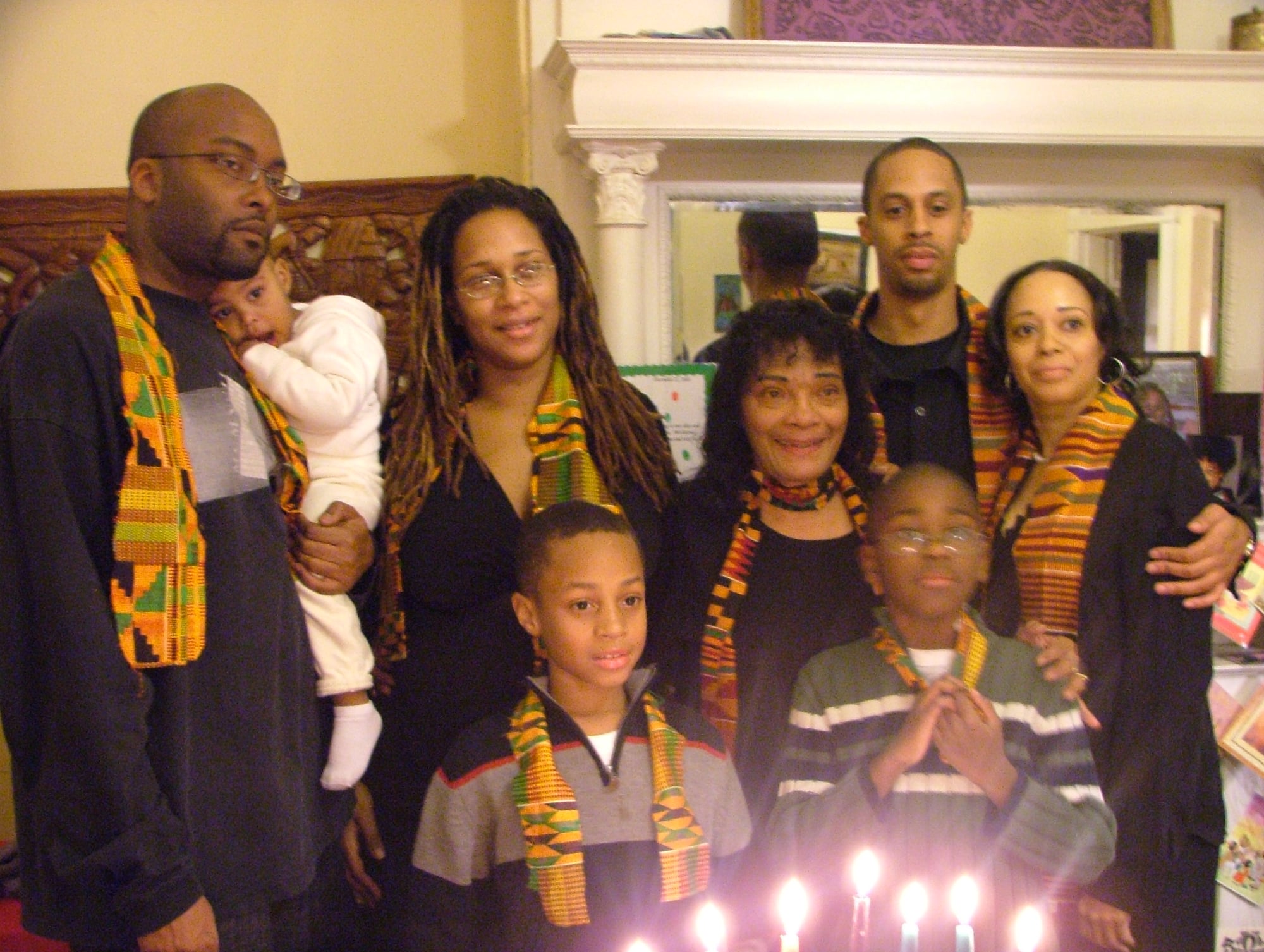
Credit: rashida s. mar b. from Baltimore, USA · CC BY-SA 2.0
Kwanzaa is a week-long holiday that celebrates African American culture, family, and community. It runs from December 26 to January 1 each year. The name comes from a phrase in Swahili, an East African language. Matunda ya kwanza means "first fruits." Kwanzaa is celebrated mostly in the United States, but also by people of African descent in other countries.
Kwanzaa is a young holiday. It was created in 1966 by a professor named Maulana Karenga. He worked at California State University, Long Beach. The 1960s were a time of struggle for civil rights in the United States. Karenga wanted to give African Americans a holiday that honored their African roots. He looked at harvest festivals from across Africa and pulled ideas from many of them. Kwanzaa is not a religious holiday. People of any faith can celebrate it.
The heart of Kwanzaa is seven values called the Nguzo Saba. There is one value for each day. They are unity, self-determination, working together, sharing, purpose, creativity, and faith. Each night, families gather to talk about that day's value and what it means for their lives.
A special candle holder called a kinara holds seven candles. The kinara sits on a mat woven from straw. One candle is black, three are red, and three are green. These are the colors of the Pan-African flag. Black stands for the people, red for their struggle, and green for the future. On the first night, the family lights the black candle in the middle. Each night after, they light one more, taking turns between the red and green sides.
Other items go on the mat too. Families place fruits and vegetables to remember the harvest. They add ears of corn, one for each child in the family. They include a special cup that everyone drinks from to honor their ancestors. On the sixth night, December 31, families hold a big feast called Karamu. They cook African and African American foods, play music, dance, and tell stories. On the last day, children may receive small gifts. The gifts are usually books or handmade items, things meant to teach or last.
Today, millions of people celebrate Kwanzaa in some form. Some celebrate it on its own. Others celebrate it alongside Christmas or Hanukkah. For only being around since 1966, Kwanzaa has spread quickly, and its message of unity reaches a new group of children each year.
Related
Last updated 2026-04-26