
Velociraptor
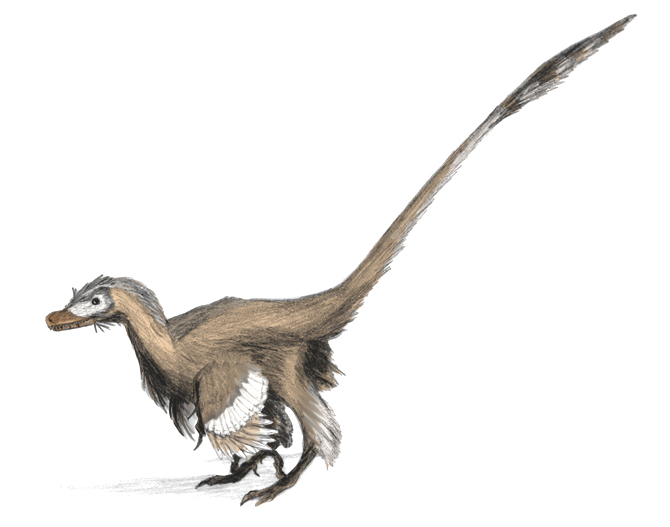
Credit: Matt Martyniuk · CC BY 2.5
Velociraptor was a small, fast dinosaur that lived about 75 million years ago. It lived in what is now Mongolia and northern China, millions of years before humans existed. Its name means "swift thief" in Latin. The first Velociraptor fossil was discovered in the Gobi Desert in 1923.
The movies have given most people the wrong idea about this animal. A real Velociraptor was about the size of a large turkey. It stood around 1.5 feet tall at the hip and measured about 6 feet long from nose to tail. It weighed around 30 pounds. The tall, scaly, human-sized creatures in the Jurassic Park films are much bigger than any Velociraptor ever was.
Velociraptor walked on two long back legs and had short arms with sharp claws. Its most famous weapon was a curved claw on the second toe of each foot. This claw could be almost 3 inches long. Scientists once thought it was used to slash prey. Newer research suggests Velociraptor used it more like a modern hawk, to pin smaller animals down while it ate them. Its long, stiff tail helped it balance as it ran and turned.
The biggest surprise from recent research is that Velociraptor had feathers. In 2007, scientists found small bumps on a fossil arm bone. Modern birds have these same bumps, which anchor long wing feathers. Velociraptor could not fly, but its arms looked more like the wings of a bird than the arms of a lizard. Many paleontologists now draw it covered in feathers, the way you would draw a scary, toothy hawk.
Feathers are part of a bigger story. Scientists agree that birds evolved from small meat-eating dinosaurs like Velociraptor. In other words, birds are living dinosaurs. The chicken in a farmyard and the sparrow at a birdfeeder are distant cousins of Velociraptor.
One of the most famous fossils in the world is called the "Fighting Dinosaurs." Found in Mongolia in 1971, it shows a Velociraptor and a plant-eating dinosaur called Protoceratops locked together in battle. The Velociraptor has its claw stuck in the Protoceratops, and the Protoceratops has the Velociraptor's arm in its beak. A sandstorm or collapsing dune seems to have buried them alive, freezing the fight in stone for 75 million years.
Velociraptor died out along with most other dinosaurs at the end of the Cretaceous Period, about 66 million years ago. A giant asteroid struck Earth and changed the climate so quickly that most large animals could not survive. The small feathered dinosaurs that lived on became the birds we see today.
Last updated 2026-04-22