
Rhinoceros
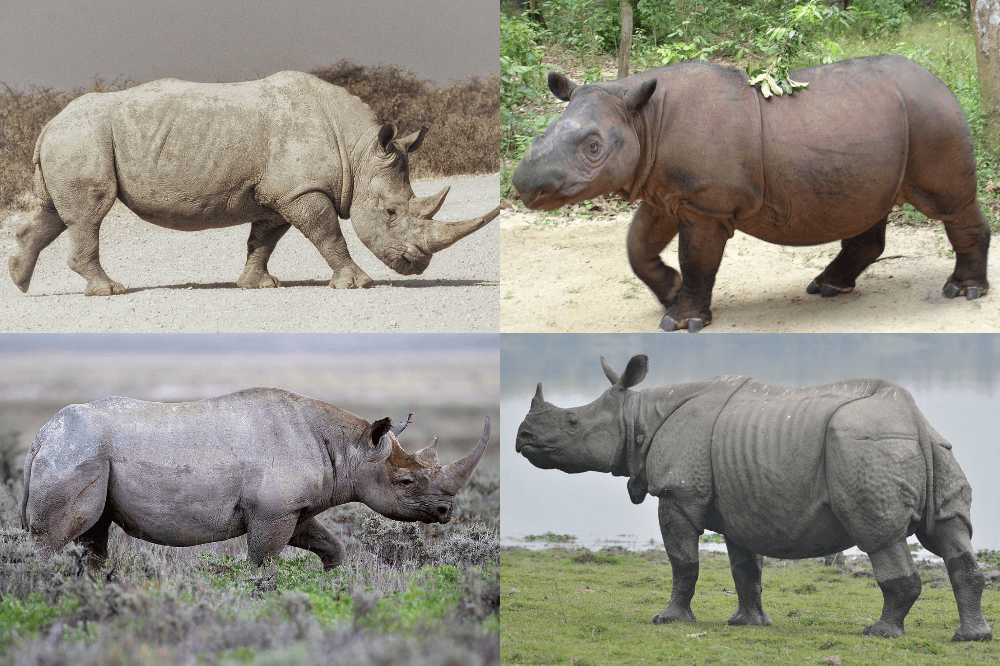
Credit: PaleoMatt · CC BY-SA 4.0
A rhinoceros is a large plant-eating mammal with thick gray skin and one or two horns on its nose. Rhinos live in parts of Africa and Asia. There are five kinds alive today: the white rhino, the black rhino, the Indian rhino, the Javan rhino, and the Sumatran rhino. The word "rhinoceros" comes from two Greek words that mean "nose horn."
Rhinos are some of the biggest animals on land. Only elephants are bigger. A white rhino can weigh 5,000 pounds, about as much as a small pickup truck. Its head alone can weigh close to 1,000 pounds. Even a newborn rhino weighs around 100 pounds at birth.
Rhino horns grow from the skin, not from the skull. They are made of keratin, the same stuff as your fingernails. If a horn breaks off, it slowly grows back. A big rhino horn can be more than three feet long.
Rhinos eat only plants. White rhinos graze on grass with wide, flat lips. Black rhinos use a pointy upper lip like a finger to pull leaves off bushes. A rhino can eat more than 100 pounds of plants in a day. It drinks from rivers and water holes, and it loves to wallow in mud. The mud dries on its skin and works like sunscreen and bug spray.
Rhinos have poor eyesight. A rhino cannot see a person standing still 100 feet away. But its hearing and sense of smell are excellent. Those large ears swivel around like satellite dishes to catch sounds from every direction. When a rhino is surprised, it sometimes charges first and looks later. A charging rhino can run 30 miles per hour, faster than any human.
Rhinos are in serious trouble. Four of the five kinds are endangered. The Javan rhino is down to about 75 animals, all in one park in Indonesia. The northern white rhino is nearly gone. Only two are left in the world, and both are female. The main reason is poaching. Criminals kill rhinos for their horns, which are sold illegally in some countries because people wrongly believe the horns cure diseases. Science has shown that rhino horn has no medicine in it at all.
Rhinos have been around for a long time. Their ancestors roamed Earth more than 50 million years ago, long before humans existed. One extinct cousin, the woolly rhino, lived in the last Ice Age and had a coat of shaggy hair. Today, park rangers, scientists, and conservation groups work hard to protect the rhinos that remain.
Related
Last updated 2026-04-22