
Elephant
Credit: Muhammad Mahdi Karim Facebook The making of this document was supported by Wikimedia CH. (Submit your project!) For all the files concerned, please see the category Supported by Wikimedia CH. العربية ∙ বাংলা ∙ čeština ∙ Deutsch ∙ English ∙ Esperanto ∙ español ∙ français ∙ galego ∙ हिन्दी ∙ magyar ∙ italiano ∙ 日本語 ∙ македонски ∙ Nederlands ∙ português do Brasil ∙ rumantsch ∙ русский ∙ sicilianu ∙ slovenščina ∙ தமிழ் ∙ українська ∙ 中文 ∙ +/− · GFDL 1.2
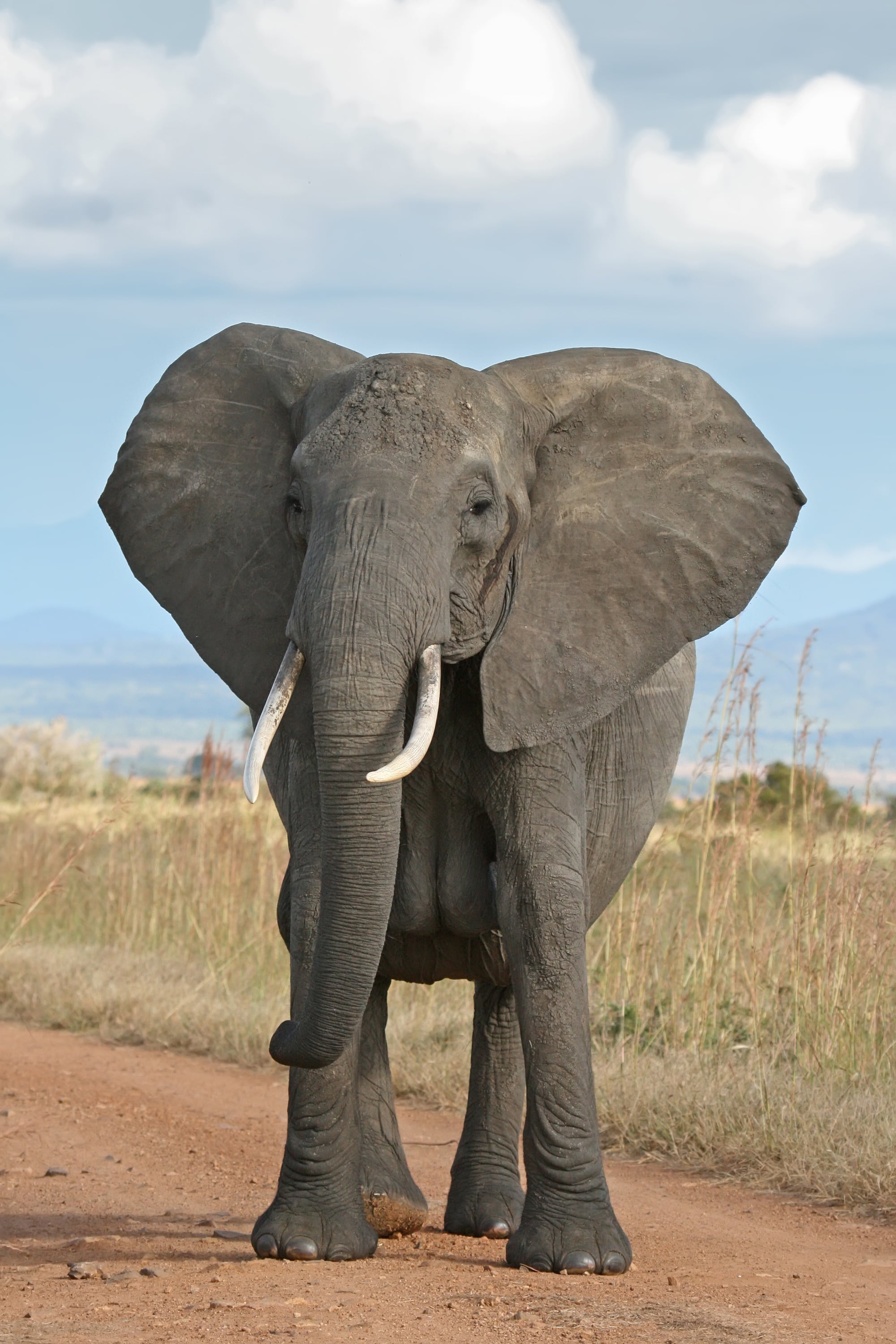
The elephant is the largest land animal on Earth. It is a mammal with thick gray skin, huge ears, long ivory tusks, and a long nose called a trunk. Three species of elephant live today. Two live in Africa: the African bush elephant and the smaller African forest elephant. The third, the Asian elephant, lives in parts of India and Southeast Asia.
Elephants are huge. An African bush elephant can weigh up to 14,000 pounds, about the weight of four small cars. The biggest ones stand 13 feet tall at the shoulder, taller than a basketball hoop. Even a newborn baby elephant weighs around 200 pounds at birth.
The trunk is the elephant's most amazing body part. It works as a nose, an arm, a hand, a straw, and a snorkel all in one. An elephant uses its trunk to breathe, smell, grab leaves, pull down branches, and suck up water to spray into its mouth. The tip of the trunk has finger-like bumps that can pick up something as small as a single blueberry.
Elephants eat only plants. A grown elephant can eat 300 pounds of grass, bark, leaves, and fruit every day. It spends up to 16 hours a day feeding. All that eating means elephants also drop huge amounts of dung, which spreads seeds across the land and helps new plants grow.
Elephants live in close family groups led by the oldest female, called the matriarch. She remembers where to find water in a drought, even places she has not visited in decades. Elephants are some of the smartest animals on Earth. They use tools, solve problems, and seem to mourn their dead. When an elephant family finds the bones of another elephant, they often stop, touch the bones with their trunks, and stand quietly for a long time. Scientists are still trying to understand what this behavior means.
Elephants and their ancestors have been around for millions of years. The woolly mammoth was a close cousin that lived during the Ice Age and went extinct about 4,000 years ago. Today's elephants are in serious trouble. Poachers kill them for their ivory tusks, and farms and cities keep shrinking the wild places where elephants live. The African forest elephant is now critically endangered.
People have lived alongside elephants for thousands of years. They appear in ancient carvings, religious stories, and royal parades. In the Hindu religion, the god Ganesha has the head of an elephant and is a symbol of wisdom. Across many cultures, the elephant stands for memory, strength, and patience, traits the real animal seems to have earned.
Related
Last updated 2026-04-22