
Raccoon
Credit: Rhododendrites · CC BY-SA 4.0
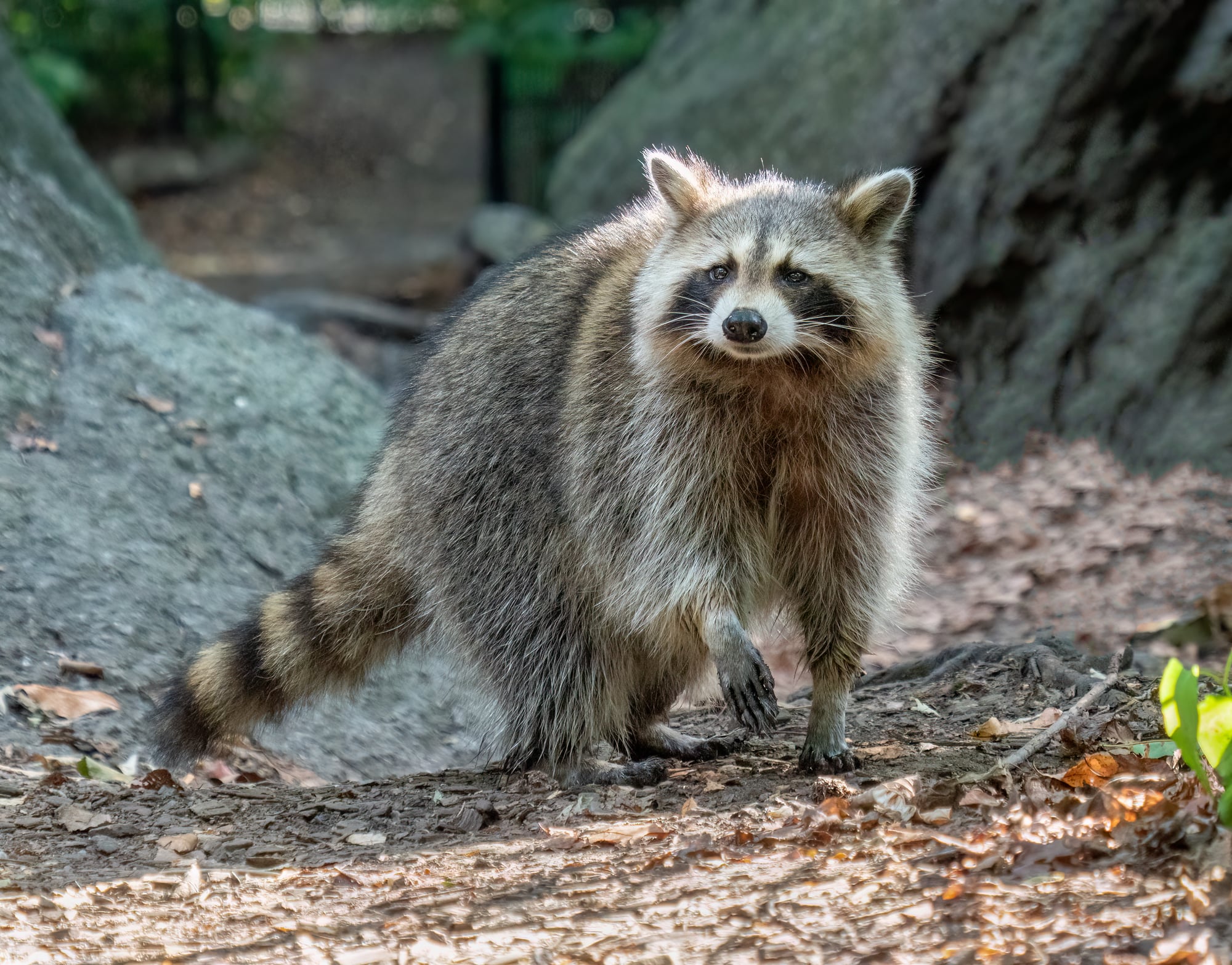
The raccoon is a medium-sized mammal that lives across North America. It is easy to spot because of the black mask of fur around its eyes and the black rings around its bushy tail. An adult raccoon is about two to three feet long, counting the tail, and weighs between 10 and 20 pounds. That is about the size of a small dog. Raccoons are related to coatis and ringtails, but not to bears, even though they look a little like small bears.
Raccoons live almost everywhere. They are found in forests, marshes, grasslands, farms, and in the middle of big cities. A raccoon's home is called a den. It might be a hollow tree, an empty burrow, a rocky crack, or the attic of someone's house. Raccoons are mostly active at night. During the day, they sleep hidden away.
Their front paws are their most amazing tool. Each paw has five long fingers that work a lot like human fingers. Raccoons can open jars, turn doorknobs, untie knots, and lift the lids off trash cans. Scientists have found that raccoon paws have an unusual number of touch sensors, which is why the animals feel objects so carefully before picking them up. Raccoons often dunk their food in water before eating. People used to think they were washing it. Scientists now believe the water helps their paws sense the food even better.
Raccoons will eat almost anything. They hunt frogs, crayfish, insects, mice, and bird eggs. They also eat fruit, nuts, corn, and seeds. In cities, they happily raid garbage cans and pet food bowls. This mix of smarts and flexibility is why raccoons do so well near people, while many other wild animals struggle.
Female raccoons have two to five babies, called kits, in the spring. The kits stay with their mother for about a year. She teaches them how to climb, hunt, and find safe dens. Young raccoons are playful and wrestle constantly, which helps them build the muscles they will need as adults.
In tests, raccoons have learned to pick locks, remember puzzle solutions for years, and figure out tricky problems that stump many other animals. Some scientists think raccoons may be among the smartest mammals in North America, though measuring animal intelligence is tricky and researchers still debate how to compare species. The next time a trash can lid is mysteriously flipped open overnight, a clever little paw is probably the reason.
Last updated 2026-04-22