
Skunk
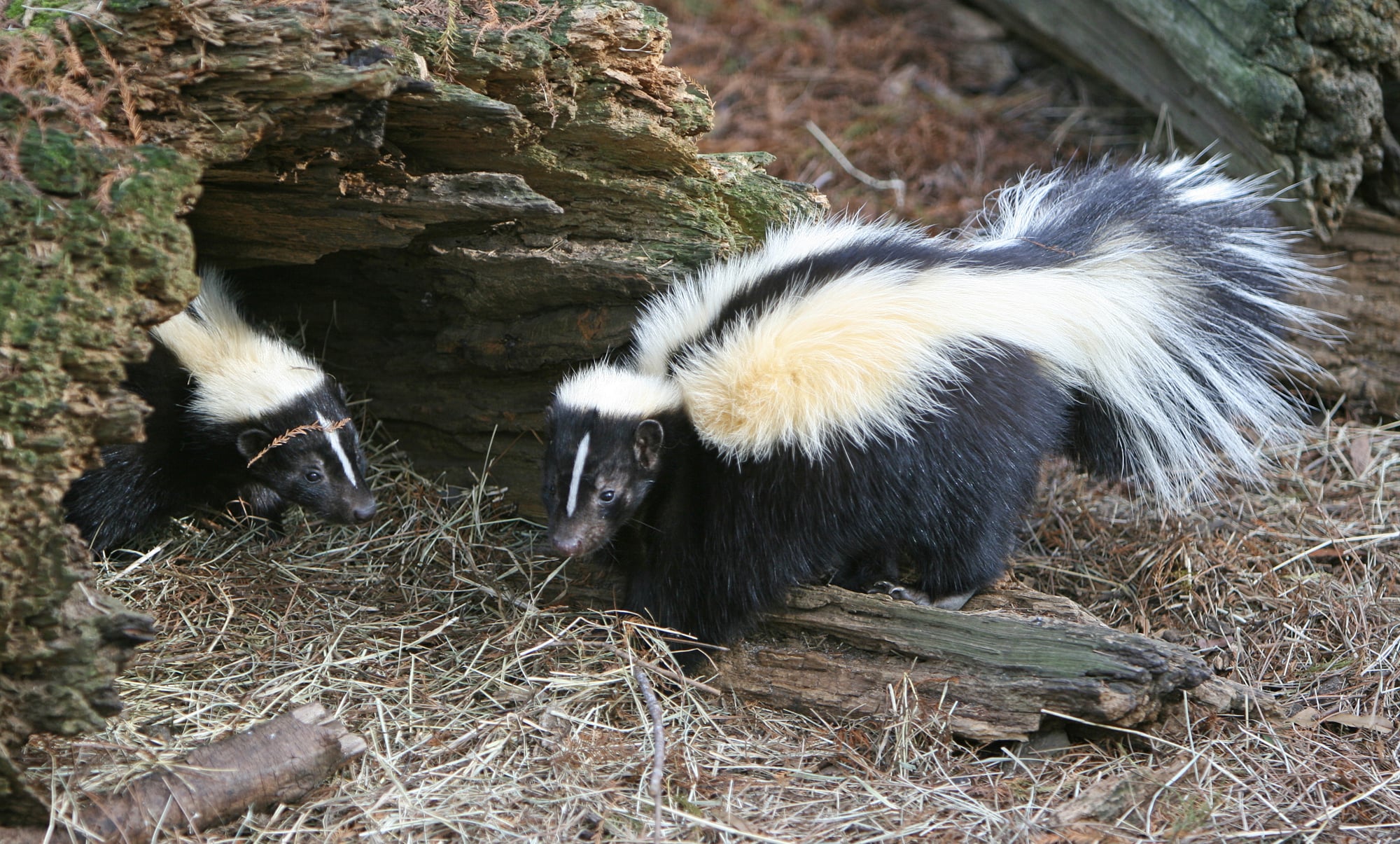
Credit: http://www.birdphotos.com · CC BY 3.0
The skunk is a small mammal known for the strong, stinky spray it uses to defend itself. Skunks live across North and South America, with a few types also found in parts of Asia. Most skunks are about the size of a house cat, with short legs, small heads, and fluffy tails. Their fur is usually black with bold white stripes or spots. That pattern is a warning sign. It tells other animals to stay away.
There are about a dozen kinds of skunks. The most common in the United States is the striped skunk. Others include the spotted skunk, the hooded skunk, and the hog-nosed skunk. Spotted skunks are small and quick, and they sometimes do a handstand on their front paws to warn enemies before they spray.
The famous spray comes from two small glands under the tail. The liquid is oily and yellow, and it contains chemicals called thiols. Thiols are what make rotten eggs smell bad, so the skunk's spray smells even worse. A skunk can shoot the spray up to 10 feet, about as far as the length of a small car. The smell is so strong that a person can notice it from more than a mile away.
Skunks do not spray right away. First they stomp their front feet, raise their tails, and hiss. A skunk's spray glands only hold enough for about five or six shots. After that, the skunk has to wait more than a week to refill. So a skunk saves its spray for real danger.
Skunks are mostly active at night. They eat almost anything they can find, which makes them omnivores. Their diet includes insects, worms, mice, eggs, fruit, and garbage. They are one of the few animals that will eat bees and wasps, using their thick fur as protection from stings. Farmers often like having skunks nearby because skunks eat pests that damage crops.
Baby skunks are called kits. A mother skunk usually has four to seven kits in the spring. The kits can spray by the time they are about a month old, even before their eyes are fully open.
Most animals leave skunks alone after one bad experience. But one predator is not bothered by the smell: the great horned owl. Owls have a poor sense of smell, so the skunk's best defense does not work on them. For every other hunter, that black and white coat is a clear message. Do not come closer.
Related
Last updated 2026-04-22