
Moth
Credit: AnotherPostcard · CC BY-SA 3.0
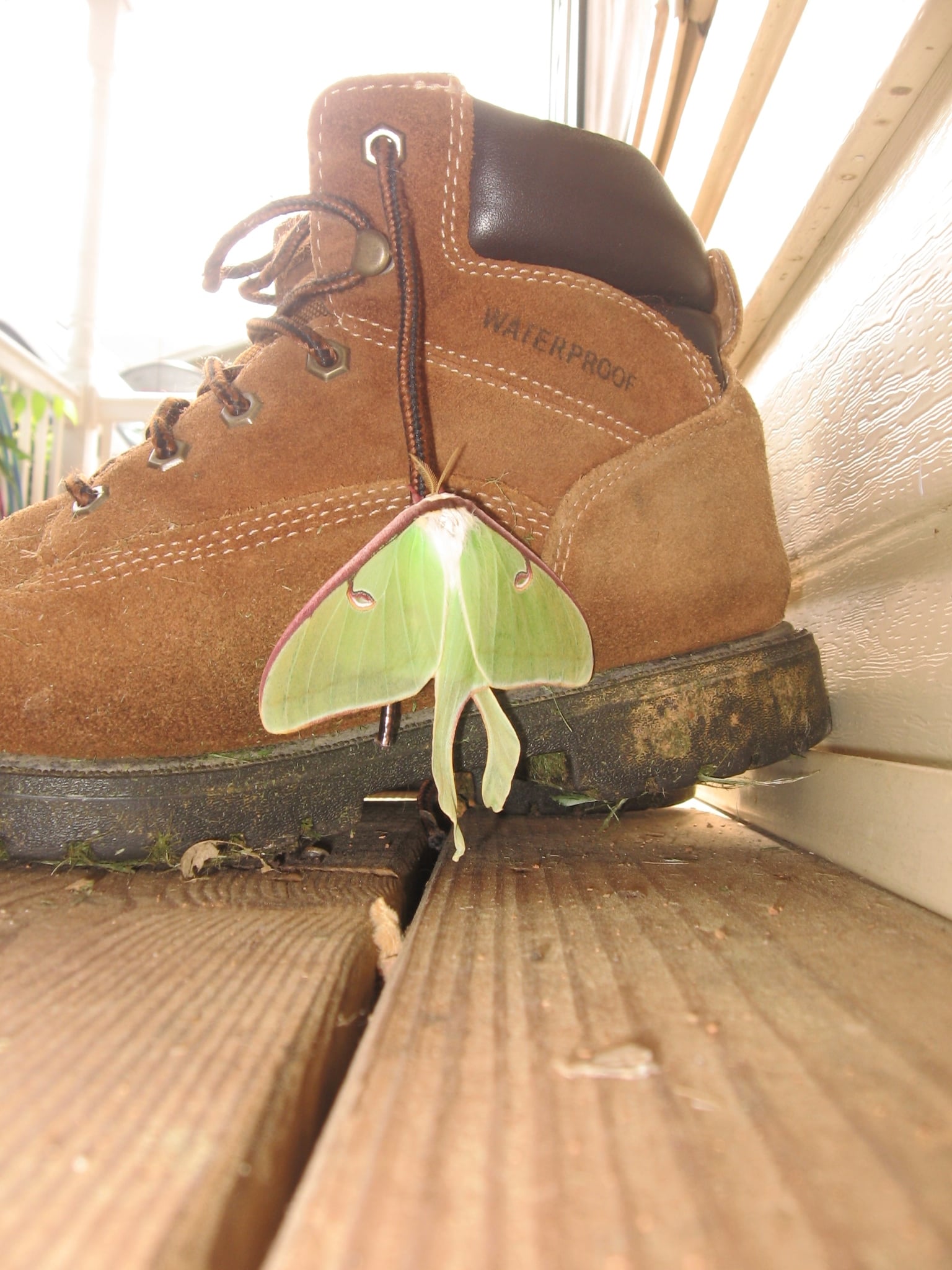
A moth is a flying insect closely related to the butterfly. Moths and butterflies both belong to a group called Lepidoptera, which means "scaly wings" in Greek. Tiny scales cover their wings like dust. If you touch a moth's wing, some of those scales rub off on your finger. There are around 160,000 known species of moths, which is about nine times more than the number of butterfly species.
Most moths are active at night, while most butterflies fly during the day. You can often tell them apart by a few other clues. Moths usually have fuzzy, thick bodies and feathery antennae. Butterflies have skinny bodies and thin antennae with little knobs at the tips. When a moth rests, it usually holds its wings flat or folded like a tent over its back. A butterfly holds its wings straight up.
Moths go through four life stages. This kind of big change is called metamorphosis. A moth starts as a tiny egg laid on a leaf. It hatches into a caterpillar, which spends most of its time eating and growing. When the caterpillar is fully grown, it spins a silk covering called a cocoon. Inside, its body slowly rebuilds itself. After days or weeks, an adult moth breaks out.
People have used moths for thousands of years. The silk in silk clothing comes from the cocoon of the silkworm moth. Each cocoon is made of one long silk thread, sometimes more than 3,000 feet long. That is longer than nine football fields lined up end to end. Silk farming began in ancient China over 4,000 years ago and was kept a secret for centuries.
Why do moths fly toward porch lights? Scientists are still working out the answer. For a long time, people thought moths used the Moon to steer, and that bright bulbs confused them. New research suggests moths may actually try to keep their backs pointed toward a bright light, which usually means the sky. A lamp close by tricks them into flying in loops around it.
Moths are important to nature. Many flowers that open at night, like evening primrose and some cactus blooms, depend on moths to spread their pollen. Bats, birds, spiders, and frogs all eat moths. Moths may seem dull next to butterflies, but they do most of the quiet work of the insect world after the sun goes down.
Last updated 2026-04-22