
Monkey
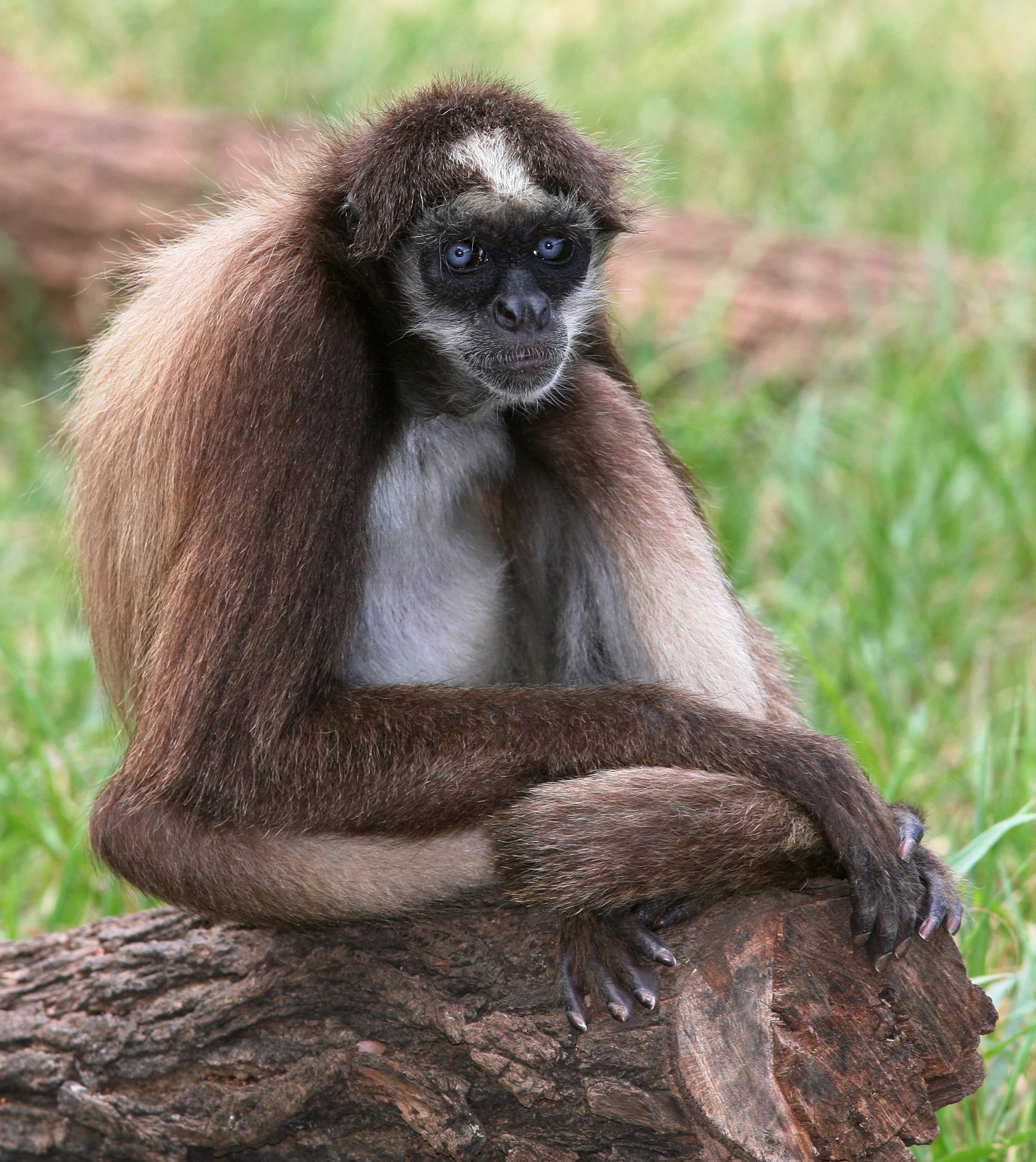
Credit: http://www.birdphotos.com edit by Fir0002 · CC BY-SA 3.0
A monkey is a kind of mammal that belongs to the primate group, the same animal family as humans and apes. There are more than 260 species of monkeys. They live in forests, mountains, and grasslands across Africa, Asia, and the Americas. Most monkeys have fur, hands with five fingers, forward-facing eyes, and long tails.
Scientists divide monkeys into two main groups based on where they live. New World monkeys live in Central and South America. These include spider monkeys, howler monkeys, and capuchins. Old World monkeys live in Africa and Asia. These include baboons, macaques, and mandrills. The two groups have been evolving apart for about 40 million years, long before any humans existed.
The easiest way to tell the groups apart is by the tail. Many New World monkeys have a prehensile tail, which means a tail that can grip things. They use it like a fifth arm to hang from branches and hold food. Old World monkeys cannot do this. Their tails are just for balance, and some have almost no tail at all.
People often mix up monkeys and apes, but they are not the same. Apes include gorillas, chimpanzees, orangutans, and gibbons. Apes do not have tails. They also have bigger brains for their body size and longer arms. Humans are apes too, not monkeys.
Most monkeys live in groups called troops. A troop can have just a few members or more than 100. Living together helps monkeys watch for danger, raise their young, and find food. They talk to each other with calls, faces, and body movements. The howler monkey of South America is one of the loudest animals on land. Its call can be heard three miles through the forest, farther than most city blocks.
Monkeys mostly eat fruit, leaves, seeds, nuts, and insects. Some also eat small animals or eggs. Many kinds use tools. Capuchin monkeys crack open nuts by banging them with rocks. Scientists have watched them do this for thousands of years, based on old rock tools found buried in the ground.
Many monkey species are in trouble today. Forests are being cut down for farms, roads, and cities. Some monkeys are also hunted or captured for the illegal pet trade. The golden lion tamarin of Brazil was once nearly extinct, with only about 200 left in the wild. Careful protection has brought the number back to around 2,500. Saving the rest will depend on saving the forests they call home.
Last updated 2026-04-22