
Frog
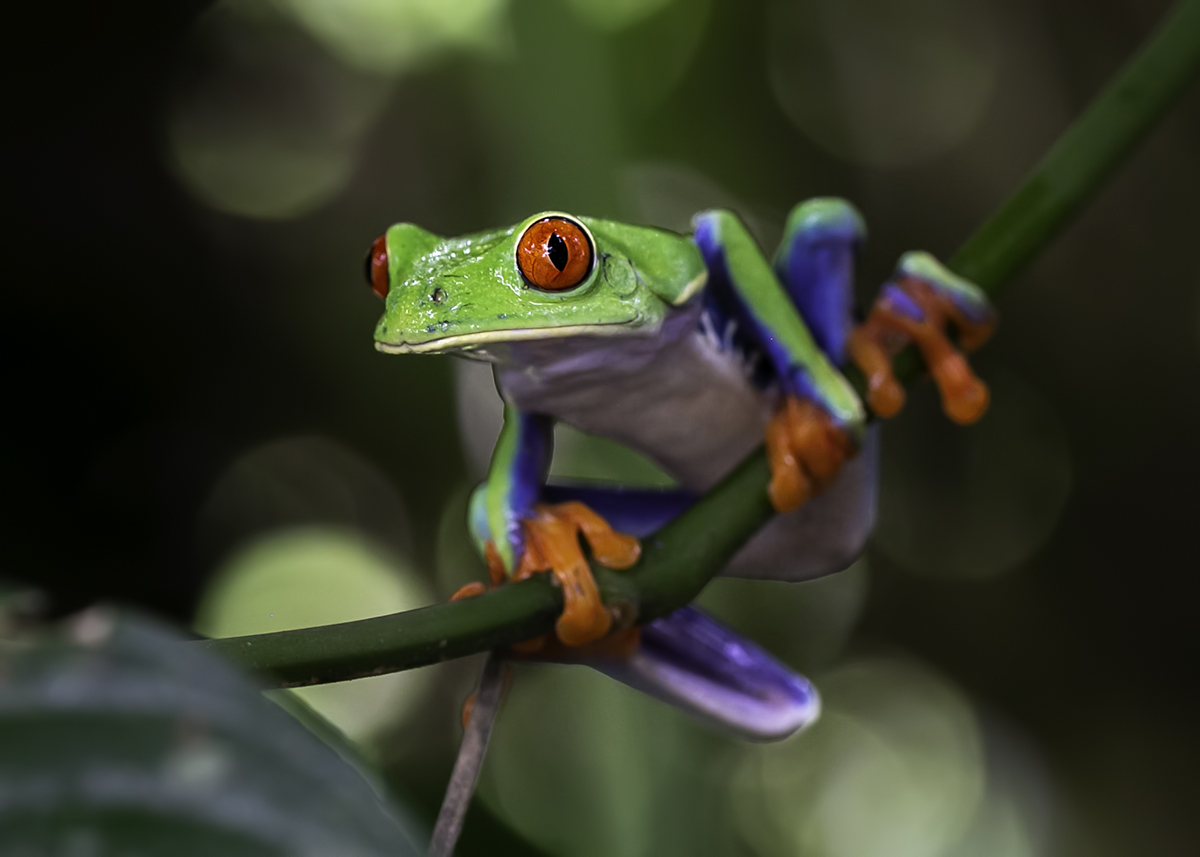
Credit: Charlie Jackson · CC BY 2.0
A frog is a small amphibian with smooth skin, long back legs, and no tail as an adult. Amphibians are animals that can live both in water and on land. Frogs are found on every continent except Antarctica. Scientists have named more than 7,000 species of them, and new ones are still being discovered.
Frogs begin life in water. A mother frog lays a clump of jelly-covered eggs in a pond or stream. The eggs hatch into tadpoles, which look more like tiny fish than frogs. Tadpoles have tails, breathe through gills, and eat algae. Over a few weeks or months, a tadpole slowly changes. It grows back legs, then front legs. Its tail shrinks and disappears. Its gills are replaced by lungs. This big change is called metamorphosis. Once it is done, the frog can hop onto land.
Adult frogs are hunters. Most eat insects, worms, and spiders. Some of the biggest frogs eat mice, snakes, or even small birds. A frog's tongue is sticky and very fast. It can flick out, grab a fly, and snap back into the mouth in less than a tenth of a second. Faster than you can blink.
Frogs do not drink water the way you do. They soak it up right through their skin. Their skin also helps them breathe when they are underwater. This thin, wet skin is very useful, but it also makes frogs sensitive to pollution. Scientists watch frog populations closely, because sick frogs often mean something is wrong with the water or air around them.
Many frogs have clever ways to stay safe. Tree frogs have sticky toe pads for climbing high into leaves. Green and brown frogs blend into plants and mud. Poison dart frogs do the opposite. They wear bright red, yellow, or blue skin as a warning. Their skin holds poisons strong enough to hurt or kill animals that try to eat them. Native peoples in the rainforests of Central and South America once used this poison on the tips of hunting darts.
Frogs can also jump amazing distances. A bullfrog can leap more than 10 times the length of its body in a single hop. If a person could jump that far, they could clear a school bus from a standing start.
Around the world, many frog species are in trouble. A deadly fungus called chytrid has wiped out entire species in the last 40 years. Habitat loss and pollution have hurt many more. When the frogs in a pond go quiet, biologists notice.
Last updated 2026-04-22