
Elk
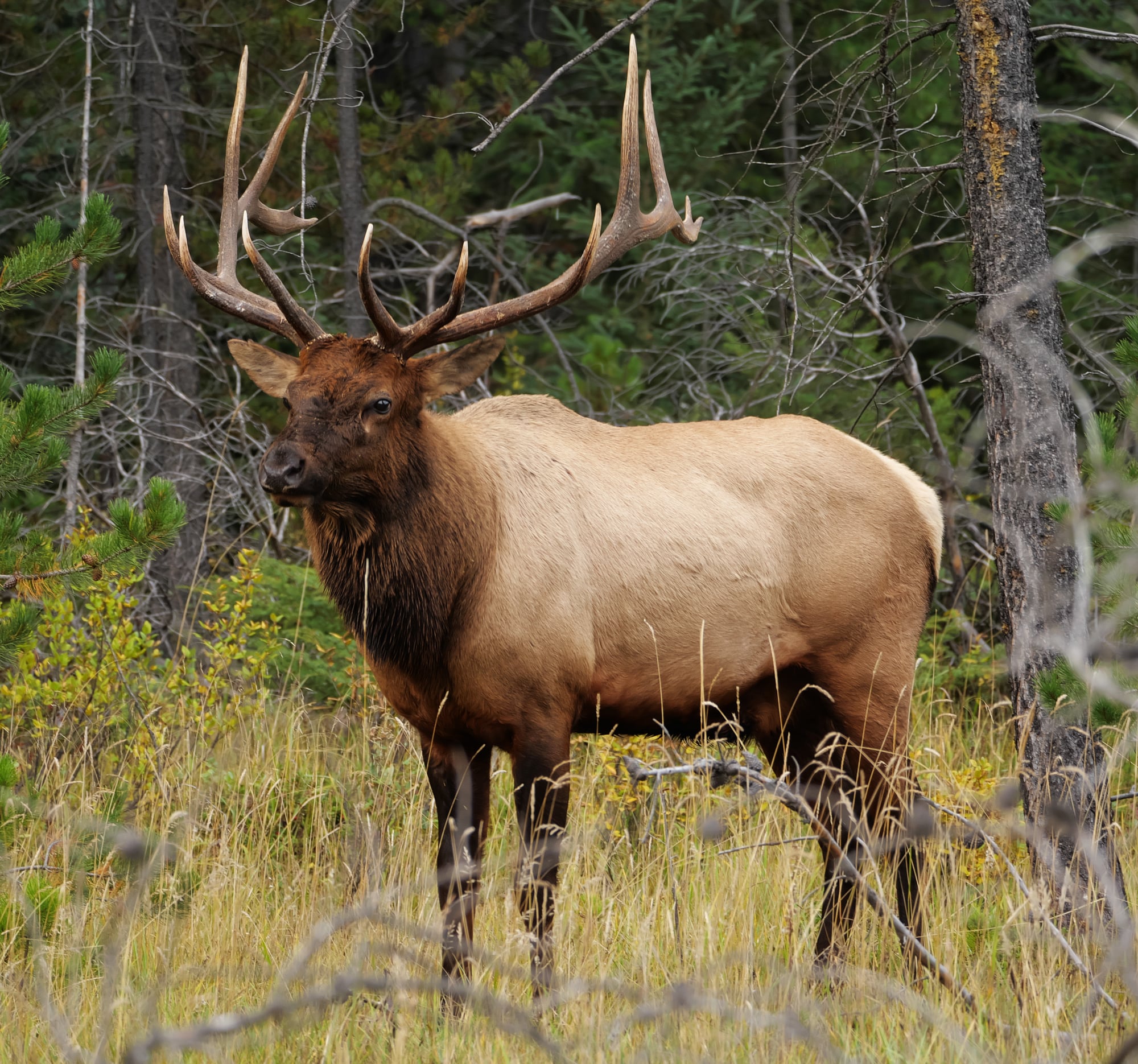
Credit: Membeth · CC0
The elk is a large member of the deer family. It lives in forests and meadows across North America and parts of eastern Asia. An adult male, called a bull, can weigh 700 to 1,100 pounds. That is about as much as a horse. Females, called cows, are smaller, usually 500 to 600 pounds. Only bulls grow antlers.
Elk are the second-largest deer in the world. Only the moose is bigger. A bull elk stands about five feet tall at the shoulder. His antlers can add another four feet to his height. A full set of antlers can weigh 40 pounds, as much as a small child. Elk grow a new set every year. They shed the old antlers in late winter and grow new ones by fall.
Elk are plant eaters. They graze on grass, leaves, bark, and twigs. An adult elk eats about 20 pounds of food each day. In summer they feed in high mountain meadows. In winter they move down to lower valleys where the snow is not as deep. This yearly trip up and down the mountains is called migration.
Fall is the most exciting time to watch elk. It is the mating season, called the rut. Bulls make a strange, whistling call that rises into a high scream. This call is called a bugle. A bull bugles to attract cows and to warn other bulls to stay away. When two bulls want the same group of cows, they crash their antlers together in a shoving match until one gives up.
Elk were once found across almost all of North America. By the early 1900s, hunting and the loss of wild land had pushed them into small mountain areas in the west. Only about 50,000 were left. Laws protecting wildlife helped them come back. Today there are about one million elk in North America. Herds have also been returned to places like Kentucky and Pennsylvania, where they had been gone for more than 100 years.
Elk have been important to Native American peoples for thousands of years. Tribes used elk meat for food, hides for clothing and shelter, and antlers for tools. The Lakota word for elk is heȟáka. The Shawnee word wapiti, which means "white rump," is another name scientists use for the elk.
Visitors to Yellowstone National Park often see elk grazing right next to the roads. In the fall, the sound of bugling bulls echoes through the valleys after sunset.
Related
Last updated 2026-04-22