
Boa Constrictor
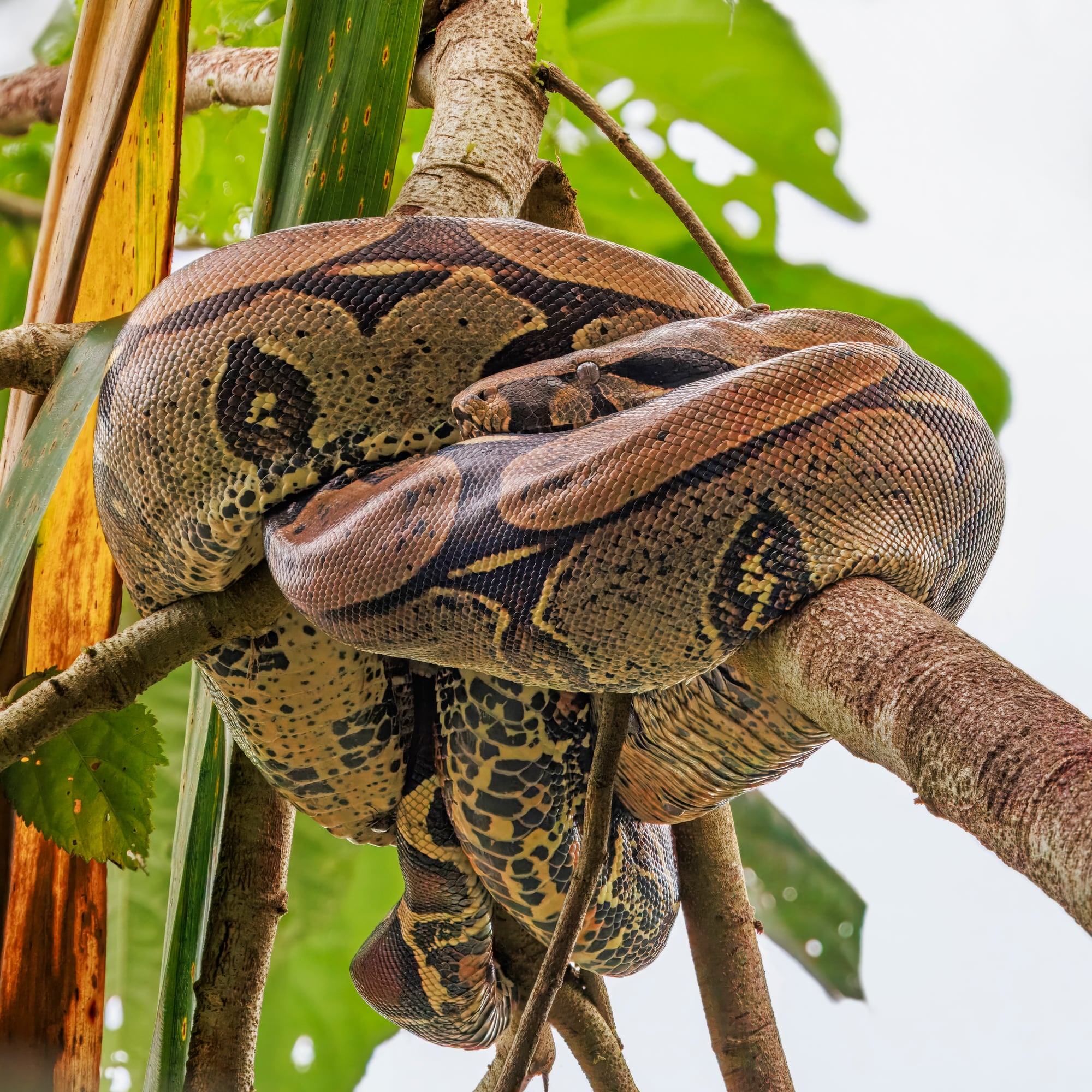
Credit: Charles J. Sharp · CC BY-SA 4.0
The boa constrictor is a large, heavy snake that lives in Central and South America. It is not venomous. Instead, it kills its prey by wrapping its body around the animal and squeezing. The word "constrictor" comes from a Latin word that means "to squeeze." Boas live in rainforests, dry forests, and grasslands, and they are also good swimmers.
Boa constrictors are big, but not the biggest snakes in the world. Adults usually grow between 6 and 10 feet long. Some can reach 13 feet, about as long as a small car. Females are larger than males. A big adult can weigh more than 60 pounds.
The skin of a boa constrictor is patterned with brown, tan, and cream-colored shapes that look a bit like saddles. This pattern helps the snake blend into leaves and shadows. A boa can lie still on a branch for hours, almost invisible, waiting for an animal to walk past.
Boas are ambush hunters. They eat birds, lizards, bats, and small mammals like rats and monkeys. When prey comes close, the boa strikes with its mouth, grabs the animal with sharp, backward-curving teeth, and quickly wraps its body around it. Scientists used to think boas killed by crushing bones or stopping prey from breathing. Newer research shows something different. The squeeze cuts off blood flow, and the prey loses consciousness within seconds. Then the boa swallows the animal whole, head first.
A boa's jaw is special. The two halves of its lower jaw are connected by a stretchy band, not a solid bone. This lets the snake open its mouth very wide and swallow prey thicker than its own head. After a big meal, a boa may not need to eat again for weeks.
Unlike most snakes, boa constrictors do not lay eggs. The eggs stay inside the mother's body until they hatch. She then gives birth to live baby snakes, sometimes 20 or more at a time. Each newborn is already about 2 feet long and ready to hunt on its own. The mother does not care for the babies after birth.
Boa constrictors can live 20 to 30 years in the wild, and even longer in zoos. They are not endangered, but some are caught and sold as pets, which can hurt wild populations. In their home forests, boas play an important role. They help keep rats and other small animals from growing too common, which keeps the whole ecosystem in balance.
Last updated 2026-04-22