
Spice Trade
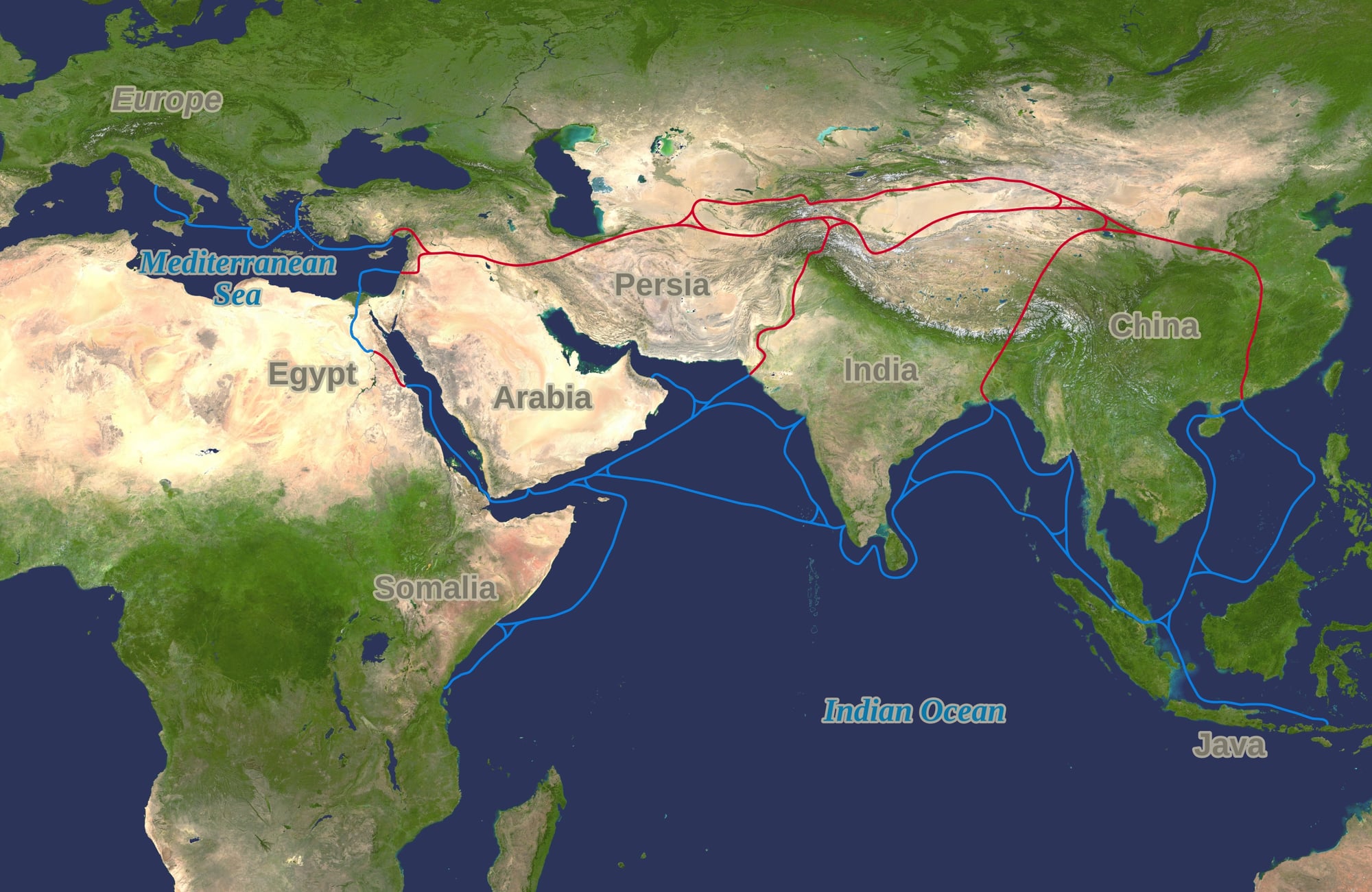
Credit: Whole_world_-_land_and_oceans_12000.jpg: NASA/Goddard Space Flight Center derivative work: Splette (talk) · Public domain
The spice trade was the buying and selling of spices between Asia, Africa, and Europe. It lasted for thousands of years. Spices like pepper, cinnamon, cloves, nutmeg, and ginger grew only in certain warm parts of the world. People in cooler places wanted them badly. The trade in these tiny dried plants shaped wars, empires, and even the maps we use today.
Most spices came from a small group of places. Pepper grew in southern India. Cinnamon came from the island of Sri Lanka. Cloves and nutmeg grew on a handful of small islands in Indonesia called the Spice Islands. Ginger came from China and India. For most of history, these were the only places on Earth where these plants would grow.
Why did people want spices so much? Spices made plain food taste better. They helped preserve meat before refrigerators existed. They were used as medicine. They smelled wonderful in a world without soap or perfume. And because they were rare and far away, owning them showed off your wealth.
Getting spices to Europe was a long journey. Traders carried them by camel across deserts and by ship across the Indian Ocean. Each time the goods changed hands, the price went up. By the time pepper reached a market in Italy, it had passed through ten or more traders. A single pound of nutmeg in Europe could cost more than a worker earned in a year.
For hundreds of years, Arab and Italian merchants controlled this trade. Other Europeans wanted a way around them. In the 1400s and 1500s, sailors from Portugal and Spain set out to find sea routes to the Spice Islands. Christopher Columbus was actually looking for a shortcut to the spices of Asia when he bumped into the Americas in 1492. Ferdinand Magellan's crew became the first to sail all the way around the world, partly because they were chasing cloves.
Once Europeans found the sea routes, the trade turned violent. Portugal, the Netherlands, England, and France fought each other for control of the Spice Islands. They also forced the people who lived there to grow spices for them. The Dutch killed or enslaved most of the people of one island, Banda, just to control the nutmeg trade. The spice trade is one of the main reasons European countries built colonies all over the world.
Today, spices are cheap. You can buy a jar of pepper at any store. But the search for these flavors changed history. It pushed sailors across oceans, drew new lines on maps, and connected parts of the world that had never met.
Related
Last updated 2026-04-26