
Renaissance
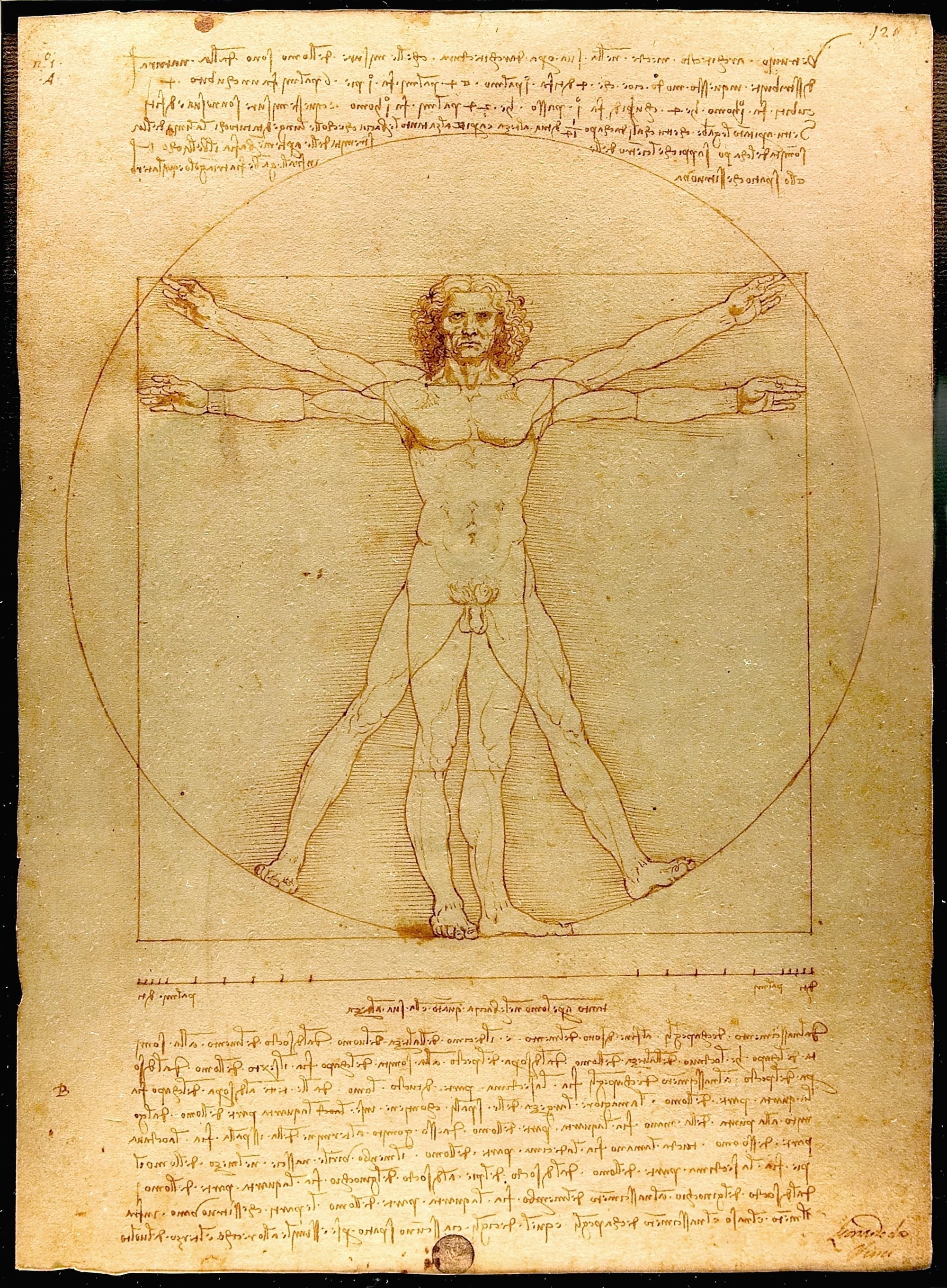
Credit: Leonardo da Vinci · Public domain
The Renaissance was a time of huge changes in art, science, and ideas in Europe. It began in Italy in the 1300s and spread across the rest of Europe over the next 300 years. The word "Renaissance" means "rebirth." People at the time felt they were bringing back the wisdom of ancient Greece and Rome after the long stretch of the Middle Ages. The Renaissance is often called the bridge between the medieval world and the modern world.
Why it started in Italy
Italy was a good place for a rebirth of ideas. It was full of busy trading cities like Florence, Venice, and Rome. These cities grew rich from trade with Asia and the Middle East. Wealthy merchants and bankers had money to spend on beautiful buildings, paintings, and books. The ruins of ancient Rome were also right there, reminding Italians of their grand past.
One family, the Medici of Florence, became especially famous for paying artists and scholars. This kind of money support is called patronage. Without patrons like the Medici, many of the most famous works of the Renaissance would never have been made.
A new way of thinking
Renaissance thinkers had a new attitude. They believed people could do great things in this life, not just wait for the next one. They studied old Greek and Latin books that had been forgotten or ignored for centuries. They asked questions about nature, the human body, and the universe. This way of thinking is called humanism, because it focused on human beings and what humans could achieve.
Humanism did not replace religion. Most Renaissance people were still deeply Christian. But they believed that learning, art, and science were ways of celebrating the world God had made.
Art
Renaissance art still amazes people today. Artists learned to paint with realistic depth, called perspective, so flat pictures looked like real spaces. They studied human bodies carefully, sometimes by cutting open dead bodies to see how muscles and bones worked. Their paintings and sculptures looked more lifelike than anything that came before.
Three artists stand out from this time. Leonardo da Vinci painted the Mona Lisa and The Last Supper. He also filled notebooks with sketches of flying machines, war tanks, and human anatomy. Michelangelo carved the marble statue of David, which stands 17 feet tall, taller than three grown adults stacked on top of each other. He also painted the ceiling of the Sistine Chapel in Rome, lying on his back on a high platform for four years. Raphael painted gentle, balanced scenes that artists copied for hundreds of years afterward.
The printing press
In about 1440, a German named Johannes Gutenberg invented a printing press that used movable metal letters. Before Gutenberg, every book in Europe was copied by hand. A single Bible could take a monk a year to write out. After Gutenberg, the same Bible could be printed in a few weeks.
This changed everything. Books became cheaper. More people learned to read. New ideas spread across Europe in months instead of decades. Many historians think the printing press is the most important invention of the Renaissance.
Science and exploration
The Renaissance also pushed science forward. Nicolaus Copernicus argued that Earth orbits the Sun, not the other way around. This was a shocking idea. For more than a thousand years, people had been taught that Earth was the center of everything. Later, Galileo Galilei used a new tool called a telescope to study the night sky. What he saw supported Copernicus.
Sailors went exploring too. Christopher Columbus sailed west from Spain in 1492 and reached the Americas. Vasco da Gama sailed from Portugal around Africa to India. Ferdinand Magellan's crew became the first people to sail all the way around the world. These voyages brought new foods, new animals, and new wealth back to Europe. They also caused great harm to the people already living in the Americas.
Disagreement among historians
Not every historian agrees about the Renaissance. Some say the term makes the Middle Ages sound darker than they really were. Plenty of art, science, and learning happened in medieval Europe too. Other historians point out that women, peasants, and enslaved people did not see much "rebirth" in their daily lives. The Renaissance mostly benefited rich and educated men.
Even with these debates, the changes are real. By the time the Renaissance ended around 1600, Europe looked different. Books were printed, not copied by hand. Artists painted with perspective. Scientists asked new questions. The modern world was beginning to take shape.
Related
Last updated 2026-04-26