
Mughal Empire
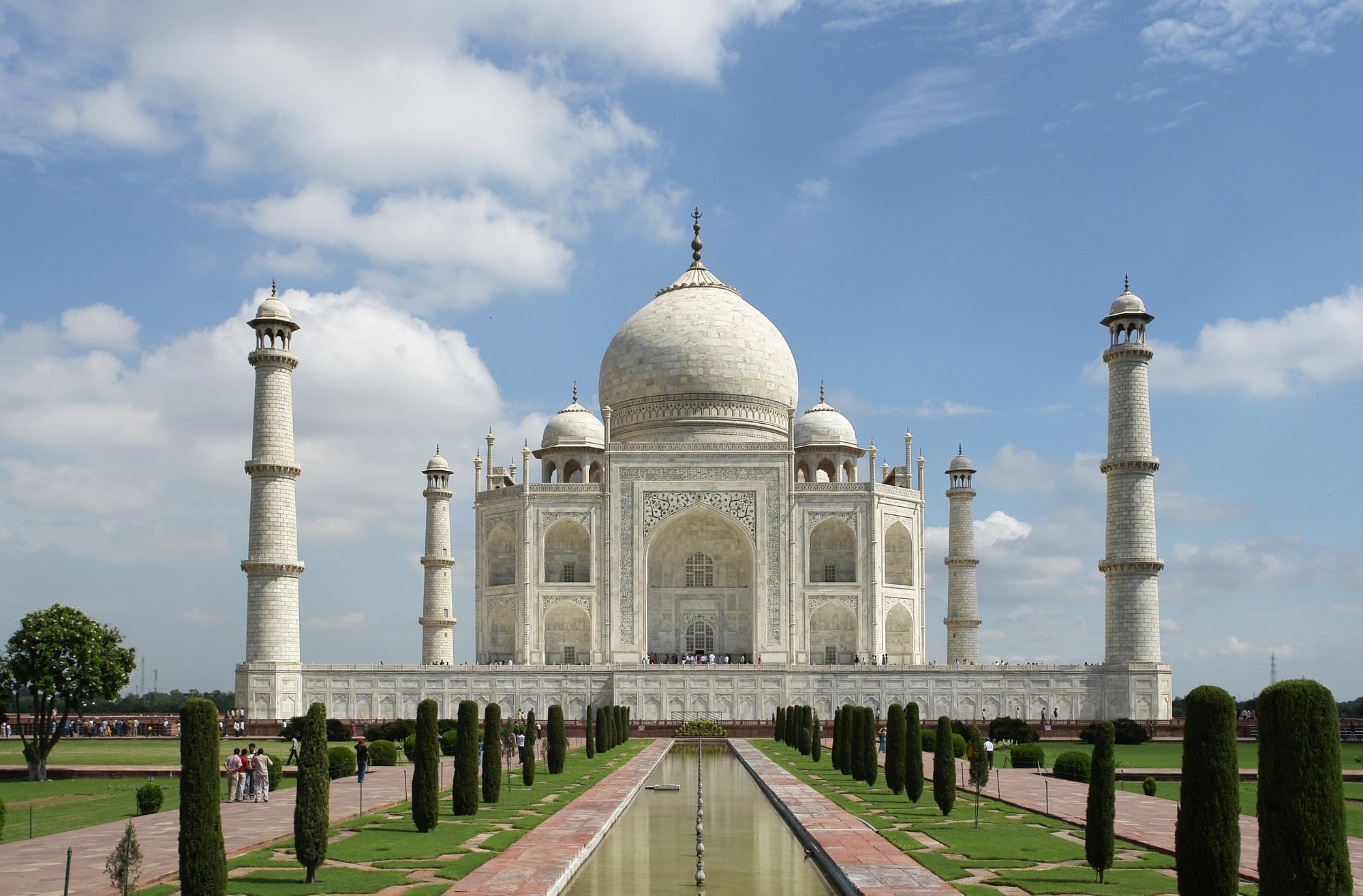
Credit: Yann; edited by Jim Carter · CC BY-SA 4.0
The Mughal Empire was a powerful kingdom that ruled most of South Asia from 1526 to 1857. It covered much of what is now India, Pakistan, Bangladesh, and Afghanistan. At its biggest, it ruled over more than 150 million people. That was about a quarter of all the people alive on Earth at the time.
The empire was founded by a man named Babur. He was a young prince from Central Asia who had lost his own kingdom. In 1526, he led a small army into northern India and won a huge battle against a much larger force. His grandson Akbar grew the empire into one of the richest and best-organized states in the world.
Akbar is often called Akbar the Great. He became emperor when he was only 13 years old and ruled for almost 50 years. The Mughal rulers were Muslim, but most of their people were Hindu. Akbar tried to treat people of all religions fairly. He ended a tax that had been charged only to non-Muslims. He invited Hindu, Christian, and Jain teachers to his court to debate ideas. Historians still discuss how tolerant his rule really was, but for his time it was unusual.
The Mughals are most famous for their buildings. Akbar's grandson Shah Jahan built the Taj Mahal in the city of Agra. He built it as a tomb for his wife, Mumtaz Mahal, who died in 1631. About 20,000 workers and 1,000 elephants helped build it. It took 22 years to finish. The whole building is covered in white marble and decorated with flowers carved from colored stone. Today the Taj Mahal is one of the most visited places on Earth.
Mughal artists also created beautiful paintings, gardens, and poetry. They blended ideas from Persia, Central Asia, and India into a new style. The empire grew rich from trade. Cotton cloth, spices, and jewels from India were sold all over the world along the routes once used by the Silk Road.
The empire began to weaken in the 1700s. Smaller kingdoms broke away. Wars drained the treasury. European trading companies, especially the British East India Company, slowly took over more and more land. By the early 1800s, the Mughal emperor ruled little more than the city of Delhi. In 1857, after a failed rebellion against British rule, the British removed the last emperor and sent him into exile.
The empire was gone, but its mark stayed. The languages, food, music, and grand stone buildings of the Mughals are still part of daily life across South Asia today.
Related
Last updated 2026-04-26