
Machu Picchu
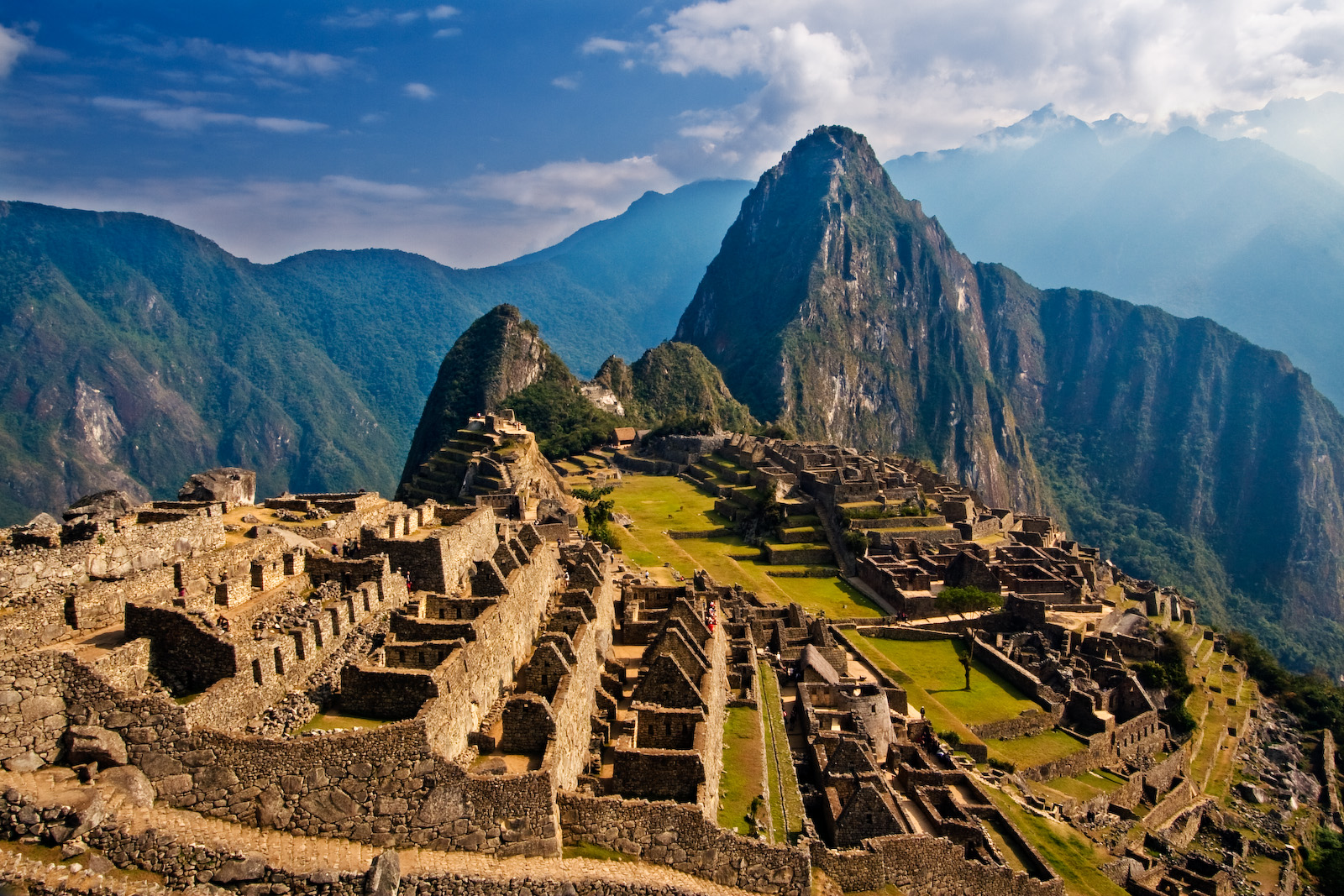
Credit: Pedro Szekely at https://www.flickr.com/photos/pedrosz/ · CC BY-SA 2.0
Machu Picchu is an ancient stone city built high in the Andes Mountains of Peru. The Inca people built it around 1450, during the height of their empire. The city sits on a narrow ridge about 7,970 feet above sea level, higher than most clouds. Today it is the most famous archaeological site in South America and one of the most visited places in the world.
The Inca built Machu Picchu without iron tools, without wheels, and without writing. Workers shaped huge granite blocks by hand. They fit the stones together so precisely that the walls have stood through more than 500 years of earthquakes. The Andes shake often, but the buildings barely move. Some of the largest stones weigh more than 50 tons, about as much as ten elephants.
The city has more than 200 buildings. There are houses, temples, storehouses, and fountains fed by mountain springs. Stone steps climb between the buildings, and farming terraces wrap around the steep slopes. The terraces let the Inca grow corn and potatoes on land that was almost too steep to walk on. Underground channels carried water through the city and drained off heavy rain.
Why was Machu Picchu built? Historians still debate this. Most experts now think it was a royal estate for the Inca emperor Pachacuti, a kind of mountain palace where he and his court could live, hold ceremonies, and study the stars. Some buildings line up with the sun on the longest and shortest days of the year. Other scholars think Machu Picchu also served as a religious site or a training place for priests.
The Inca lived at Machu Picchu for only about 100 years. In the 1500s, Spanish soldiers invaded Peru and destroyed the Inca Empire. The Inca seem to have left Machu Picchu around this time. The Spanish never found it. The thick cloud forest grew over the buildings, and the outside world forgot the city existed.
Local farmers in the area always knew about the ruins. But the wider world did not learn of them until 1911, when an American historian named Hiram Bingham was led there by a young Peruvian boy named Pablito Álvarez. Bingham took photographs and wrote books that made the site famous.
Today about 1.5 million people visit Machu Picchu each year. So many feet wear down the old stones that Peru now limits how many tourists can enter and which paths they can walk. The city the Inca built to last forever is being protected so it can last a little longer.
Related
Last updated 2026-04-26