
Pyramids of Egypt
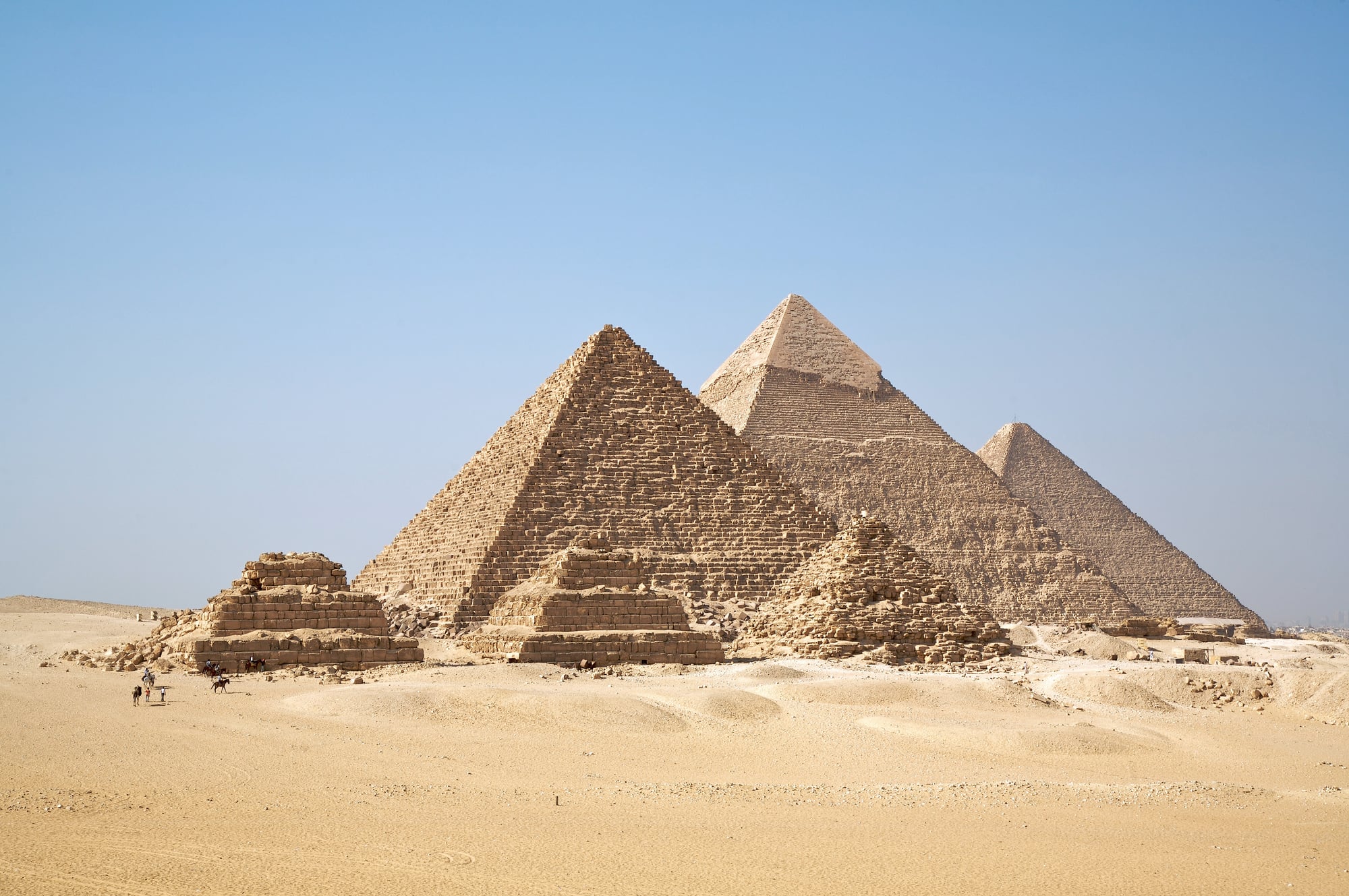
Credit: Ricardo Liberato · CC BY-SA 2.0
The Pyramids of Egypt are giant stone tombs built by the ancient Egyptians. They were built as burial places for pharaohs, the kings of ancient Egypt. Most of them stand in the desert near the Nile River, in what is now the country of Egypt. More than 100 pyramids have been found there. The biggest and most famous ones were built between about 2600 and 1700 BCE.
The most famous pyramids stand at Giza, just outside the city of Cairo. There are three large pyramids at Giza. The biggest is called the Great Pyramid. It was built around 2560 BCE for a pharaoh named Khufu. The Great Pyramid stands 481 feet tall. That is taller than a 40-story building. It is made of about 2.3 million stone blocks. Some of the blocks weigh more than a small car.
Why did the Egyptians build them? They believed in life after death. A pharaoh was thought to become a god when he died. The pyramid was meant to protect his body and help his spirit reach the next world. Inside, builders carved hidden rooms and tunnels. They filled the burial chamber with treasures, food, furniture, and tools. The pharaoh was supposed to use these things in the afterlife.
How they were built is still a mystery in some ways. For a long time, people believed the pyramids were built by slaves. But in the 1990s, archaeologists found the workers' village. The workers were paid Egyptian laborers who ate well and lived in organized camps. They worked in teams with names like "Friends of Khufu." Scientists know the workers used copper tools, ropes, sleds, and ramps. But exactly how they lifted blocks weighing many tons into place is still debated. Some experts think they used long straight ramps. Others think the ramps wrapped around the pyramid like a spiral.
Standing guard near the Great Pyramid is the Great Sphinx. It is a huge statue with the body of a lion and the head of a human. The Sphinx is carved from a single piece of bedrock. It is 240 feet long and about 66 feet tall.
After about 1700 BCE, Egyptian pharaohs stopped building pyramids. The giant tombs were too easy for robbers to find. Later pharaohs were buried in hidden tombs cut into the rocky walls of a desert canyon called the Valley of the Kings.
The pyramids are the only one of the ancient world's "Seven Wonders" that still stand today. Tourists from all over the world visit them every year. Archaeologists are still digging in the sand around them, and they keep finding new tombs, tools, and clues about how this amazing civilization lived.
Last updated 2026-04-26