
Fascism
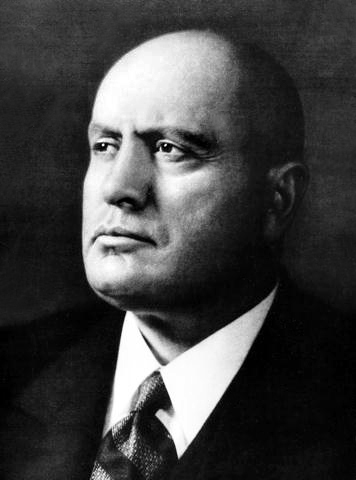
Credit: Unknown · Public domain
Fascism is a kind of government in which one leader and one political party hold total power over a country. Fascist leaders use force to silence anyone who disagrees with them. They put their nation above everything else, including the rights of individual people. Fascism began in Italy in the early 1920s. It spread to Germany, Spain, and other countries before being defeated in World War II.
The word comes from the Italian word fascio, meaning a bundle. The idea was that people should be tied together as one, like sticks in a bundle, with no room for disagreement. The first fascist leader was Benito Mussolini. He took power in Italy in 1922 and ruled as dictator for 21 years. He called himself Il Duce, which means "The Leader."
Fascism shares several traits wherever it appears. The leader is treated almost like a hero or god. The government controls the news, schools, and what people are allowed to say. Police and soldiers are used to scare or jail anyone who speaks out. The government often blames the country's problems on a group of people, such as a minority religion or ethnic group. War and military strength are praised as proud and noble.
The most famous fascist leader was Adolf Hitler. He led the Nazi Party in Germany starting in 1933. The Nazis blamed Jewish people for Germany's troubles. They passed cruel laws, took away rights, and eventually murdered six million Jews in the Holocaust. That is more people than live in the entire state of Maryland today. Hitler also started World War II in 1939 by invading other countries.
In Spain, a general named Francisco Franco led a fascist government from 1939 until his death in 1975. Japan's government in the 1930s and 1940s shared many fascist ideas, though historians sometimes argue about whether to call it true fascism.
World War II ended in 1945 with the defeat of Germany, Italy, and Japan. Mussolini and Hitler both died that year. After the war, most of the world agreed that fascism had been a disaster. The United Nations was created partly to stop anything like it from happening again.
Historians today still debate exactly which leaders and movements should be called fascist. Some say the word should only describe Mussolini's Italy and Hitler's Germany. Others use it for any government that follows the same patterns. The debate matters, because spotting these patterns early can help people stop them.
Related
Last updated 2026-04-26