
Alan Turing
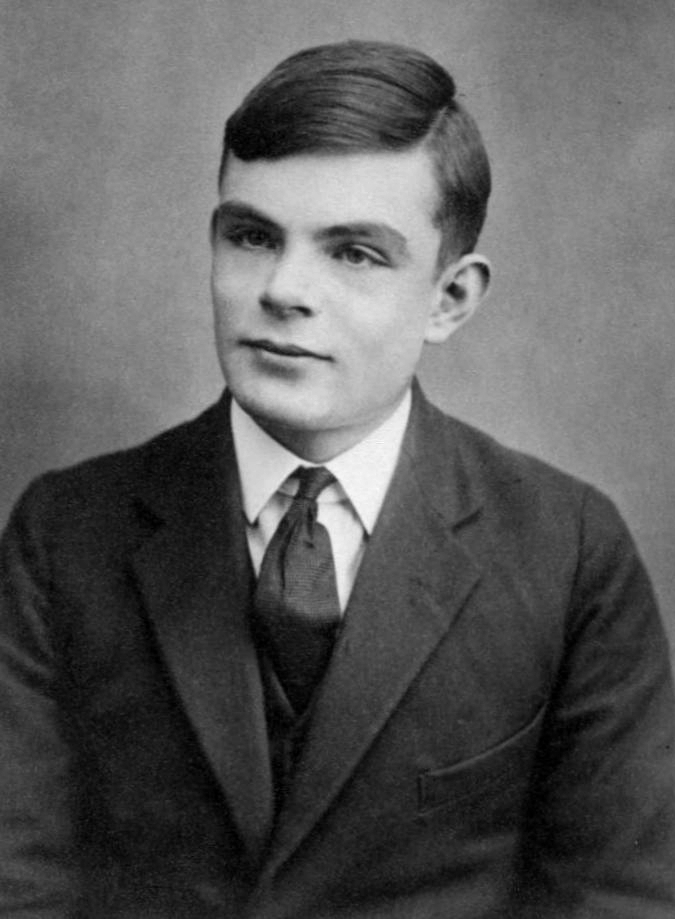
Credit: Possibly Arthur Reginald Chaffin (1893-1954) · Public domain
Alan Turing was a British mathematician who helped invent the modern computer. He lived from 1912 to 1954. During World War II, he led a team that broke the secret codes of Nazi Germany. His ideas about machines that "think" became the foundation for computer science and artificial intelligence.
Turing was born in London in 1912. As a boy, he loved math and science. His teachers thought he was strange because he scribbled equations in the margins of his English papers. He went on to study at the University of Cambridge and later earned a Ph.D. at Princeton in the United States.
In 1936, when he was just 23, Turing wrote a paper that changed the world. He imagined a simple machine that could read symbols on a long strip of tape and follow a list of rules. By changing the rules, the same machine could solve almost any problem. This idea is now called a Turing machine. Every computer today, from the phone in your pocket to the biggest supercomputer, works on the basic plan he described.
When World War II began, Turing went to a secret site in England called Bletchley Park. The Germans were sending military orders using a code machine called Enigma. The number of possible Enigma settings was huge, more than 150 million million million. Turing helped design a machine called the Bombe that could test millions of settings quickly. His team cracked Enigma. The Allies could read German messages and plan attacks around them.
After the war, Turing kept asking strange and important questions. Could a machine ever think? In 1950, he proposed a test: if a person typing messages back and forth could not tell whether they were chatting with a human or a machine, the machine should be called intelligent. This is called the Turing Test, and people still argue about it today as new chatbots and AI systems appear.
Turing's life ended sadly. In 1952, he was arrested under British laws that made being gay a crime. He was punished by the courts and lost his security clearance. He died in 1954, at age 41. Most experts believe he took his own life, though some historians think his death may have been an accident.
For decades, Turing's wartime work was kept secret, so few people knew what he had done. In 2009, the British government finally apologized. Queen Elizabeth II gave him an official pardon in 2013. Today his face appears on the British 50 pound note.
Related
Last updated 2026-04-26