
3D Printing
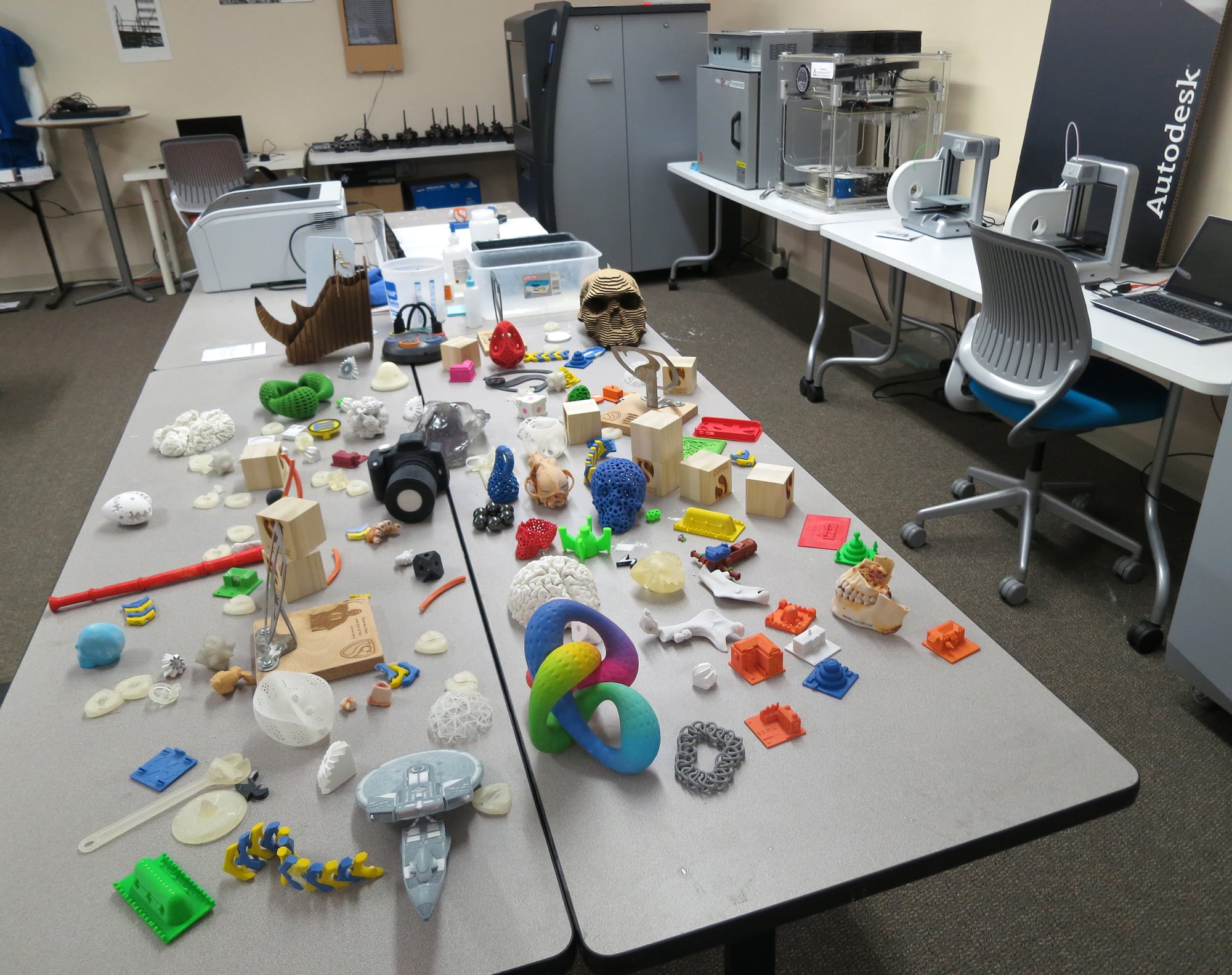
Credit: Steve Jurvetson · CC BY 2.0
3D printing is a way of building solid objects by adding material in thin layers, one on top of another. A regular printer puts ink on a flat sheet of paper. A 3D printer puts down melted plastic, metal, or other materials in a shape that grows upward into a real object you can hold. The technology is also called additive manufacturing, because it adds material instead of cutting it away.
Most 3D printers work in a simple pattern. First, a person designs an object on a computer. The design is then sliced into hundreds or even thousands of flat layers, like the floors of a tall building. The printer reads each layer and lays down a thin line of melted plastic in that exact shape. The plastic cools and hardens in seconds. Then the printer moves up a tiny step and prints the next layer on top. After many hours, the layers stack into a finished object.
The most common home printers use plastic that comes on a spool, like thread. Bigger industrial machines can print with metal powders, ceramic, concrete, or even living cells. Companies have printed car parts, jet engine pieces, hearing aids, prosthetic hands, and houses. In 2014, a Chinese company printed ten small houses in a single day using concrete. Doctors have used 3D printers to make models of patients' hearts before surgery, so they can practice on a copy first.
3D printing started in the 1980s. An American engineer named Chuck Hull built the first working machine in 1983 and patented it in 1986. For many years, the printers were huge and cost a fortune. Then key patents ran out around 2009, and prices dropped fast. Today a basic 3D printer for home use costs less than a video game console.
The technology is not perfect. Printing one object can take many hours. Most home printers can only use one or two materials at a time. Printed plastic is often weaker than plastic made in a factory mold. Engineers and scientists are still working on these problems.
What makes 3D printing strange and powerful is that the same machine can make almost anything its owner can design. A factory normally needs different tools for different products. A 3D printer just needs a different file. The next time you lose a small plastic piece from a toy, somebody, somewhere, has probably already printed a replacement.
Related
Last updated 2026-04-25