
Plastic
Credit: ImGz · CC BY-SA 3.0
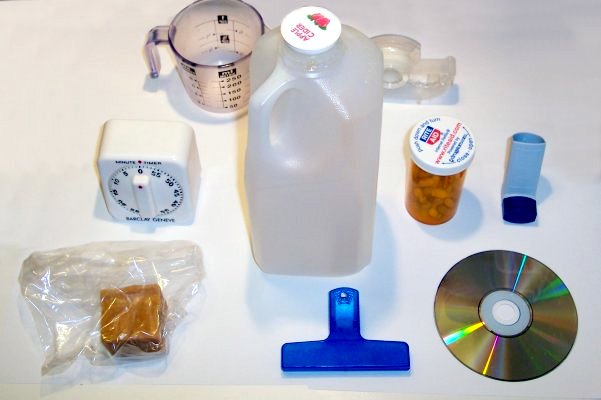
Plastic is a group of human-made materials that can be shaped into almost anything. Plastic can be soft or hard, clear or colored, bendable or stiff. It is found in toys, water bottles, lunch boxes, car parts, phone cases, and even the clothes you wear. Most plastic is made from oil or natural gas that comes out of the ground.
Plastics are made of long chains of tiny units called molecules. These chains are called polymers. The word "polymer" means "many parts." In a factory, workers heat oil and other chemicals until small molecules link together into these long chains. Different chains make different kinds of plastic. Some chains make bendy plastic, like a grocery bag. Other chains pack together tightly and make hard plastic, like a helmet.
The first fully man-made plastic was invented in 1907 by a chemist named Leo Baekeland. He called it Bakelite. It was hard, heat-resistant, and cheap. Soon people were making radios, phones, and buttons out of it. Many more plastics were invented in the next 50 years. By the 1950s, plastic was everywhere.
Plastic became popular for good reasons. It is light, strong, cheap to make, and easy to shape. Doctors use plastic tubes and gloves to keep patients safe. Plastic food wrap keeps meals fresh. Plastic helmets protect bike riders. Without plastic, many modern things would not work the same way.
But plastic has a big problem. Most plastic does not break down. When you throw away a plastic straw, it does not rot like a banana peel. It just sits there, sometimes for hundreds of years. Every year, people make more than 400 million tons of plastic. Much of it ends up in landfills or in the ocean. Tiny broken pieces called microplastics have been found in fish, in drinking water, and even inside human blood. Scientists are still studying what this means for our health.
Recycling can help, but it is harder than many people think. Only about 9 percent of all plastic ever made has been recycled. The rest has been burned, buried, or left in nature. Some scientists are working on new kinds of plastic that break down quickly. Others are finding bacteria that can eat plastic. The goal is to keep the useful parts of plastic while solving the waste problem it causes.
Last updated 2026-04-23