
Yeast
Credit: Masur · Public domain
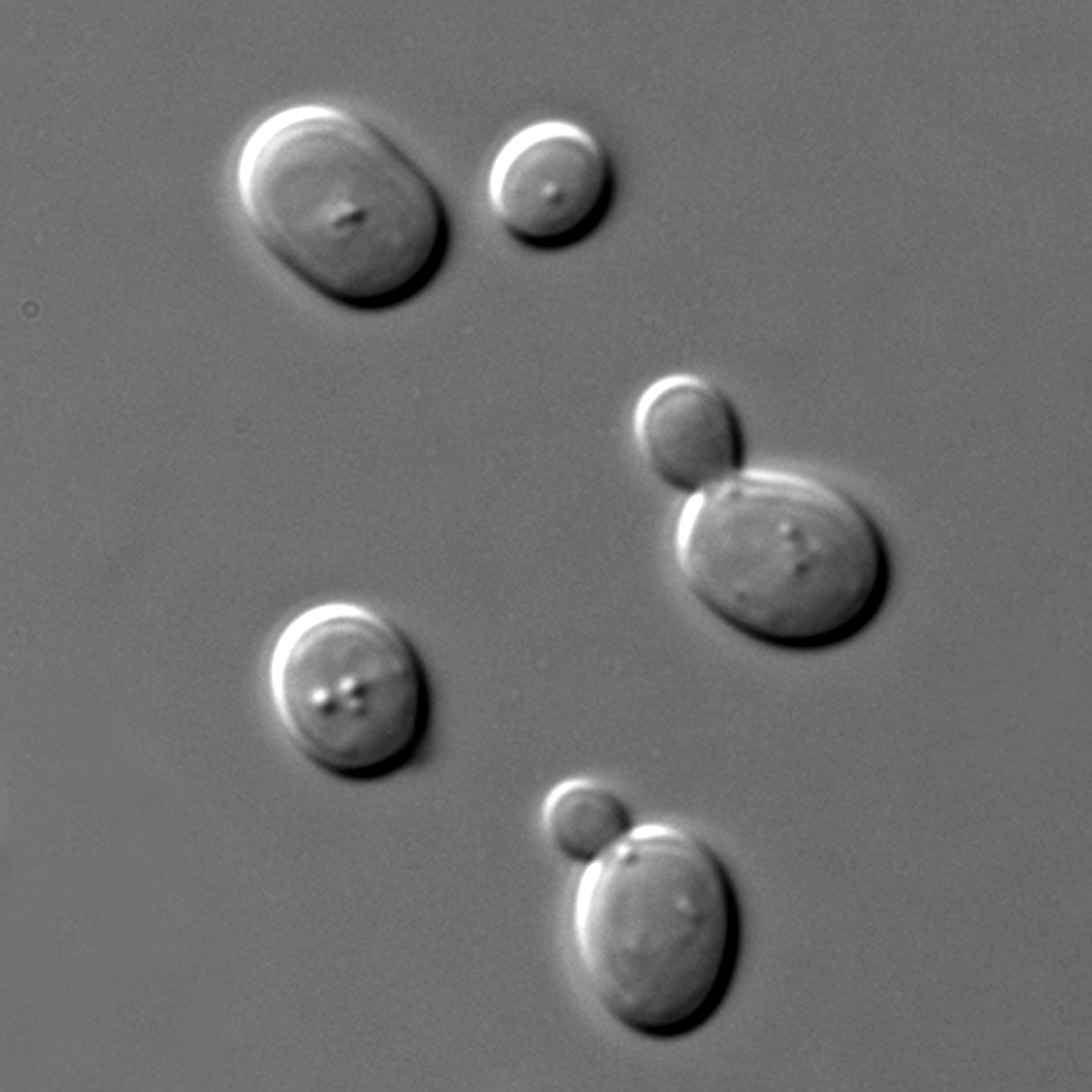
Yeast is a tiny living thing that belongs to the fungi family. It is not a plant or an animal. Each yeast is just one cell, far too small to see without a microscope. About 1,500 different kinds of yeast have been discovered. The most famous one is called Saccharomyces cerevisiae, which is used to bake bread and brew drinks.
Yeast cells are shaped like tiny eggs. They float in the air, sit on the skins of fruit, and live in soil all over the world. To make new yeast, a cell grows a small bump on its side. The bump gets bigger, then breaks off as a brand new cell. Scientists call this "budding." In warm, sweet conditions, one yeast cell can become millions in just a few hours.
Yeast eats sugar. When it does, it gives off two things: a gas called carbon dioxide, and a liquid called alcohol. This process is called fermentation. People have used fermentation for thousands of years, long before anyone knew yeast existed.
Bread rises because of yeast. When a baker mixes yeast into dough, the yeast eats the sugars in the flour. The carbon dioxide it makes gets trapped inside the stretchy dough as tiny bubbles. The dough puffs up and grows larger. When the bread bakes in the oven, the heat kills the yeast and locks the bubbles in place. That is why a slice of bread is full of little holes.
Beer and wine are also made with yeast. Brewers add yeast to grain or fruit juice. The yeast eats the sugars and produces alcohol. Different kinds of yeast give beer and wine different flavors.
Yeast is older than written history. Ancient Egyptians were baking risen bread and brewing beer more than 4,000 years ago. They had no idea a living creature was doing the work. Nobody figured that out until the 1850s, when a French scientist named Louis Pasteur looked at fermentation under a microscope. He proved that yeast was alive and that it caused the bubbles.
Yeast also matters in science. Saccharomyces cerevisiae was the first creature with a complex cell to have its full set of genes mapped, back in 1996. Yeast cells work in many of the same ways human cells do. Researchers use yeast to study cancer, aging, and how medicines act inside the body. A creature small enough to fit a billion in a teaspoon is teaching us about ourselves.
Last updated 2026-04-25