
Pitcher Plant
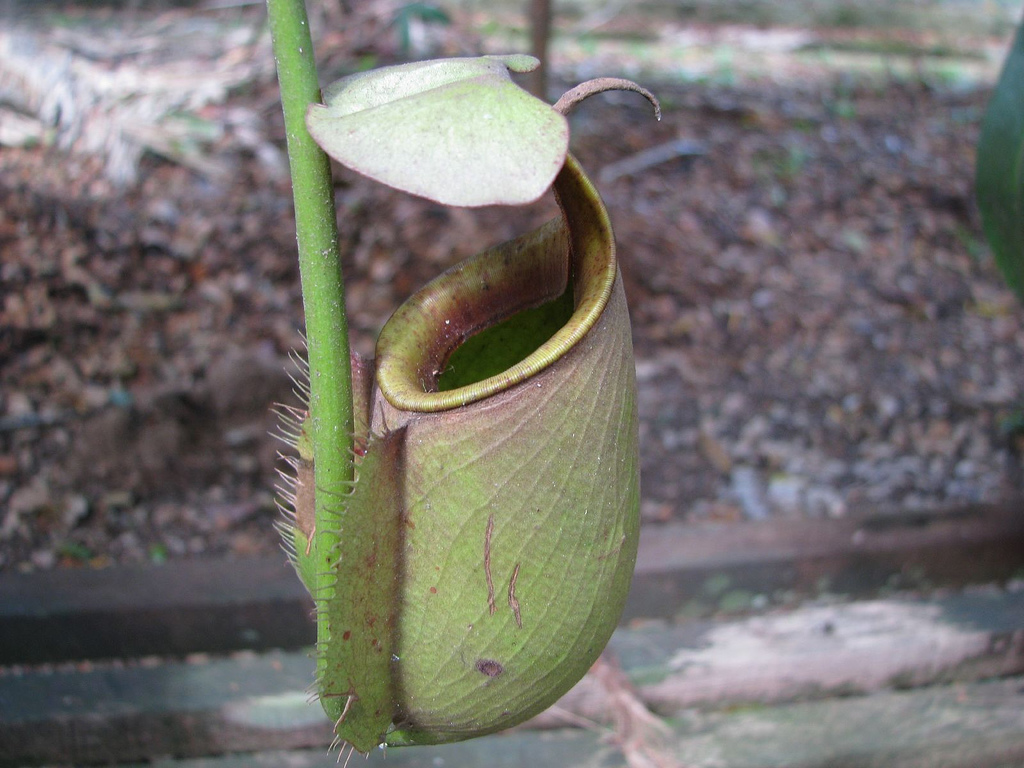
Credit: Richard W Sinyem from www.BorneoExpress.com · CC BY 2.0
A pitcher plant is a plant that catches and eats small animals. It is one of the few kinds of plants in the world that get part of their food this way. Pitcher plants grow in places where the soil is poor, like swamps, bogs, and rocky mountainsides. By eating insects and other small creatures, they get nutrients the soil cannot give them.
The plant is named for its leaves. Each leaf is shaped like a tall pitcher or a deep cup. The pitcher is open at the top and closed at the bottom. Many kinds have a small lid that hangs over the opening like a tiny roof, which keeps rain from filling the trap.
Pitcher plants do not chase prey. They wait. The rim of the pitcher is often bright red, yellow, or purple, and it gives off a sweet smell. Insects fly or crawl over to taste the sugary nectar. The rim is slick, like an ice-covered slide. One slip, and the insect tumbles down inside.
The inside walls of the pitcher are coated with slippery wax and tiny downward-pointing hairs. Climbing back out is almost impossible. At the bottom of the pitcher waits a pool of liquid. The plant makes this liquid itself. It works like the juices in your stomach, breaking the trapped animal down into nutrients the plant can soak up through its leaves.
Most pitcher plants catch ants, flies, beetles, and spiders. But some are much bigger. Tropical pitcher plants in Southeast Asia, called Nepenthes, can grow pitchers more than a foot tall. Scientists have found drowned frogs, lizards, and even small rats inside them. One species in the Philippines, Nepenthes attenboroughii, was discovered in 2007 on a single mountaintop. It is named after the British nature host David Attenborough.
Some pitcher plants have surprising friends. Tiny mosquito larvae and certain spiders live inside the pitcher's liquid without being digested. They feed on the dead insects and leave waste behind, which the plant absorbs. Tree shrews in Borneo even use one giant pitcher plant as a toilet, sitting on its rim to lick nectar while their droppings fall in. The plant gets free fertilizer.
Pitcher plants are found on almost every continent, from the cold bogs of Canada to the rainforests of Sumatra. Many kinds are now in trouble because their wetlands are being drained or their forests cut down. Once a bog is gone, the plants that turned an empty swamp into a hunter's garden are very hard to bring back.
Related
Last updated 2026-04-25