
Wetland
Credit: National Park Service · Public domain
A wetland is an area of land that is covered or soaked with water for much of the year. Wetlands sit between dry land and open water. They form along the edges of rivers, lakes, and oceans, and in low spots where rainwater collects. The water can be fresh, salty, or a mix of both. Wetlands are found on every continent except Antarctica.
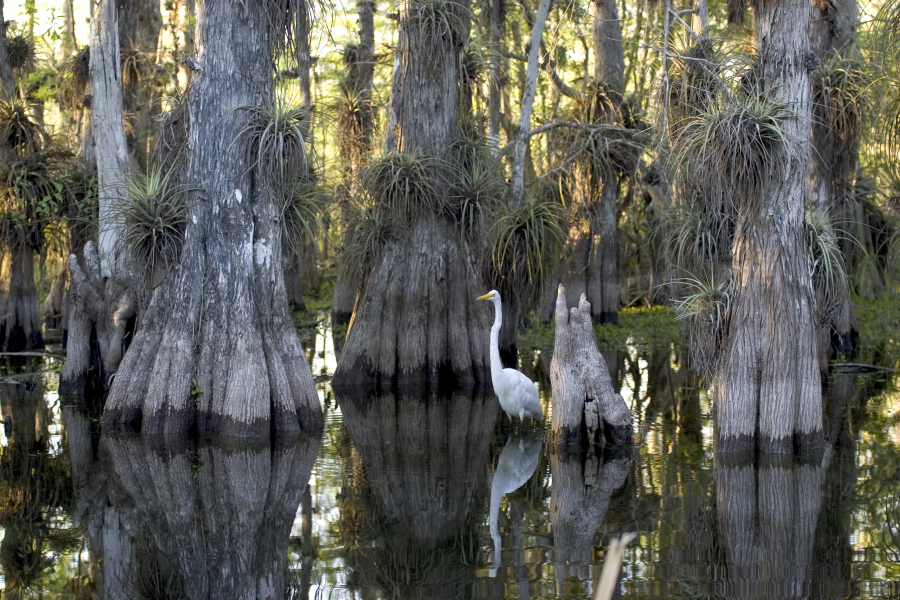
There are several main kinds of wetlands. A swamp is a wetland with lots of trees, like the cypress swamps of Louisiana. A marsh has soft plants like grasses and reeds instead of trees. A bog is a spongy wetland filled with moss and old plant matter that has built up for thousands of years. A fen is similar to a bog but gets more of its water from underground springs. Each type looks different, but all of them stay wet most of the time.
Wetlands are some of the busiest places in nature. A single acre of healthy wetland can support hundreds of kinds of plants, insects, fish, frogs, birds, and mammals. Alligators, herons, beavers, otters, and turtles all depend on wetlands. Many ducks and geese stop in wetlands during their long migrations to rest and feed. Scientists sometimes call wetlands "the supermarkets of nature" because so many animals find food there.
Wetlands also help people, even people who live far away from one. They act like giant sponges. When heavy rains come, a wetland soaks up the extra water and slowly releases it. This helps protect nearby towns from floods. Wetlands also clean water. As water moves through the mud and plants, dirt and pollution get filtered out. The water that flows out the other side is cleaner than the water that came in.
For a long time, people thought wetlands were useless. They drained them to build farms, roads, and houses. The United States has lost more than half of its original wetlands since the 1600s. Today scientists understand how important wetlands are, and many countries now have laws to protect them. Some wetlands that were drained are even being rebuilt.
Wetlands store a huge amount of carbon in their soggy soil. When wetlands are drained, that carbon escapes into the air as a gas that warms the planet. Protecting wetlands does more than save frogs and ducks. It helps keep the whole climate in balance.
Last updated 2026-04-25