
Mississippi River
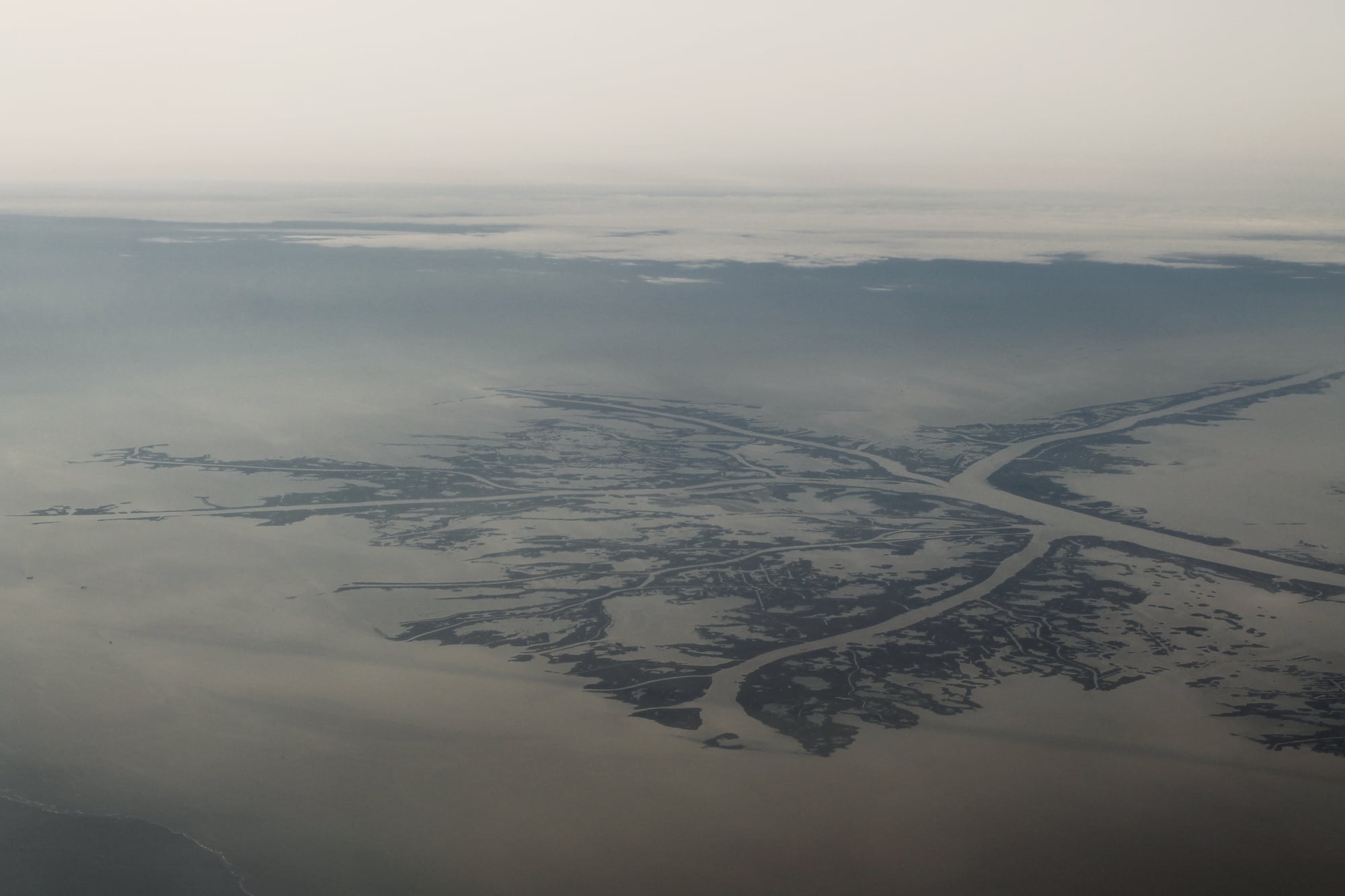
Credit: formulanone from Huntsville, United States · CC BY-SA 2.0
The Mississippi River is the second-longest river in the United States. It flows from northern Minnesota all the way down to the Gulf of Mexico. Along the way, it travels about 2,340 miles and passes through or borders ten states. Only the Missouri River is longer. The name "Mississippi" comes from an Ojibwe word, misi-ziibi, which means "great river."
The Mississippi starts at Lake Itasca in Minnesota. At its source, the river is so small that people can wade across it. As it moves south, other rivers flow into it and make it much bigger. The biggest of these is the Missouri River, which joins near St. Louis. The Ohio River joins near Cairo, Illinois. By the time the Mississippi reaches the Gulf, it carries water from 31 states and two Canadian provinces. Together, this area is called the Mississippi River watershed. It covers about 1.2 million square miles, or nearly 40 percent of the lower 48 states.
The river ends in a delta south of New Orleans, Louisiana. A delta is a flat area of land built up from mud and sand that a river drops as it empties into the sea. The Mississippi carries so much mud that it has slowly built new land out into the Gulf of Mexico over thousands of years.
People have lived along the Mississippi for a long time. Native American groups like the Ojibwe, Dakota, Chickasaw, and Choctaw built towns along its banks. Around 1,000 years ago, a group called the Mississippian people built a city called Cahokia near present-day St. Louis. At its peak, Cahokia had more people than London did at the same time. Huge earthen mounds from the city still stand today.
The Mississippi has shaped American history. In 1803, the United States bought the Louisiana Territory from France and gained control of the river. Steamboats soon filled the river and carried cotton, corn, and people. Writer Mark Twain grew up on its banks and used it as the setting for The Adventures of Huckleberry Finn. During the Civil War, both sides fought hard to control the river because whoever held it could split the country in two.
The Mississippi can also be dangerous. It floods often, sometimes covering whole towns. Engineers have built long walls called levees to hold the water back, but the river does not always stay where people want it to. Scientists think the Mississippi will one day change its path and flow through a different channel to the sea.
Related
Last updated 2026-04-23